
What Is Crown Pruning?
Crown Pruning is the selective removal of branches from a tree's crown, or upper canopy, to improve structure, clearance, and light flow. The work focuses on specific limbs, not broad topping cuts. A pruning plan considers branch size, attachment, tree health, nearby buildings, and the tree's natural shape.
Quick Facts About Crown Pruning
Category
Tree canopy maintenance
Used for
Structure, clearance, and light management
Common confusion
Topping or cutting back the whole canopy
Also called
Crown Reduction, Crown cleaning
Often discussed with
Landscaper
Key Takeaways About Crown Pruning
- Selective branch removal preserves the tree’s natural crown.
- Pruning can improve clearance around roofs, paths, and utility lines.
- Crown pruning isn’t the same as topping a tree.
How Crown Pruning Works
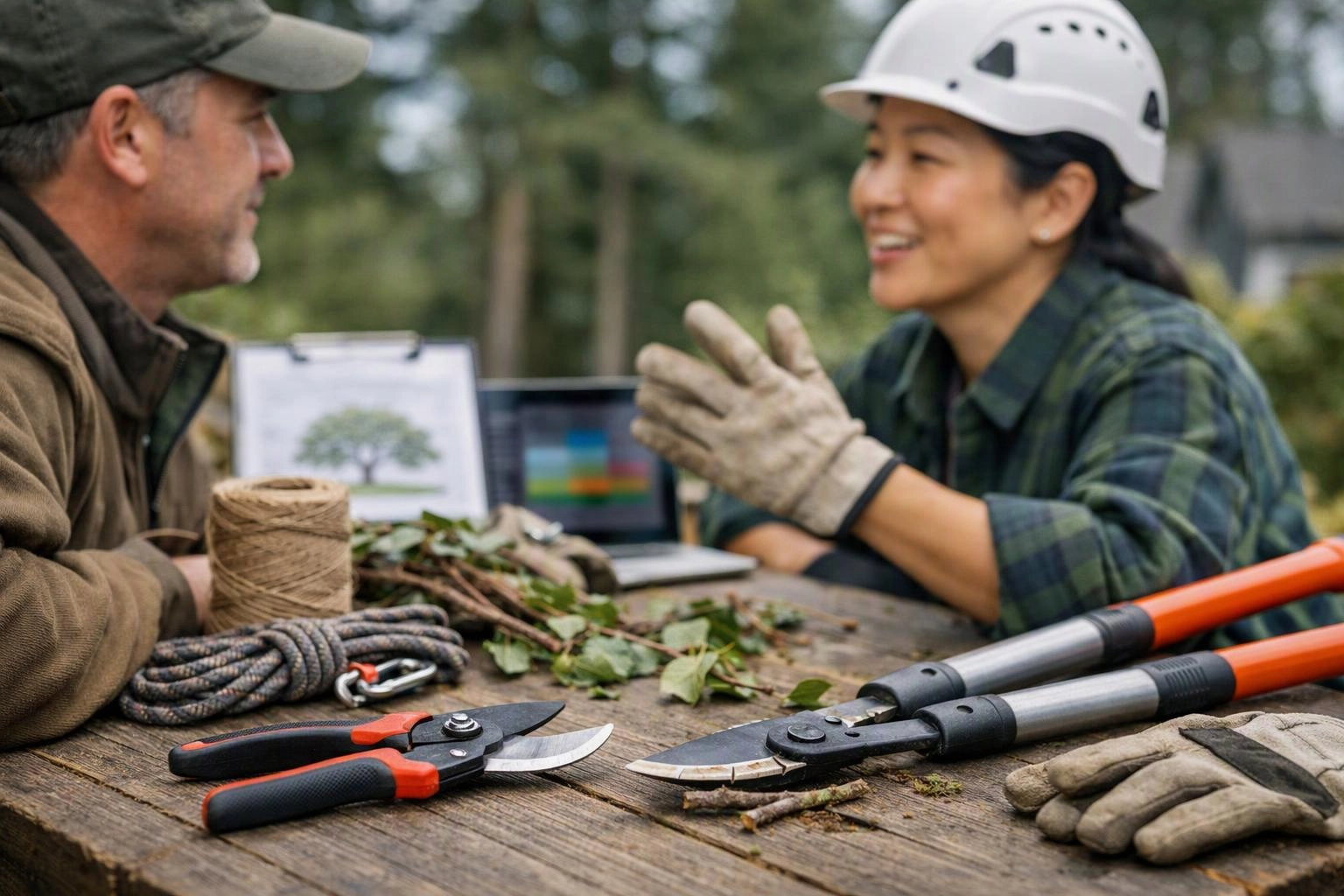
Crown Pruning starts with a review of the tree’s branches, canopy shape, and nearby features. A pruning plan identifies limbs that rub, hang over a roof, block a path, or weaken the tree’s structure. Cuts follow the branch collar, which helps the tree close the wound.
Related glossary terms: Tree Protection, Evergreen Screening, Hardscape.
Good crown pruning removes selected branches while keeping the canopy balanced. The work may include crown cleaning, crown raising, or crown thinning. Crown cleaning removes damaged or poorly attached limbs. Crown raising lifts lower branches for clearance. Crown thinning reduces crowding without stripping the outer canopy.
Tree Protection during site planning helps prevent damage to the trunk and root area. The final cuts should support the tree’s form and the needs of the surrounding landscape.
Expert Note
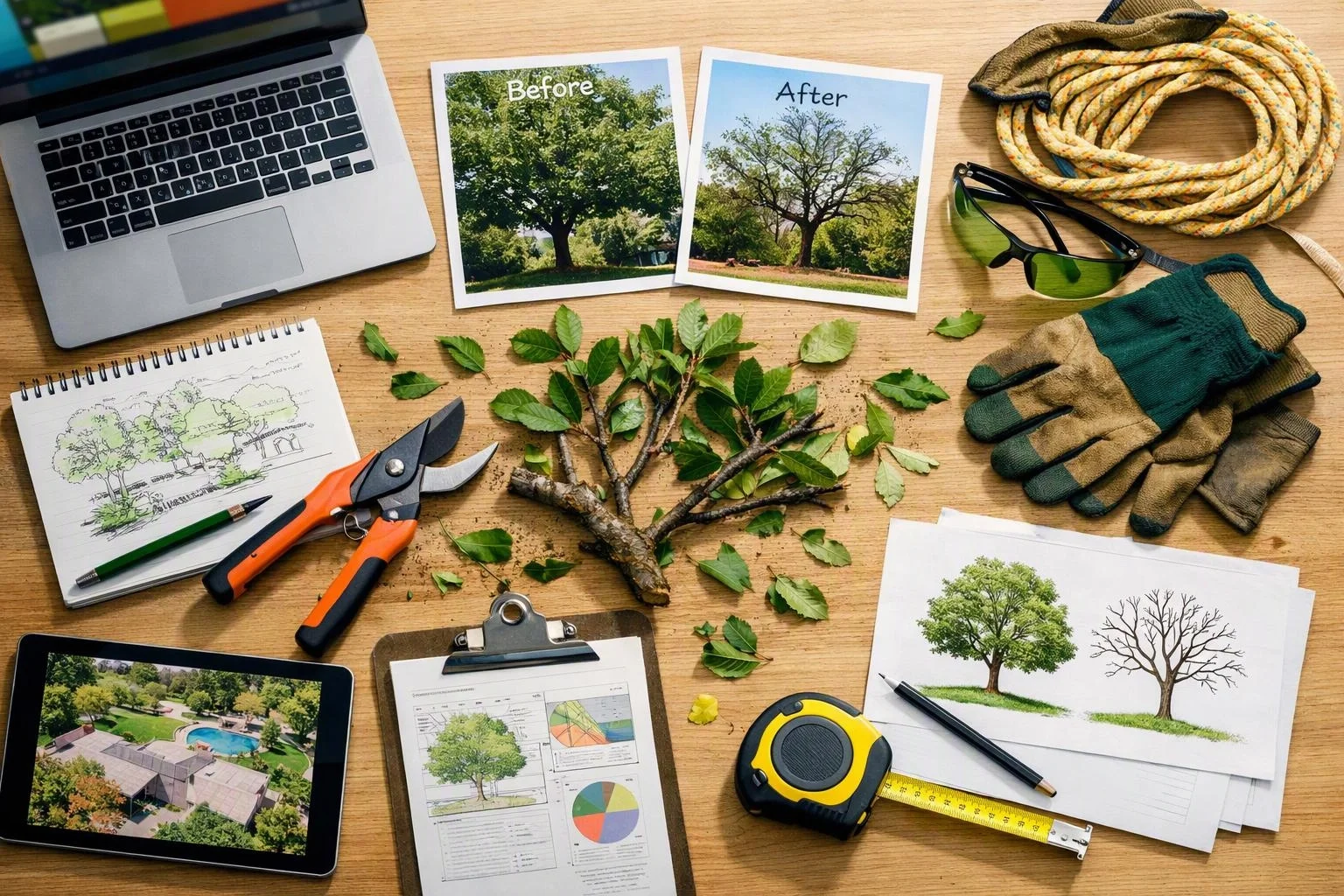
When we plan crown pruning, we inspect branch attachments, canopy balance, and nearby structures. We mark cuts that solve a clear site problem and protect the tree’s natural form. Our team also checks the finished canopy from several views, since a balanced appearance can change as branches are removed.
Crown Pruning in Practice: A Real-World Example
A Bellevue homeowner may need clearance from a maple overhanging a walkway. We would identify the lowest interfering limbs and selected crossing branches, then keep enough canopy for a balanced shape.
Related Services
Related Terms
Tree Protection
Tree Protection is a planned set of measures that keeps existing trees and their root zones…
Evergreen Screening
Evergreen Screening is a planting design that uses trees, shrubs, or other plants that keep their…
Hardscape
Hardscape is the built part of a landscape, such as patios, paths, walls, steps, edging, and…
LandscaperBellevuewa.com
Have Questions About Crown Pruning?
Contact LandscaperBellevuewa.com for practical guidance on Crown Pruning and related landscape architect company work in Bellevue.