
What Are Weep Holes?
Weep Holes are small openings built into a retaining wall that let trapped water drain through the wall face. They reduce water pressure behind the wall and help protect the wall system. Weep holes usually connect to a drainage layer of gravel or another free-draining material.
Quick Facts About Weep Holes
Category
Retaining wall drainage feature
Used for
Releasing water behind walls
Common confusion
Confused with surface drains
Also called
Drainage Holes, Wall weep holes
Often discussed with
Retaining Wall Design
Key Takeaways About Weep Holes
- They drain water through the retaining wall face.
- Blocked openings can leave water trapped behind the wall.
- Weep holes are not the same as surface drains.
How Weep Holes Works
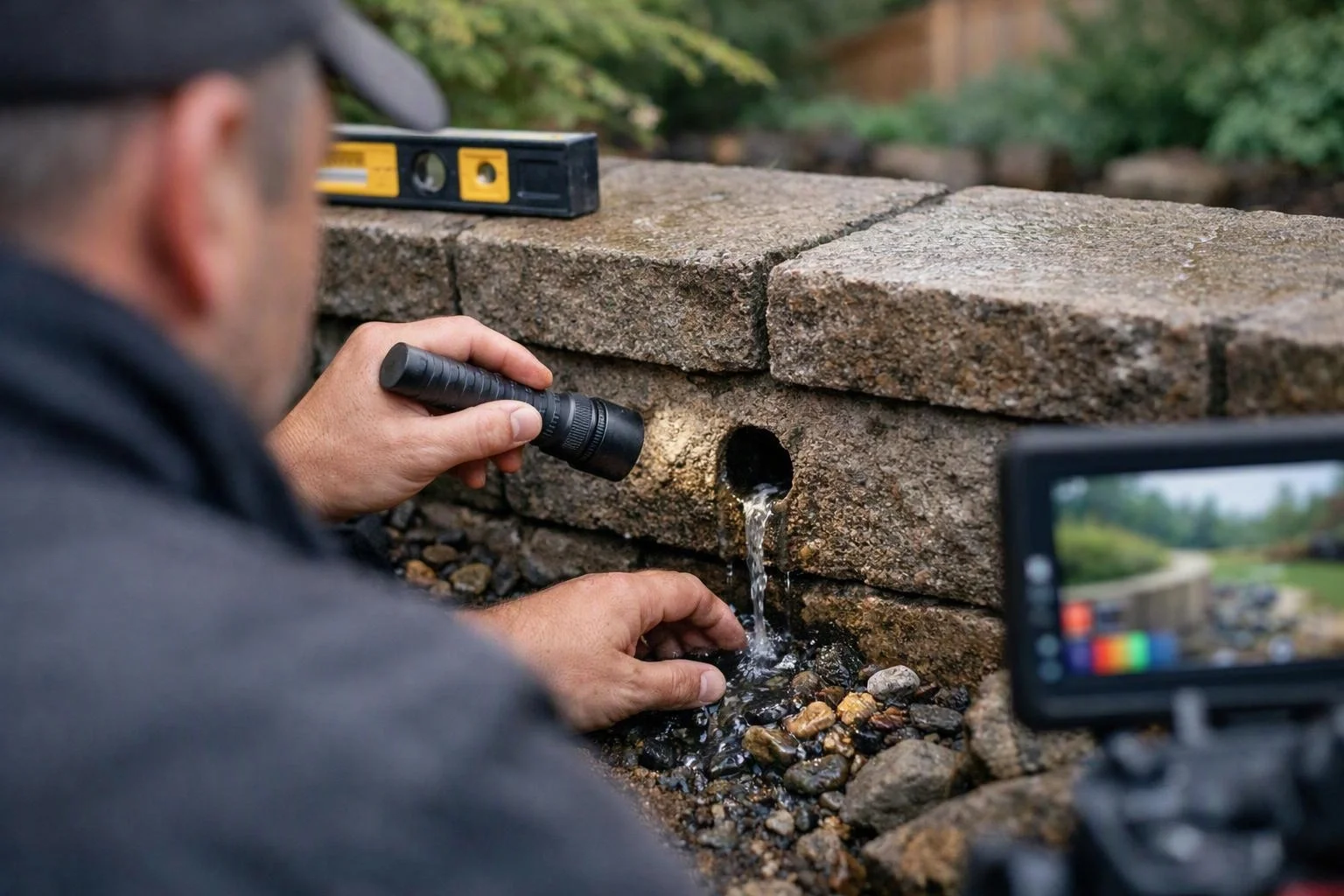
Weep holes create a drainage path through a retaining wall. Water moves from the backfill into a free-draining layer, then exits through each opening. This path helps limit water pressure behind the wall.
Related glossary terms: Underdrain, French Drain, Gravel Base.
Placement depends on the wall design, drainage layer, and finished ground surface. The openings must remain clear at the wall face. Soil, mulch, roots, or mortar can block the outlet and keep water trapped behind the wall.
Retaining wall drainage may also include perforated pipe, clean gravel, or filter fabric. These parts work together, but each has a separate role. Weep holes release water at the wall face, while the other parts collect or guide water behind the wall.
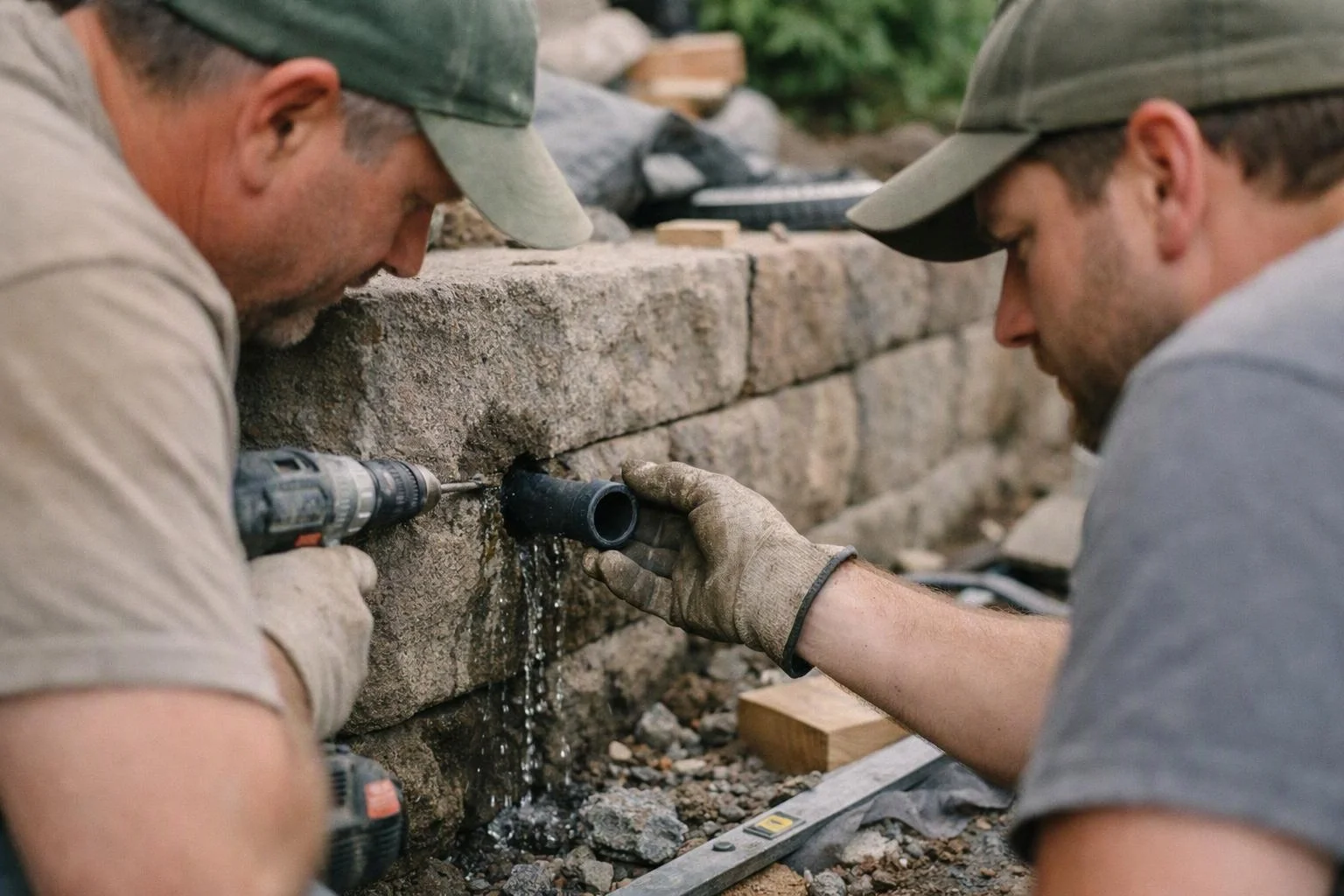
Expert Note
When we design retaining walls, we review how water will move through the backfill and leave the wall face. We check that outlet locations stay clear and connect with the planned drainage layer. We also consider the finished grade so surface water does not flow directly into the openings.
Weep Holes in Practice: A Real-World Example
A retaining wall beside a sloped Bellevue yard may include weep holes near its lower section. Drainage material behind the wall guides collected water toward the openings and away from the soil behind the wall.
Related Services
Related Terms
Underdrain
Underdrain is a buried drainage system that collects water in soil and carries it away through…
French Drain
A French Drain is a ground drainage system that collects excess water through a gravel-filled trench…
Gravel Base
Gravel base is a compacted layer of crushed stone placed beneath a patio surface. It creates…
LandscaperBellevuewa.com
Have Questions About Weep Holes?
Contact LandscaperBellevuewa.com for practical guidance on Weep Holes and related landscape architect company work in Bellevue.