How should plant shelves be designed for clear water and healthy plants for Pond contractor?
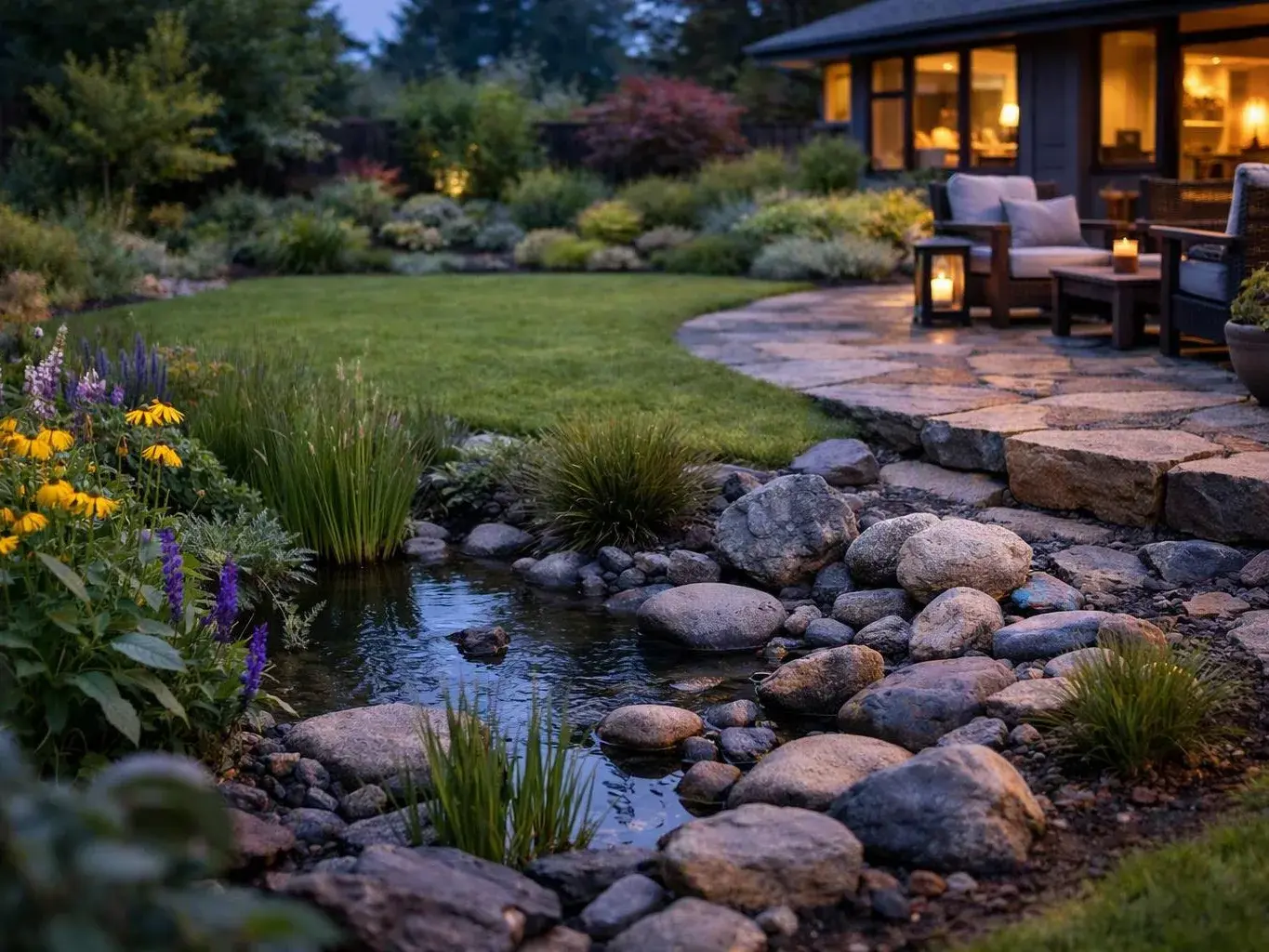
Plant shelves should match the root depth and light needs of the selected aquatic plants. We set shelf zones with water circulation, shade placement, and open-water space in mind. The design also considers how the pond edge will be maintained. A shelf that is too deep, too shaded, or poorly connected to circulation can limit plant health even when the water appears clear.
When should aeration be part of the pond design?
Aeration should be part of the design when the pond needs added oxygen and movement beyond its planned circulation. The layout considers basin shape, water flow, plant zones, and the pond's intended use. We explain where aeration fits and how it relates to the rest of the water feature. Aeration supports the design, but it does not correct every layout problem.
What does a first pond site assessment check?
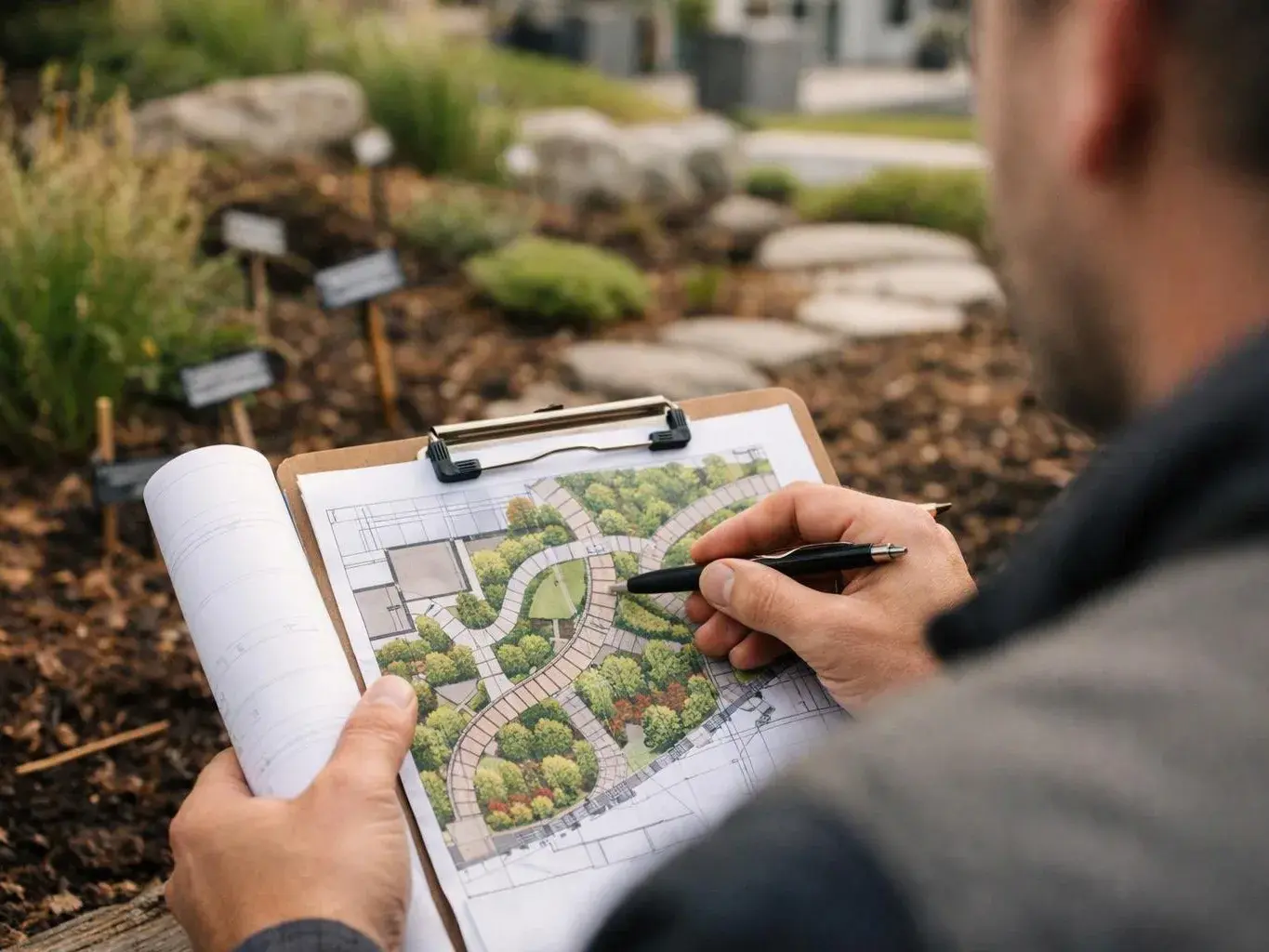
A first pond assessment checks the proposed location, soil, slopes, drainage, access, views from the home, and nearby landscape features. We also discuss plants, circulation, shade, and the intended use. Those findings shape the quote and the design scope. Bring any goals for fish, aquatic plants, seating, paths, or a stronger connection to an existing patio.
Which pond features change the project quote most?
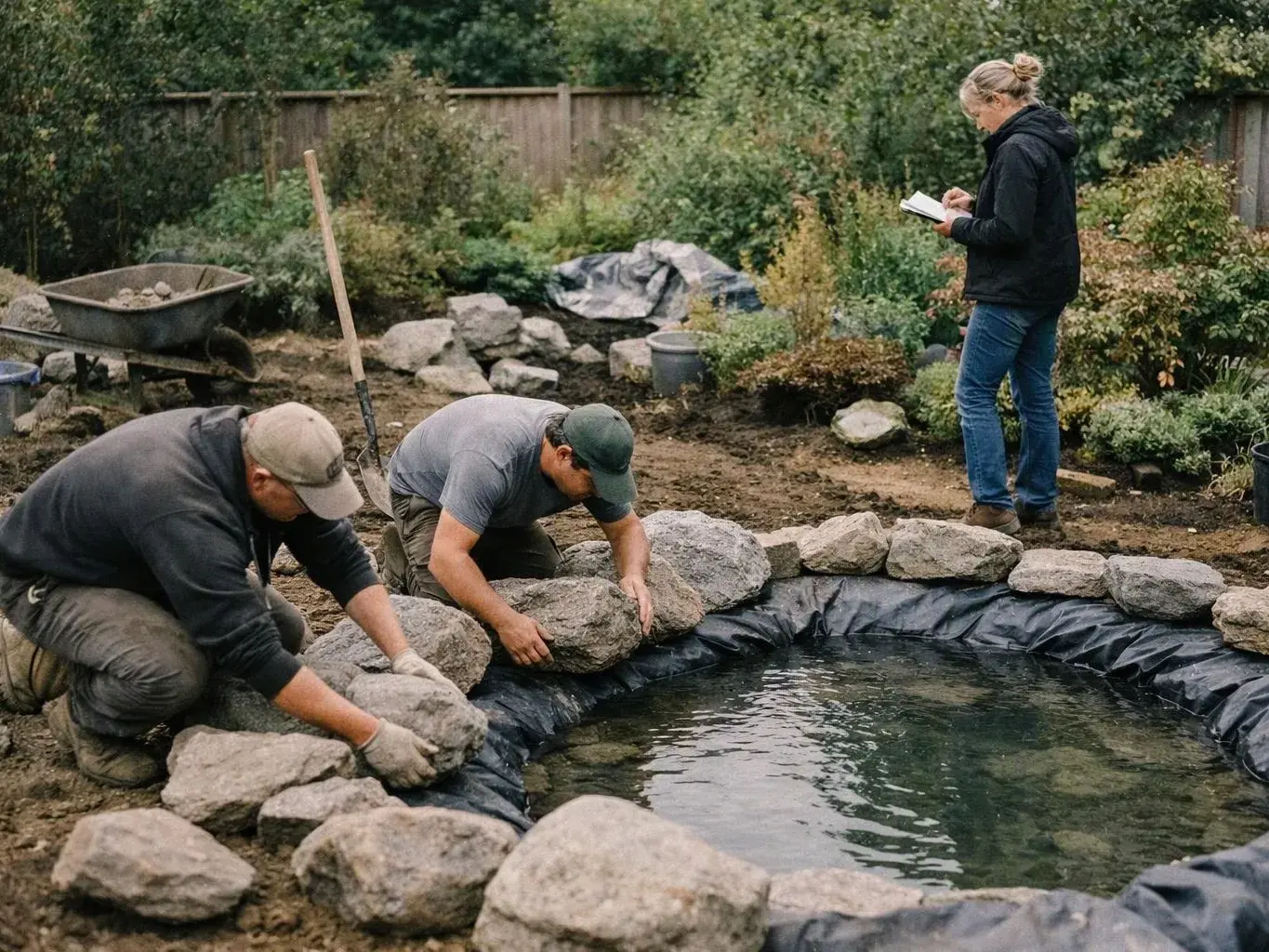
The pond's size, excavation, access, circulation, aeration, planting, drainage, and connected hardscape shape the quote. Plant shelves also affect the basin layout and construction work. We review those choices with you before preparing upfront pricing. A site assessment gives us the information needed for a quote tied to your property instead of a broad allowance.
Why can beneficial bacteria not solve every pond problem?
Beneficial bacteria cannot replace correct circulation, suitable plant placement, shade planning, or routine maintenance. They support biological balance after the pond has a sound design. We look at the basin, water movement, plant zones, and visible symptoms together. That review helps separate a biological need from a layout or equipment issue.
What should I prepare before discussing a pond installation?
A homeowner should prepare the pond's intended use, preferred planting, desired views, and any known access limits. Photos of the yard can help frame the discussion, but the site still needs review. We then connect those goals with soil, slopes, drainage, circulation, and nearby landscape work. The result is a more focused conversation about scope and quote needs.