
What Is Geotextile Fabric?
Geotextile Fabric is a synthetic textile placed in soil to separate materials, filter water, reinforce weak ground, or control erosion. In retaining wall work, fabric helps keep soil from mixing with drainage gravel while allowing water to pass. The selected fabric depends on soil conditions, drainage needs, and wall design.
Quick Facts About Geotextile Fabric
Category
Soil and drainage material
Used for
Separation, filtration, and reinforcement
Common confusion
Not a waterproof barrier
Also called
Filter Fabric, Geotextile
Often discussed with
Retaining Wall Design
Key Takeaways About Geotextile Fabric
- It separates soil from gravel without blocking water flow.
- Fabric type depends on soil and drainage conditions.
- It isn't the same as waterproof liner or plastic sheeting.
How Geotextile Fabric Works
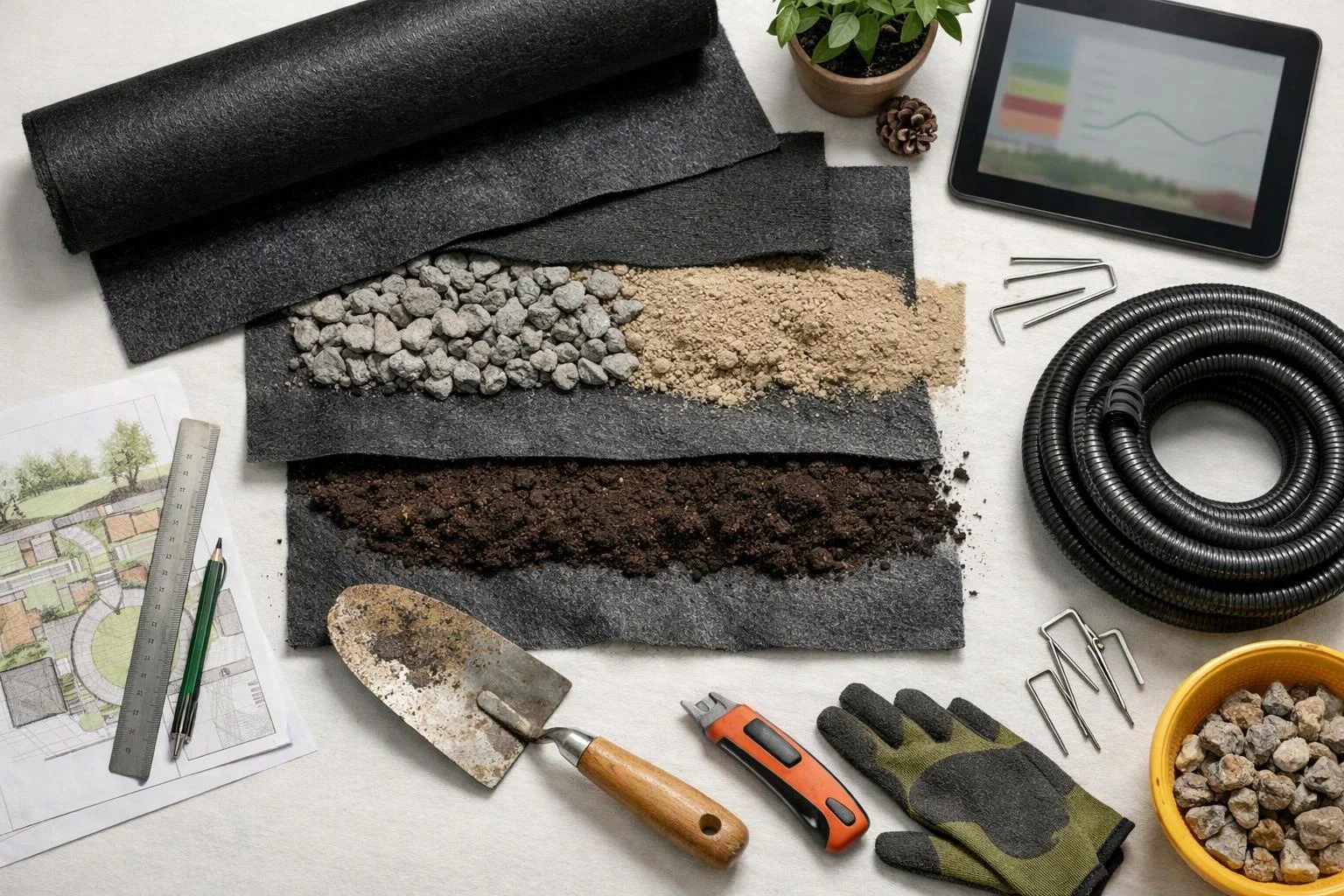
Geotextile Fabric works by separating soil from other materials while letting water move through its openings. The fabric helps stop fine soil from filling spaces in drainage gravel. Water can still reach a drain system behind the wall.
Related glossary terms: Gravel Base, Underdrain, Soil Compaction.
Fabric may also reinforce soft soil or help control surface erosion. Its performance depends on the weave, strength, and opening size. A retaining wall design may place fabric between native soil and gravel, while a drainage area may use it around an underdrain.
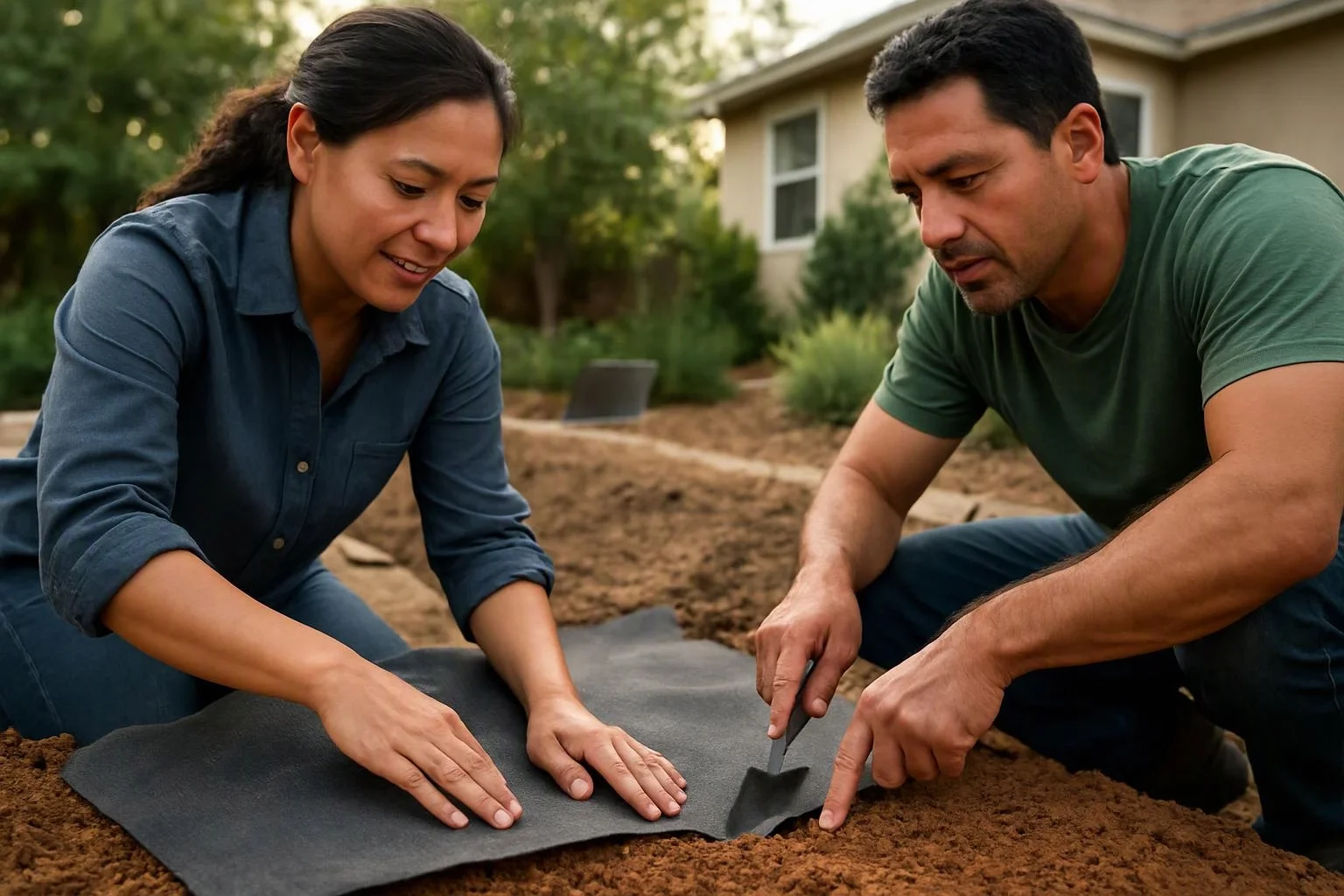
Geotextile fabric must be placed on clean, prepared soil. Creases, tears, and loose edges can reduce its function. The surrounding gravel and soil must also suit the wall's drainage plan.
Expert Note
When we design a retaining wall, we check the soil, drainage path, and fabric location together. We keep fabric separated from sharp debris and confirm that drainage gravel can move water freely. Our team also checks overlaps and edges before backfilling.
Geotextile Fabric in Practice: A Real-World Example
A retaining wall beside a sloped Bellevue yard may need fabric between the excavated soil and drainage gravel. The fabric keeps soil from clogging the gravel while water moves toward the wall drain.
Related Services
Related Terms
Gravel Base
Gravel base is a compacted layer of crushed stone placed beneath a patio surface. It creates…
Underdrain
Underdrain is a buried drainage system that collects water in soil and carries it away through…
Soil Compaction
Soil Compaction is the pressing of soil particles close together, which reduces open spaces for air…
Subgrade
Subgrade is the prepared soil surface beneath a patio base and its finished paving materials. Crews…
LandscaperBellevuewa.com
Have Questions About Geotextile Fabric?
Contact LandscaperBellevuewa.com for practical guidance on Geotextile Fabric and related landscape architect company work in Bellevue.