
What Is Soil Compaction?
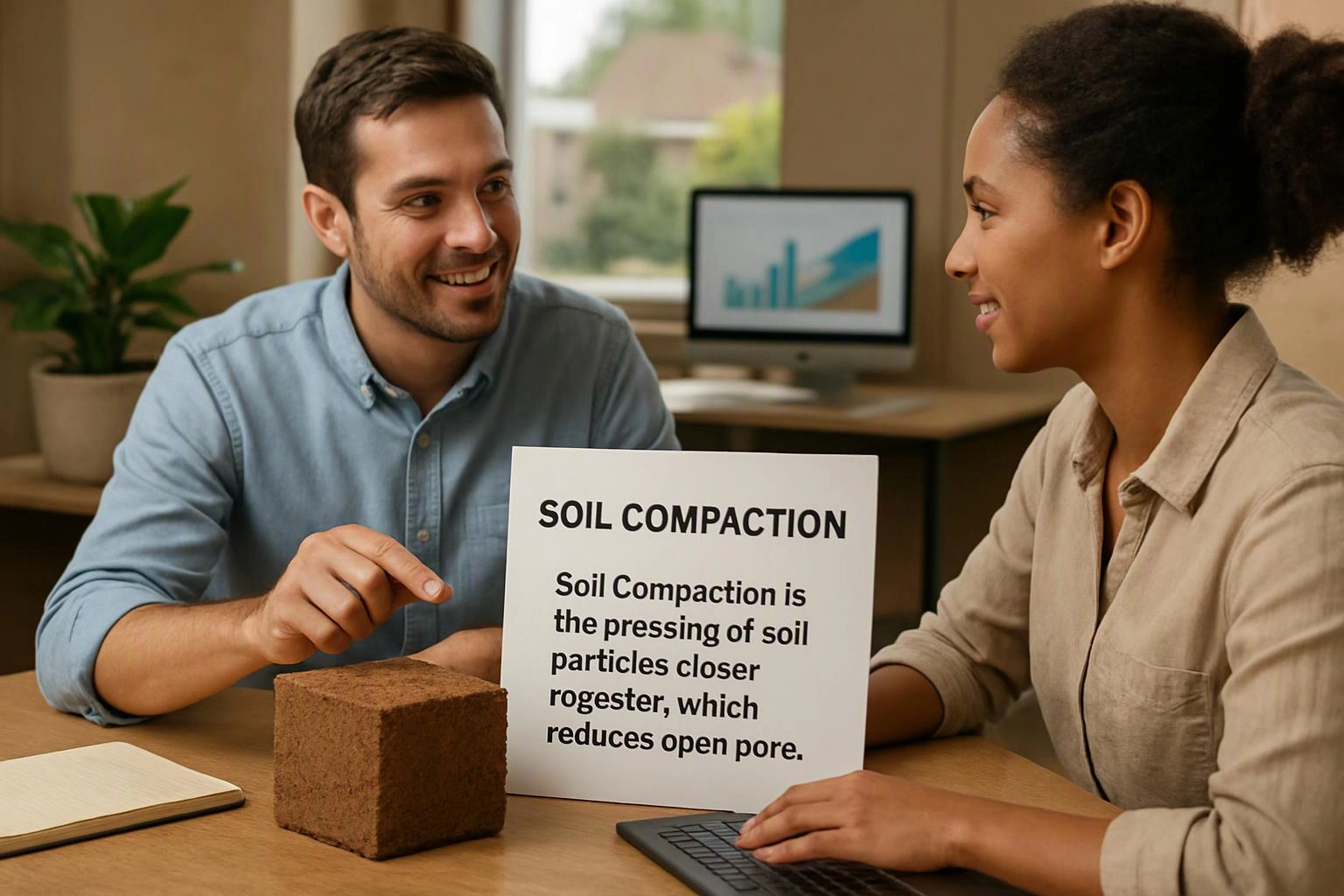
Soil Compaction is the pressing of soil particles close together, which reduces open spaces for air and water. Heavy equipment, foot traffic, wet conditions, and repeated loading can cause it. Compacted soil becomes harder for roots to enter, drains poorly, and may shed water across the surface instead of absorbing it.
Quick Facts About Soil Compaction
Category
Soil condition
Used for
Site preparation and landscape renovation
Common confusion
Firm soil is not always compacted soil
Also called
Compacted Soil
Often discussed with
Landscape Renovation, Landscape Grading Design
Key Takeaways About Soil Compaction
- Compacted soil has fewer open spaces between particles.
- Roots need loose soil to spread and access air.
- Compaction isn't the same as healthy soil firmness.
How Soil Compaction Works
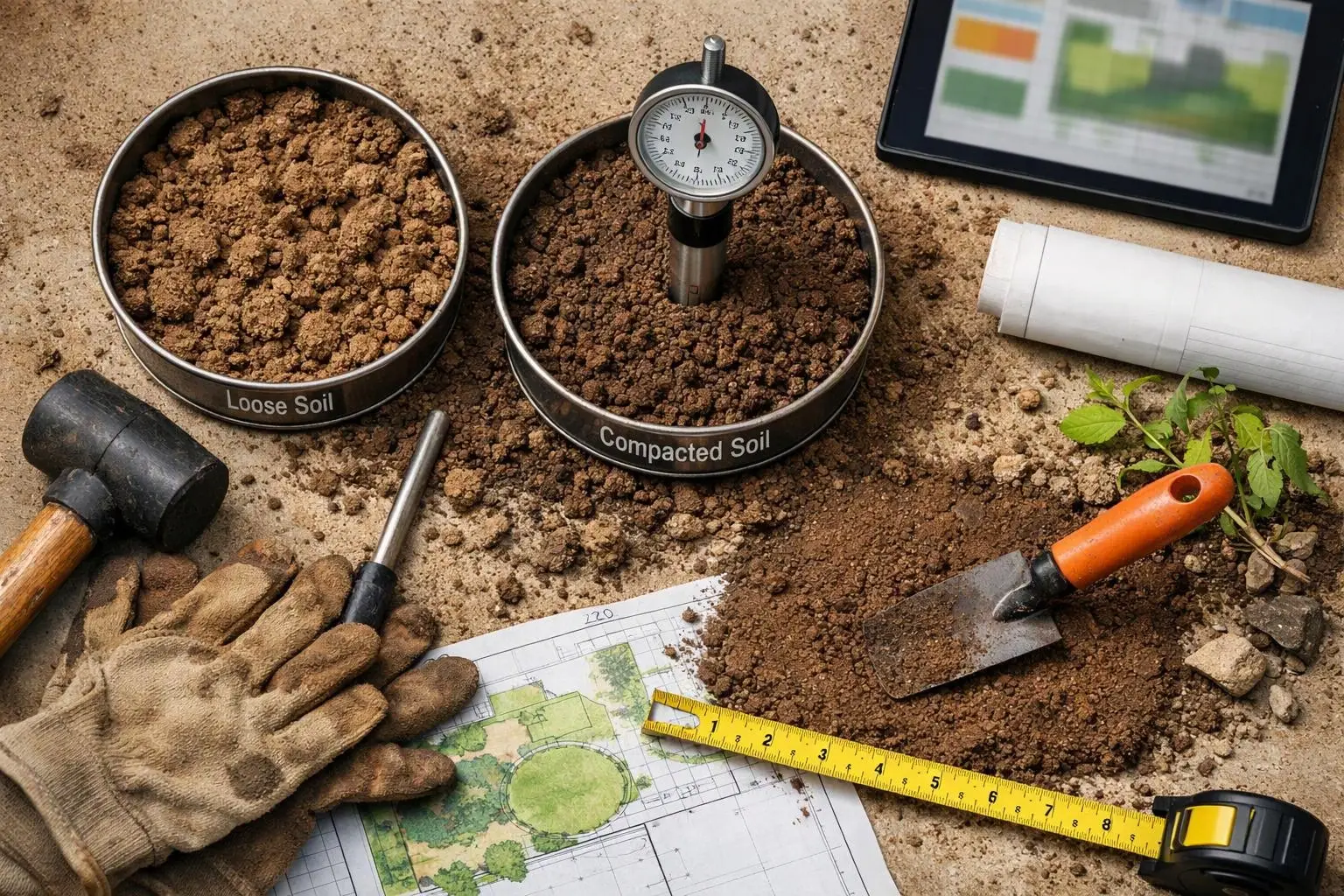
Soil Compaction happens when pressure pushes soil particles closer together. The pressure may come from machinery, walking, stored materials, or work on wet ground. As the spaces close, air and water have fewer paths through the soil.
Related glossary terms: Soil Amendment, Subgrade, Topsoil.
Landscapers check compacted areas by looking at surface hardness, drainage, and root growth. A probe or hand tool can show where soil resists entry. Renovation work may include removing unsuitable soil, loosening the existing layer, adding a soil amendment, or rebuilding the planting area. Paths and patios need a firm subgrade, but planting beds need a different soil condition.
Compaction can occur near structures, along access routes, or below newly installed hardscape. The right treatment depends on the soil type, the planned use, and the depth of the affected layer.
Expert Note
When we plan a landscape renovation, we check soil firmness, drainage, and existing root growth. We identify areas that need loosening or soil replacement before planting. We also keep planting soil separate from compacted base material used under walks, patios, or other hardscape.
Soil Compaction in Practice: A Real-World Example
A backyard renovation may leave a narrow strip beside a new patio with dense, hard soil. We can loosen that strip and improve its planting soil before adding shrubs or ground cover.
Related Services
Related Terms
Soil Amendment
Soil Amendment is a material mixed into existing soil to change its structure, drainage, nutrient supply…
Subgrade
Subgrade is the prepared soil surface beneath a patio base and its finished paving materials. Crews…
Topsoil
Topsoil is the upper layer of soil used to support plant roots and soil life. It…
Gravel Base
Gravel base is a compacted layer of crushed stone placed beneath a patio surface. It creates…
LandscaperBellevuewa.com
Have Questions About Soil Compaction?
Contact LandscaperBellevuewa.com for practical guidance on Soil Compaction and related landscape architect company work in Bellevue.