
What Are Permeable Pavers?
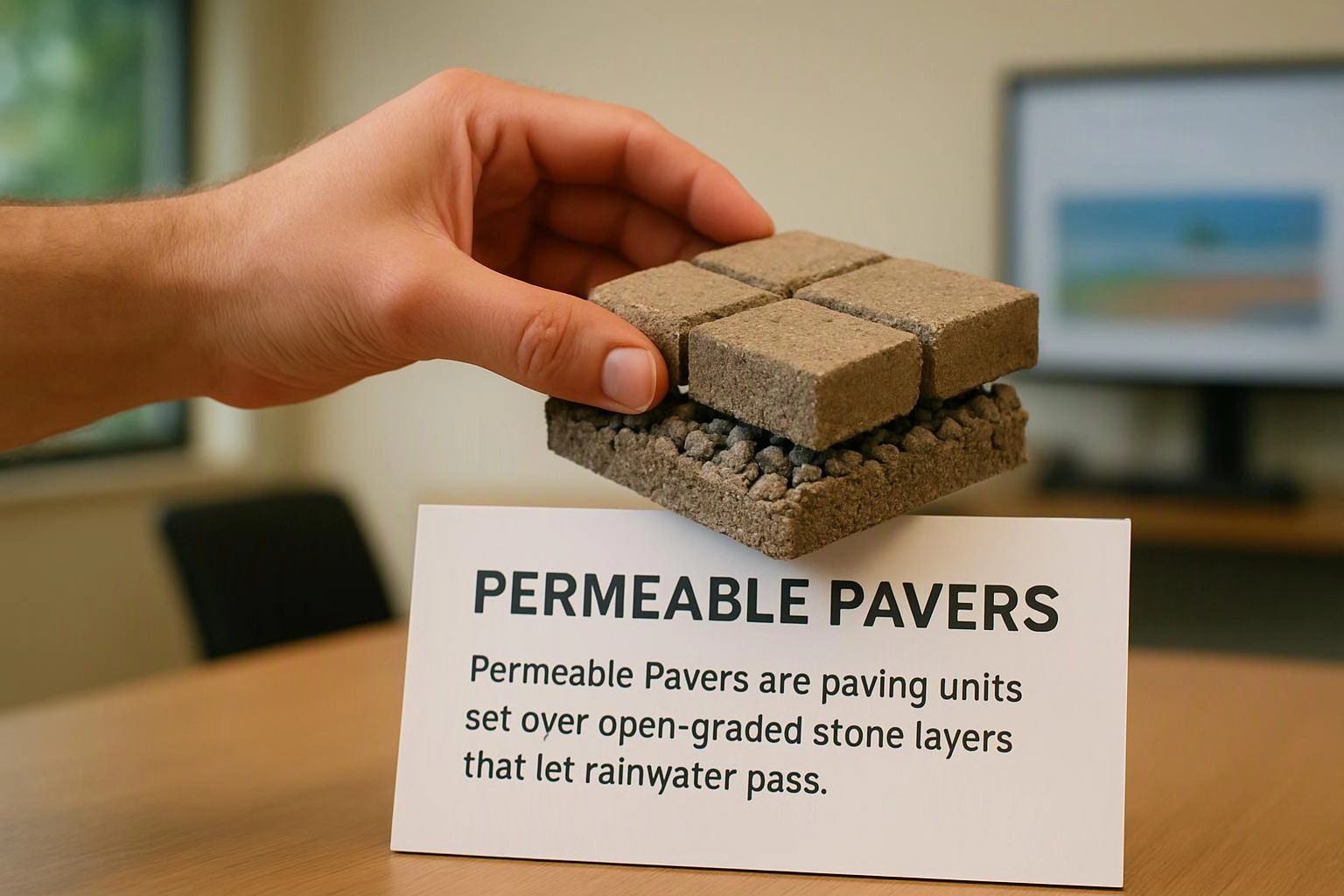
Permeable Pavers are paving units with open joints or porous surfaces that let rainwater move into a stone base below. The base stores and filters runoff before water reaches soil or a drainage system. They create a firm walking or driving surface while supporting rainwater management in patios, paths, and parking areas.
Quick Facts About Permeable Pavers
Category
Stormwater paving system
Used for
Patios, walkways, and driveways
Common confusion
They are not standard pavers with ordinary sand joints
Also called
Permeable Pavement, Pervious pavers
Often discussed with
Rain Garden Design
Key Takeaways About Permeable Pavers
- Open joints let rain pass below the paved surface.
- A clean stone base supports drainage and surface stability.
- Permeable pavers are not the same as standard pavers with sealed joints.
How Permeable Pavers Works
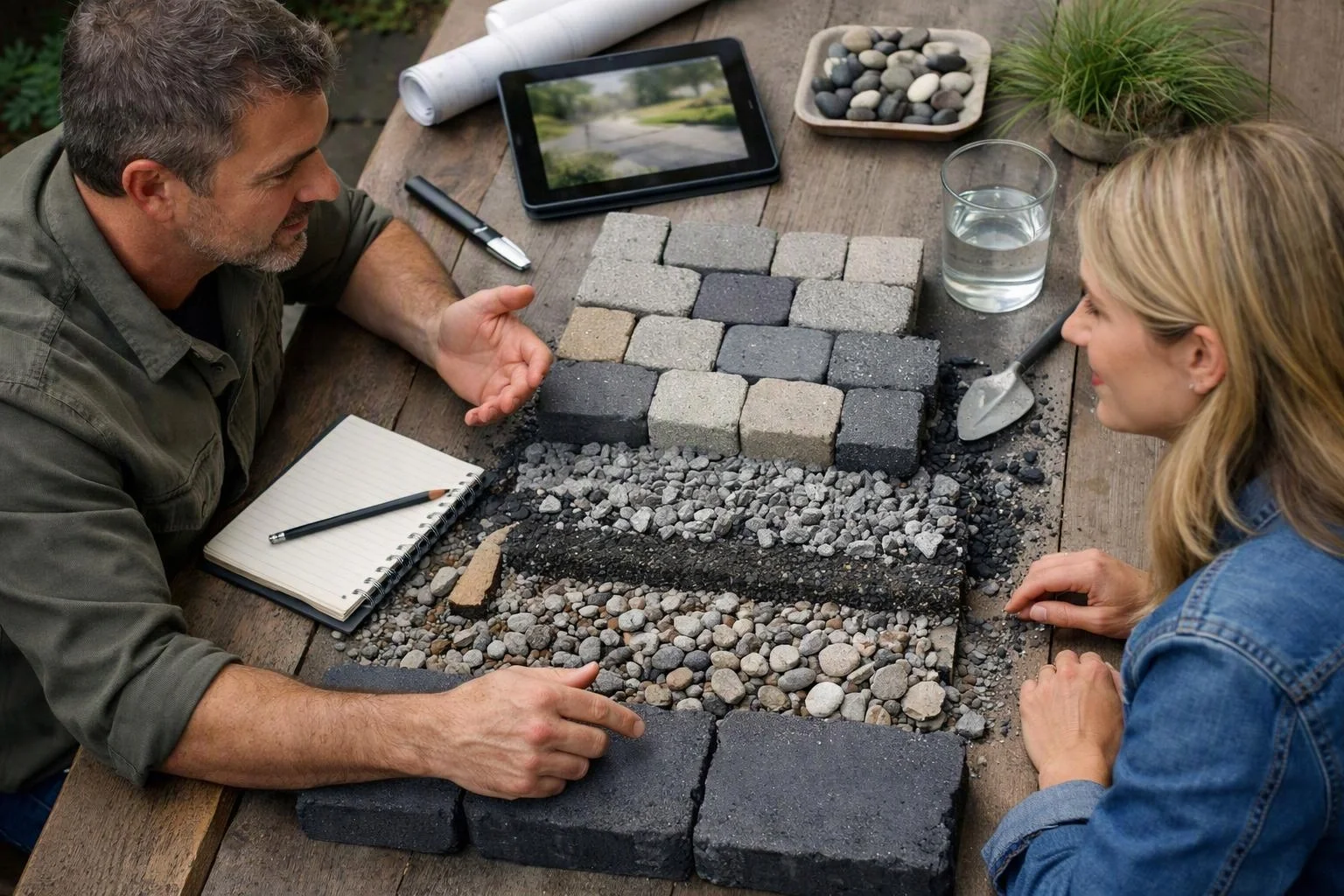
Permeable Pavers work by directing rain through joints or openings into a layered stone base. The base holds water for a time and lets it seep into the soil below. Some designs connect to an underdrain that carries extra water away.
Related glossary terms: Paver, Gravel Base, Geotextile Fabric.
Installers check the soil, slope, and expected runoff before choosing the base design. Clean, crushed stone supports the pavers and keeps water pathways open. Joint material must also allow water to pass. Fine soil or regular sand can block these spaces.
In rain garden design, permeable pavers can cover a path or small sitting area near planted drainage areas. The paved surface manages its own runoff, while nearby planting areas handle water from other parts of the site.
Expert Note
When we plan permeable pavers for a rain garden, we check slope, soil drainage, and the path of roof or surface runoff. Our team coordinates the paved area with planting beds and any needed underdrain.
Permeable Pavers in Practice: A Real-World Example
A backyard rain garden may include a permeable paver path leading from a patio to the planting area. Rain can pass through the path and move into its stone base instead of flowing across the garden edge.
Related Services
Related Terms
Paver
A paver is a manufactured unit used to create outdoor surfaces such as patios, walkways, and…
Gravel Base
Gravel base is a compacted layer of crushed stone placed beneath a patio surface. It creates…
Geotextile Fabric
Geotextile Fabric is a synthetic textile placed in soil to separate materials, filter water, reinforce weak…
Underdrain
Underdrain is a buried drainage system that collects water in soil and carries it away through…
LandscaperBellevuewa.com
Have Questions About Permeable Pavers?
Contact LandscaperBellevuewa.com for practical guidance on Permeable Pavers and related landscape architect company work in Bellevue.