
What Is Compost?
Compost is a dark, crumbly soil amendment made from decomposed plant and other organic materials. It adds organic matter, supports soil life, and helps planting soil hold water and air. Compost is mixed into soil or spread around plants, but it does not replace soil, mulch, fertilizer, or a complete planting plan.
Quick Facts About Compost
Category
Organic soil amendment
Used for
Improving planting soil
Common confusion
Not the same as mulch
Also called
Compost Amendment, Finished compost
Often discussed with
Planting Design, Native Plant Landscaping
Key Takeaways About Compost
- Compost improves soil structure through decomposed organic matter.
- Mix compost into planting soil before installing plants.
- Compost is not the same as mulch or fertilizer.
How Compost Works
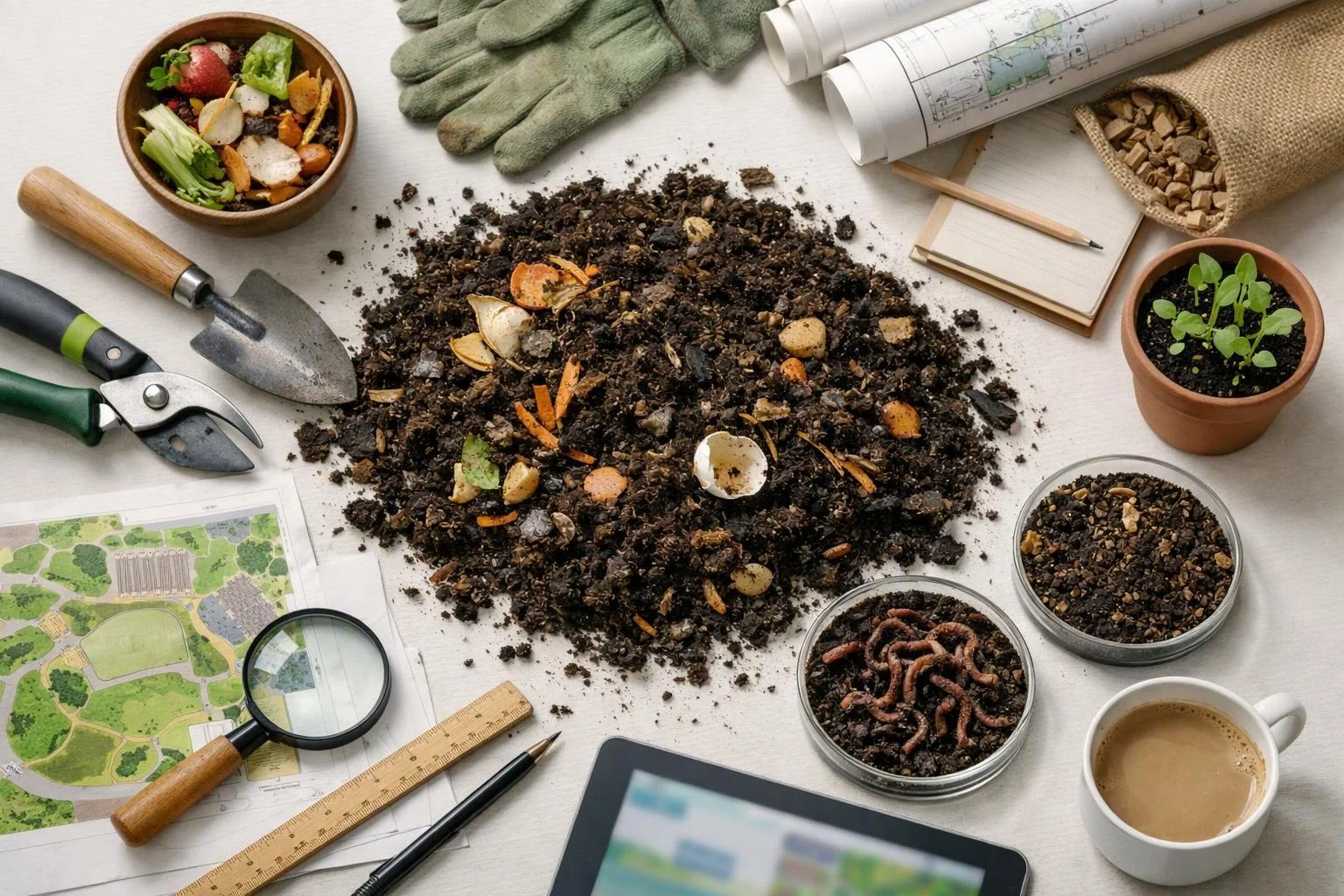
Compost forms as microorganisms break down leaves, plant scraps, and other organic matter. The finished material contains stable organic matter that can improve soil texture. It helps compacted soil hold air and helps sandy soil retain moisture.
Related glossary terms: Soil Amendment, Mulch, Topsoil.
Landscape professionals blend compost into planting soil before plants go in. The material should be mature, dark, and free of large undecomposed pieces. Soil amendment describes compost's role in changing soil conditions. Mulch stays on the surface and protects soil from drying and erosion.
Compost supports planting design by creating a better root zone. Plant selection still needs to match sunlight, drainage, and site conditions. Too much compost can change soil texture and drainage, so the amount and placement should fit the existing soil.
Expert Note
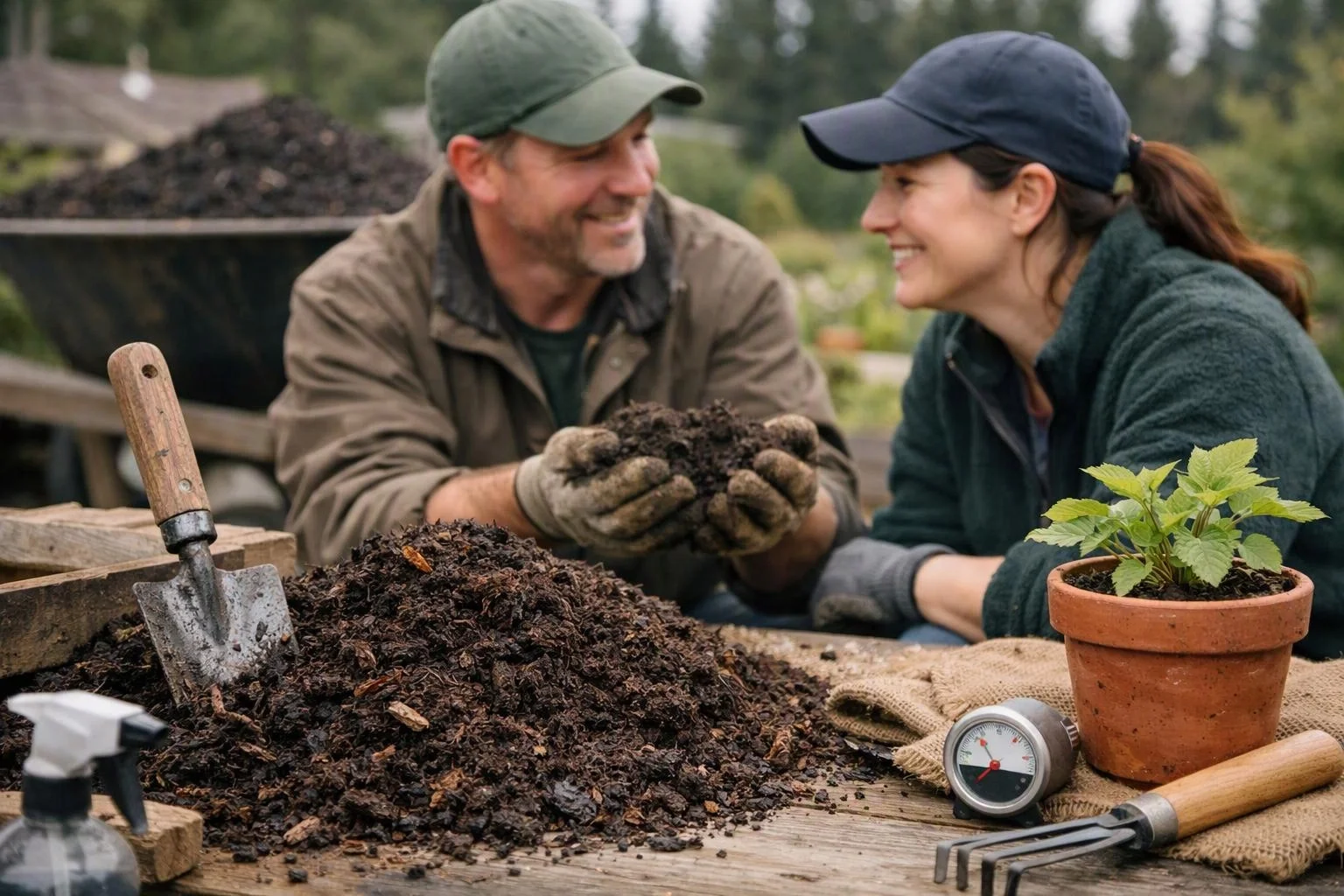
When we plan planting beds, we check the existing soil before adding compost. We look at drainage, texture, and the needs of the selected plants. Our team places compost where it can support root growth without creating a wet layer beneath the planting soil.
Compost in Practice: A Real-World Example
For a Bellevue planting bed with compacted soil, we can blend compost into the prepared root zone before installing shrubs and perennials. The planting plan still accounts for shade, drainage, and each plant's mature size.
Related Services
Related Terms
Soil Amendment
Soil Amendment is a material mixed into existing soil to change its structure, drainage, nutrient supply…
Mulch
Mulch is a protective layer placed over soil around plants. It may contain shredded bark, wood…
Topsoil
Topsoil is the upper layer of soil used to support plant roots and soil life. It…
Pollinator Garden
A pollinator garden is a planted area that provides nectar, pollen, shelter, and host plants for…
LandscaperBellevuewa.com
Have Questions About Compost?
Contact LandscaperBellevuewa.com for practical guidance on Compost and related landscape architect company work in Bellevue.