
What Is a Pollinator Garden?
A pollinator garden is a planted area that provides nectar, pollen, shelter, and host plants for bees, butterflies, hummingbirds, and other pollinating wildlife. The design combines flowering plants with suitable spacing, seasonal bloom periods, and site conditions. These gardens can fit into borders, containers, residential yards, or larger landscape plans.
Quick Facts About Pollinator Garden
Category
Ecological garden design
Used for
Supporting pollinating wildlife
Common confusion
Any flower bed is not automatically a pollinator garden
Also called
Wildlife Garden, Pollinator-friendly garden
Often discussed with
Garden Design, Native Plant Landscaping
Key Takeaways About Pollinator Garden
- Native and adapted plants often form the garden’s plant mix.
- Blooming at different times helps provide food across the seasons.
- A pollinator garden is not the same as a flower bed.
How Pollinator Garden Works
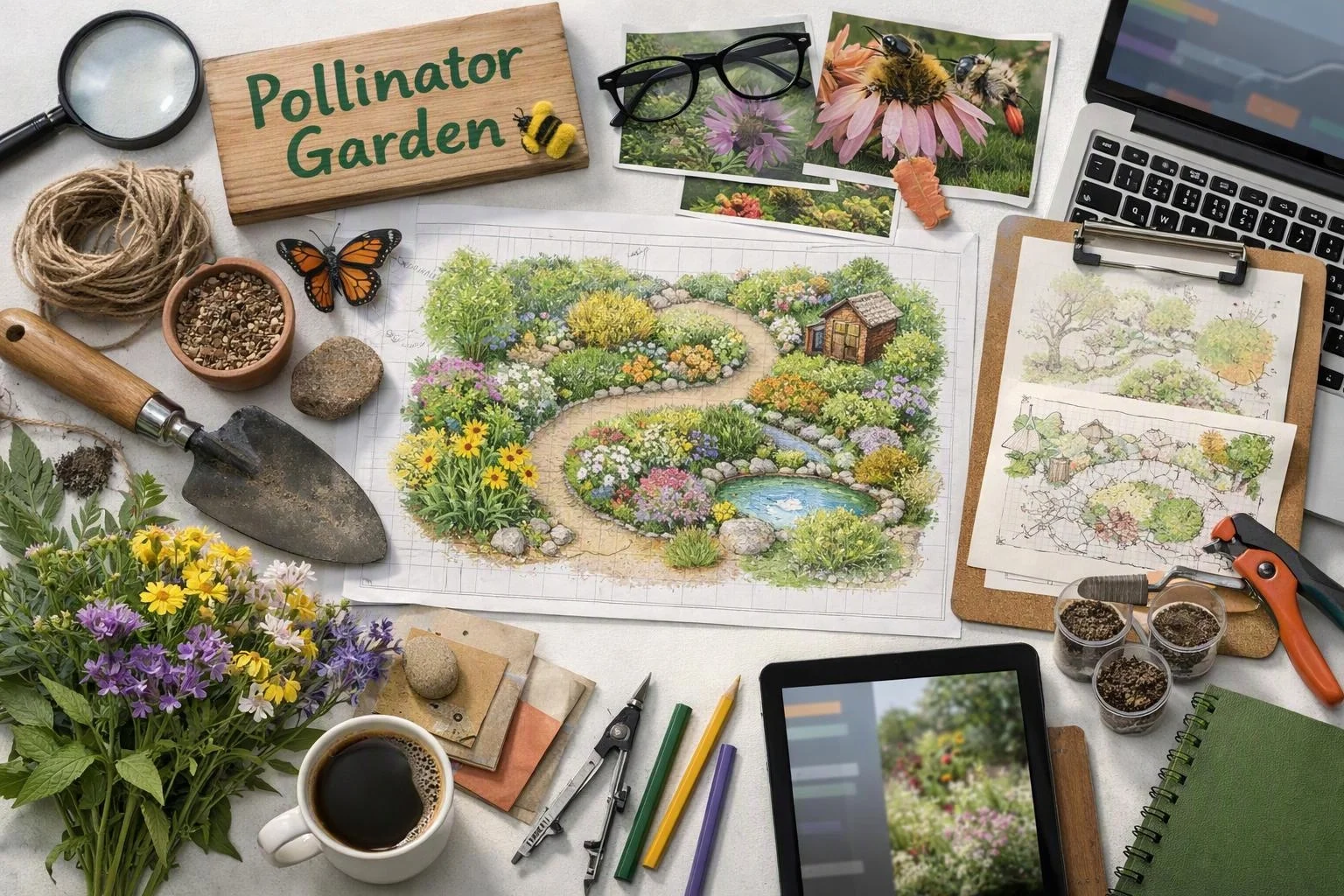
A pollinator garden works by placing plants with useful flowers, leaves, and shelter in a planned area. Bees and butterflies visit flowers for nectar and pollen. Some caterpillars feed on specific host plants, so plant choice supports more than adult insects.
Related glossary terms: Rain Garden, Soil Amendment, Mulch.
Garden designers review sunlight, soil, drainage, wind, and nearby water needs. They group plants by height and spread, then plan bloom periods across the growing season. A garden may include native plants, flowering shrubs, herbs, and ground covers. The finished planting should offer food and cover without blocking paths, views, or access areas.
Expert Note
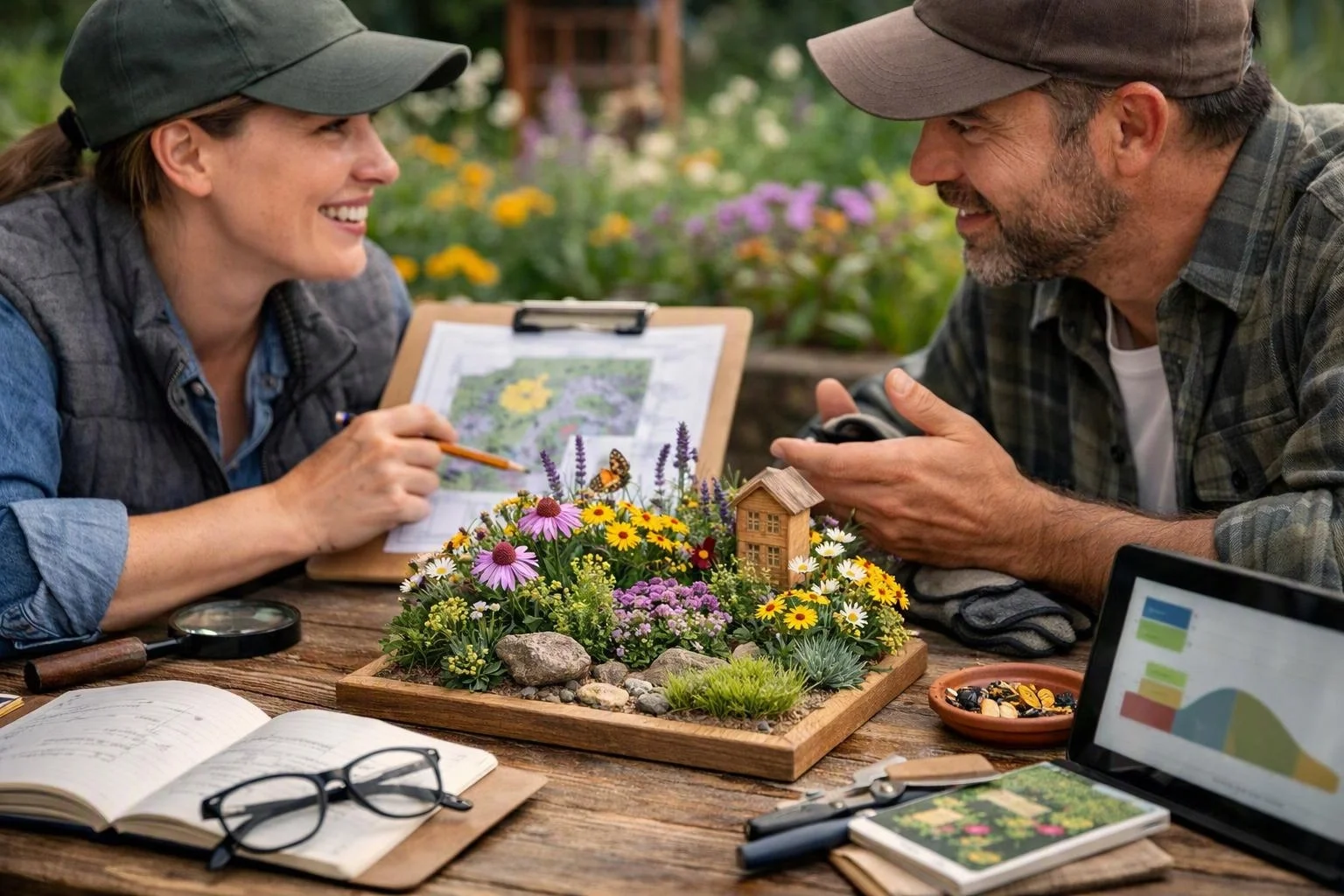
When we plan a pollinator garden, we review sunlight, drainage, soil conditions, and the space available for plant growth. We also check bloom timing and plant height so the design supports wildlife without crowding paths, windows, or other garden features.
Pollinator Garden in Practice: A Real-World Example
For a Bellevue backyard, a garden design might place flowering perennials near a sunny fence, with low ground covers along the path. Shrubs and host plants can add shelter while keeping the planting orderly and easy to view.
Related Services
Related Terms
Rain Garden
A rain garden is a planted area shaped to collect and soak up runoff from roofs…
Soil Amendment
Soil Amendment is a material mixed into existing soil to change its structure, drainage, nutrient supply…
Mulch
Mulch is a protective layer placed over soil around plants. It may contain shredded bark, wood…
LandscaperBellevuewa.com
Have Questions About Pollinator Garden?
Contact LandscaperBellevuewa.com for practical guidance on Pollinator Garden and related landscape architect company work in Bellevue.