
What Is a Soil Amendment?
Soil Amendment is a material mixed into existing soil to change its structure, drainage, nutrient supply, or ability to support plant roots. Common amendments include compost, aged organic matter, and mineral products. The right material depends on the soil problem, the plants selected, and the planting area's moisture conditions.
Quick Facts About Soil Amendment
Category
Planting soil treatment
Used for
Improving root-zone conditions
Common confusion
Amendment is not the same as mulch
Also called
Soil Conditioner, Soil Improver
Often discussed with
Planting Design
Key Takeaways About Soil Amendment
- Amendments change soil properties instead of forming a separate planting layer.
- The material must match the soil problem and selected plants.
- Compost and mulch serve different purposes.
How Soil Amendment Works
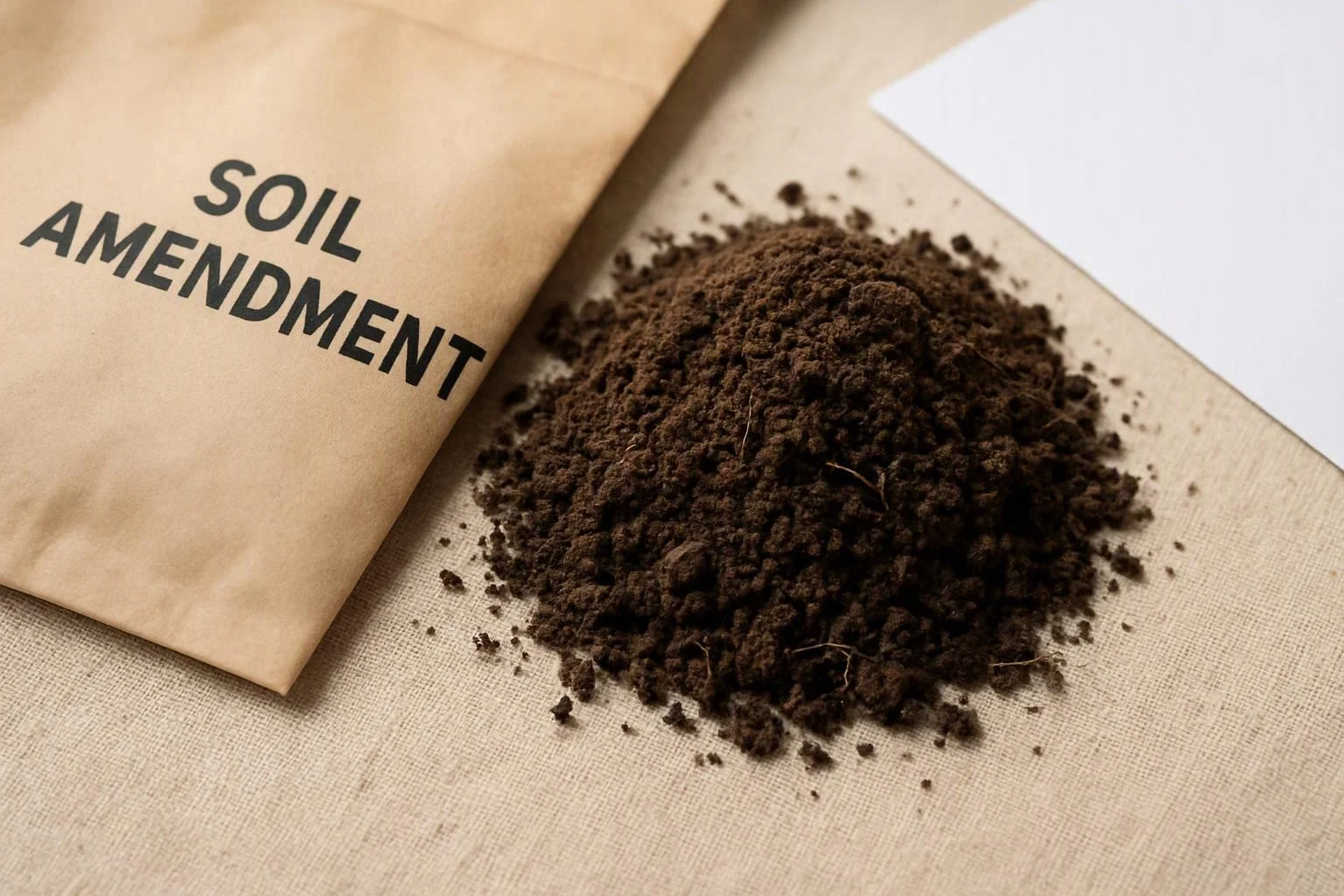
Soil Amendment works by mixing a selected material into the root zone. The material can loosen dense soil, add organic matter, improve moisture movement, or support nutrient storage. Results depend on the original soil and the depth of the planting area.
Related glossary terms: Compost, Mulch, Topsoil.
Planting design starts with checking how soil drains and how easily roots can enter it. Compost may support soil structure and organic matter. Mineral amendments can change drainage or texture in some conditions. The amendment must be blended through the root zone, not left as a thin layer on top.
Mulch sits on the soil surface and protects it from drying and erosion. A soil amendment becomes part of the growing medium. Plant selection, grading, irrigation, and drainage all affect the final soil plan.
Expert Note
When we develop a planting design, we check the existing soil's texture, drainage, and compaction before selecting an amendment. We match the material to the plants and site conditions, then show where it belongs in the root zone. We also coordinate soil changes with grading and drainage details.
Soil Amendment in Practice: A Real-World Example
For a Bellevue planting bed with dense soil, a planting design may specify organic matter mixed through the root zone before shrubs and perennials are installed. The design can also keep surface mulch separate so each material performs its intended job.
Related Terms
Compost
Compost is a dark, crumbly soil amendment made from decomposed plant and other organic materials. It…
Mulch
Mulch is a protective layer placed over soil around plants. It may contain shredded bark, wood…
Topsoil
Topsoil is the upper layer of soil used to support plant roots and soil life. It…
Soil Compaction
Soil Compaction is the pressing of soil particles close together, which reduces open spaces for air…
LandscaperBellevuewa.com
Have Questions About Soil Amendment?
Contact LandscaperBellevuewa.com for practical guidance on Soil Amendment and related landscape architect company work in Bellevue.