Landscape Lighting Design: Layers, Fixtures, and Planning
Landscape lighting design combines ambient, path, accent, and task lighting to guide movement, highlight features, reduce glare, and support outdoor use. At LandscaperBellevuewa.com, we plan fixture locations, wiring routes, controls, and service access as one system. Written by Adam Gorski.
Written by Adam Gorski · 29 years of local experience
Request an EstimateWhat Is Landscape Lighting Design?
Landscape lighting design is a plan that places outdoor fixtures to support safety, visibility, comfort, and visual focus.
Outdoor lighting should follow the property layout and the way people use each space. A clear lighting plan considers walkways, entries, patios, planting beds, trees, walls, decks, and water features.
We connect fixture placement with wiring, controls, and access for future maintenance. Our team can also adjust a plan around existing plants and hardscape.
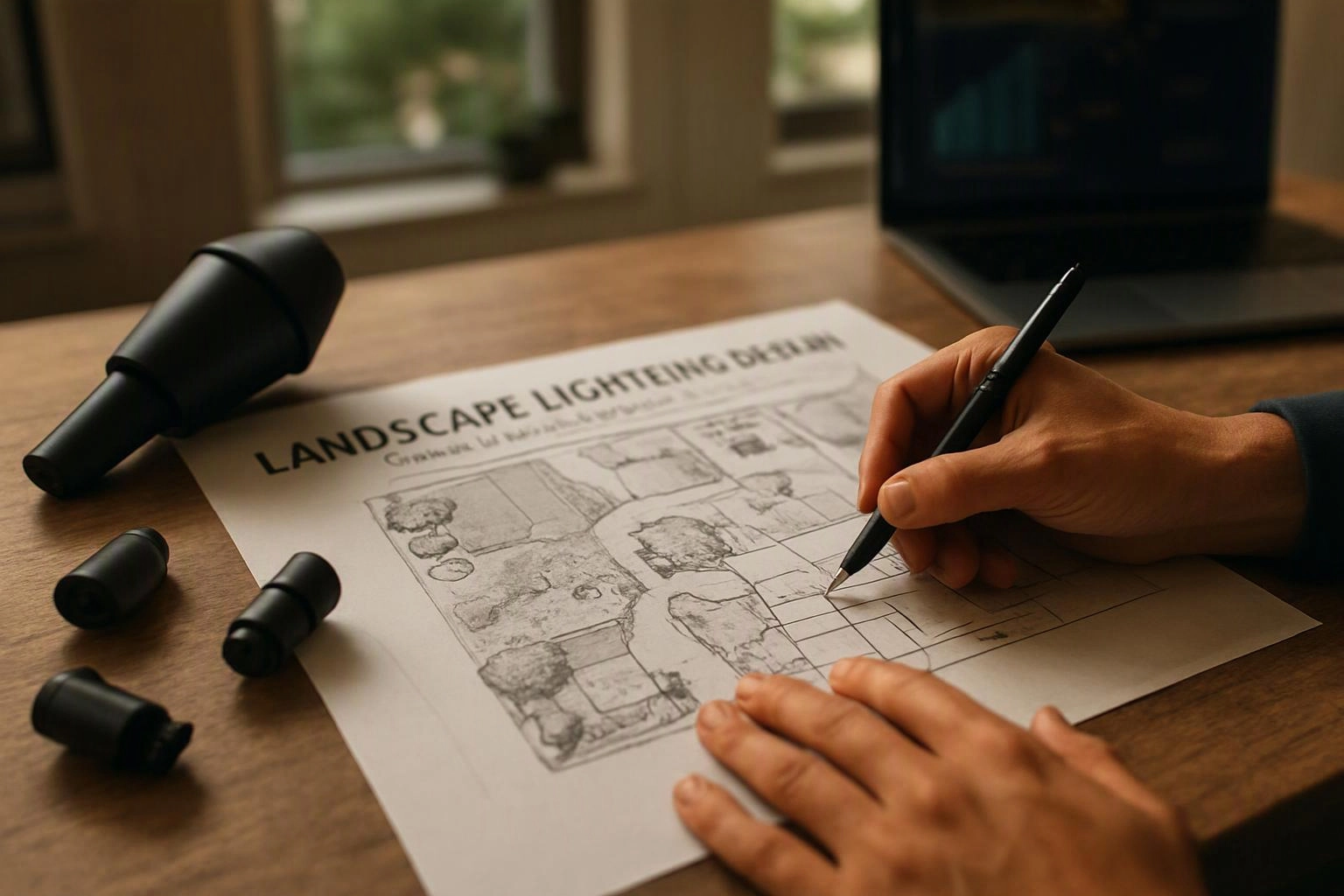
How Do Lighting Layers Work Together?
Layered lighting combines general light, focused light, and guidance light so one fixture doesn’t serve every purpose.
Ambient lighting gives an area a comfortable base level of light. It can support movement across patios, entries, and gathering spaces.
Path lighting guides people along walkways and helps define edges. Task lighting focuses on a specific activity or location, such as an entry, stair, or outdoor work area.
Accent lighting draws attention to trees, walls, planting textures, or architectural features. We balance these layers so bright fixtures don’t overpower softer areas.
Which Landscape Lighting Fixtures Fit Each Purpose?
Landscape lighting fixtures suit different tasks, including pathway guidance, feature highlighting, wall washing, step visibility, and water illumination.
Fixture choice depends on the subject, mounting position, beam spread, and desired level of light. Our team matches each fixture to its setting and checks how it works with nearby surfaces.
| Fixture | Common purpose | Planning point |
|---|---|---|
| Path lights | Walkway and planting-bed guidance | Place them to light the route without creating glare. |
| Spotlights | Focused accent lighting | Aim the beam at trees, walls, or architectural details. |
| Floodlights | Broad area lighting | Control the beam spread and light spill carefully. |
| Well lights | Low-profile uplighting | Keep placement clear of foot traffic and routine maintenance. |
| Underwater lights | Water feature lighting | Use suitable equipment and plan safe wiring routes. |
| Step lights | Stair and grade-change visibility | Position light to reveal each tread without shining into eyes. |
| Wall lights | Entry and wall illumination | Match mounting height and light output to the wall. |
| String lights | Decorative patio and deck lighting | Plan support points, control access, and visual balance. |
How Do You Plan a Landscape Lighting System?
Landscape lighting planning starts with the site, then connects lighting goals to fixture locations, wiring, controls, and maintenance access.
We review the full low-voltage lighting system before installation begins. Our quote explains the planned fixtures, wiring work, controls, and other design choices that affect the project cost.
What Should We Check Before Installation?
Pre-installation checks should cover walkways, stairs, driveways, trees, planting beds, drainage, the existing electrical system, and property boundaries.
We look for roots, buried services, water flow, and areas where fixtures could be damaged. We also check sightlines from windows, entries, patios, and nearby properties.
Electrical connections and low-voltage wiring should follow applicable safety and code requirements. Our team handles the installation review and recommends licensed electrical support when existing electrical work falls outside the lighting plan.
How Can Outdoor Lighting Reduce Glare?
Glare reduction works when fixtures are shielded, aimed carefully, and positioned so light reaches the subject without shining into eyes or windows.
We use fixture shielding and careful fixture angles to control direct brightness. Mounting height also affects how easily people see the lamp and how far light travels.
Beam spread should match the subject. A narrow beam can highlight a tree or feature, while a wider beam can support an open area.
We also consider color temperature, nearby reflective surfaces, and light trespass. These choices help limit unwanted light spill across windows, paths, and neighboring spaces.
How Do We Balance Safety and Visual Appeal?
Landscape lighting balances safety and visual appeal by making travel areas readable while preserving the property’s natural focal points.
We give pathway safety, step lighting, and entry lighting enough attention for clear movement. We then use shadow control to add depth without making the space look flat.
Accent lighting can bring out architectural features and plant textures. Visual balance comes from spreading attention across the property instead of placing every bright fixture in one area.
Our team reviews the design from normal walking and viewing positions. This helps us catch harsh shadows, blocked views, and distracting hot spots before system testing.
What Should a Landscape Lighting Plan Include?
A complete lighting plan should show how fixtures, wiring, controls, and maintenance needs work together.
We use these details to connect the design with landscape lighting installation. A clear plan also makes later landscape lighting repair easier because each zone has a documented purpose.
When Should Landscape Lighting Be Repaired or Adjusted?
Landscape lighting repair is needed when fixtures stop working, wiring appears exposed, beams shift, or plants block the intended light.
Dark fixtures and flickering lights can point to connection, lamp, control, or transformer faults. Water intrusion can damage fixtures and create recurring performance problems.
Misaligned fixtures often need adjustment after soil movement, weather, gardening, or accidental contact. Overgrown plants may also block beams or create unwanted shadows.
We inspect the affected zone, check the low-voltage system, and test the controls. Exposed wiring or damaged electrical parts should be handled by our crew or another licensed electrical professional.
How We Connect Design With Installation
Landscape Lighting Installation connects the approved design with fixture placement, wiring, controls, and system testing.
Our team checks the fixture layout against the property before placing equipment. We route the low-voltage system with attention to surfaces, planting areas, drainage, and service access.
We connect lighting controls to the planned zones and adjust fixture angles during testing. The final review checks pathway lighting, accent lighting, ambient light, and task light from the intended viewpoints.
For planning support, our Landscape Lighting Designer service connects design decisions with installation needs.
What Should You Ask Before Approving a Lighting Design?
Lighting design questions help you confirm that the plan supports safe movement, comfortable views, and future maintenance.
We answer these questions during design review and explain how each choice affects installation. You can request a quote through our contact page with the areas and features you want to illuminate.