Landscape Lighting Design vs. Installation
Landscape lighting design creates the lighting plan, while installation places, wires, aims, and tests the system. LandscaperBellevuewa.com can guide the design, installation, and repair needs separately or together.
Written by Adam Gorski · 29 years of local experience
Request an EstimateLandscape Lighting Design vs. Installation at a Glance
Landscape lighting design plans the system, while landscape lighting installation builds and tests it. The right choice depends on project scope and site readiness.
Use the comparison below to decide whether you need planning, physical work, or both. Our team can also review an existing system when repair needs affect the project.
| Factor | Landscape Lighting Design | Landscape Lighting Installation |
|---|---|---|
| Project cost drivers | Planning detail, fixture choices, zones, and control needs. | Fixtures, cable routing, trenching, access, controls, and testing. |
| Project timeline | Depends on site information, design detail, and requested revisions. | Depends on site readiness, cable routes, equipment, and installation conditions. |
| Maintenance | Creates access and replacement notes for future upkeep. | Includes system testing and practical setup for ongoing maintenance. |
| Best-fit project | New layouts, major upgrades, or projects with unclear coverage. | Approved plans that need fixtures, wiring, aiming, and commissioning. |
Design is the better starting point when you’re unsure about light placement or system capacity. Installation is the better fit when the plan, equipment, and access are already settled.
What Does Landscape Lighting Design Include?
Landscape lighting design is a planning service that decides where lights, wiring, controls, and power should go.
We begin with your lighting goals and property layout. We then plan fixture placement, beam spread, light color, and lighting zones for paths, trees, walls, steps, or outdoor living areas.
Our team also reviews transformer capacity, wiring paths, cable routing, and maintenance access. The result is a low-voltage lighting plan that guides equipment selection and installation work.
Our Landscape Lighting Designer service can help when you need a complete layout before selecting installation work.
Why Choose Landscape Lighting Design First?
Landscape lighting design helps align the lighting effect, equipment choices, and installation plan before physical work begins.
A clear plan also gives our team a shared reference during installation. It helps prevent uneven coverage, unwanted glare, and difficult cable routes.
Design-first planning is especially useful when several lighting zones must work together. It also supports a cleaner quote because the requested scope is easier to define.
What Does Landscape Lighting Installation Include?
Landscape lighting installation is the physical work of placing fixtures, routing approved wiring, connecting controls, and testing the system.
We place lighting fixtures according to the plan and route low-voltage cable through suitable paths. Our crew protects cable from likely damage and connects the system to the transformer and lighting controls.
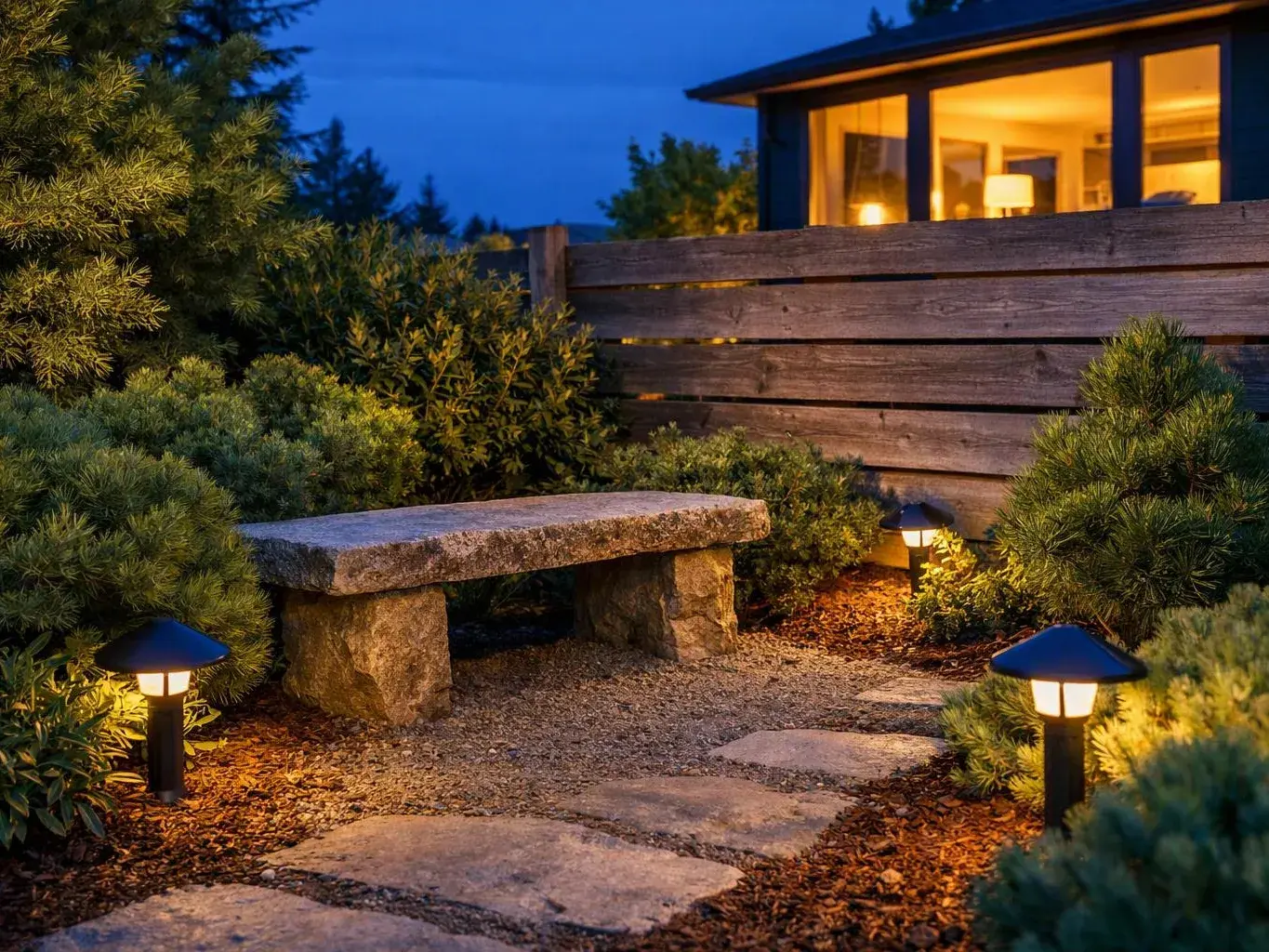
We complete fixture aiming so path lighting, accent lighting, tree lighting, wall washing, and security lighting serve their intended purpose. System testing checks connections, light levels, controls, and nighttime performance.
Electrical safety remains central to the work. We review cable protection, transformer connections, and site conditions, and we advise licensed service when regulated electrical work or inspection requirements apply.
Why Choose Landscape Lighting Installation?
Landscape lighting installation suits projects that have a clear plan and need the lighting system built, aimed, and checked.
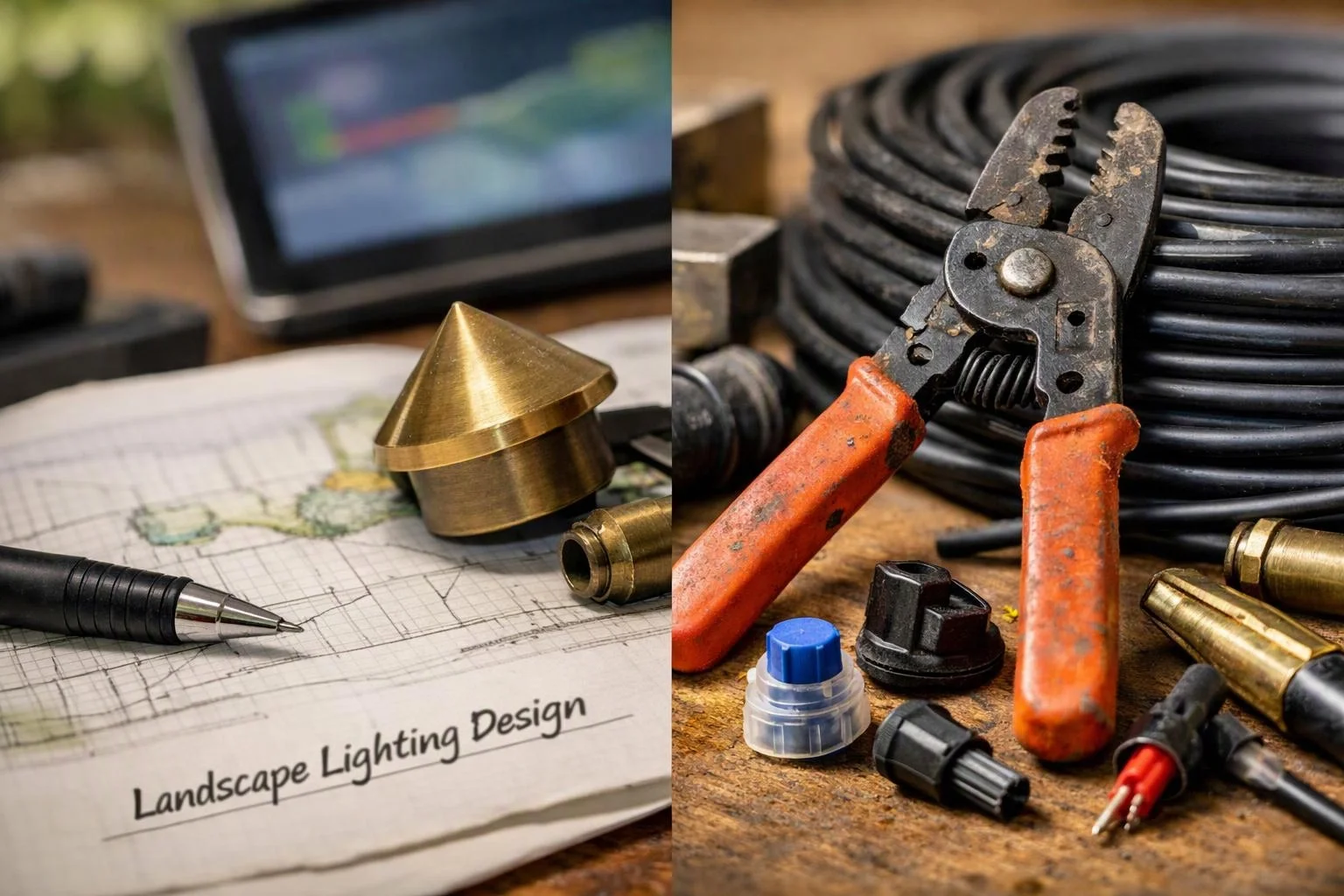
Our team turns the approved layout into working outdoor lighting. We also adjust fixture placement when actual site conditions differ from the original plan.
Installation works best when access conditions and equipment choices are known. A design review may still be useful when the existing plan leaves important details open.
Can You Hire a Designer Without Installation?
Yes, landscape lighting design can be hired separately when you need a plan before deciding who will install the system.
A standalone lighting plan can show fixture locations, lighting zones, beam spread, wiring paths, transformer needs, and lighting controls. We can prepare installation-ready documents that make the intended scope easier to understand.
A design-only service may include a fixture schedule and notes for light color, placement, aiming, and cable routing. The property owner remains responsible for choosing how and when the installation proceeds unless design and installation coordination is included.
We can also coordinate design and installation when you want one team to carry the plan through physical completion. This approach can reduce confusion when site conditions require changes during the work.
What Should You Include When Requesting a Lighting Quote?
A useful landscape lighting quote request identifies the property, lighting goals, target areas, existing equipment, and requested scope.
Clear information helps our team separate design work, installation work, and repair needs. It also helps us identify access concerns before preparing the quote.
We use this information to define what the quote includes. Our team can then explain the equipment, labor, testing, and repair items tied to the requested scope.
What Changes the Cost of Design and Installation?
Landscape lighting cost changes with the design detail, equipment, wiring distance, site conditions, controls, and repair work included.
Property size affects the amount of planning and cable routing involved. The number of lighting zones also changes transformer needs, control choices, fixture spacing, and system testing.
Fixture type, beam angle, light color, and material affect equipment selection. Wiring distance and trenching conditions affect labor, cable protection, and access requirements.
Transformer requirements and control systems can add planning complexity. Site access can also change how our crew protects planting, hardscape, and existing surfaces.
Repair needs may include fixture replacement, wiring inspection, transformer testing, or fault diagnosis. We explain these items in the quote so you can see which work belongs to design, installation, or repair.
How Do Design, Installation, and Repair Work Together?
Landscape lighting repair checks the existing system first, then restores or replaces the parts that prevent safe, even operation.
We begin with a lighting inspection and review existing wiring, fixtures, transformer, connectors, timer, and photocell. Fault diagnosis helps us separate a failed part from a broader wiring or capacity issue.
Our team may recommend fixture replacement when a light no longer performs as intended. We may also recommend system expansion when the existing transformer, wiring, and lighting zones can support added coverage.
Nighttime testing shows whether the repaired or expanded system provides the right light placement, beam spread, and glare control. Regular maintenance can then keep fixtures aimed, connections protected, and controls working.
Adam Gorski provides the author attribution for this guide. We prepare each quote around the requested service scope and the conditions found on site.
Questions About Lighting Design and Installation
Does landscape lighting design include choosing the fixtures?
Yes, landscape lighting design can include choosing fixtures that match the beam spread, light color, placement, and intended lighting effect.
Can existing landscape lights be repaired during a new lighting project?
Yes, existing landscape lights can be repaired during a new project when our inspection identifies repairable fixtures, wiring, transformer, or control issues.
What should a landscape lighting plan show?
A landscape lighting plan should show fixture placement, lighting zones, beam spread, light color, wiring paths, transformer needs, controls, and maintenance access.
Do landscape lighting systems need maintenance after installation?
Yes, landscape lighting systems need maintenance to keep fixtures aimed, cable connections protected, controls working, and lighting coverage even.
When you’re ready to define the work, send our team the property details, photos, goals, and requested scope. We’ll use that information to prepare an accurate quote for design, installation, repair, or a coordinated project.
Related Resources
A Checklist for Troubleshooting Landscape Lights That Keep Failing
Everything About ItLandscape Lighting Design: Layers, Fixtures, and Planning
Everything About ItFront Yard Landscape Design: Entry, Planting, and Walkways
Brand vs BrandLandscape lighting designer Companies Worth Comparing in Bellevue (2026)