Skip to content

Rain Garden Design in Bothell

Native sedges should suit the site's soil and drainage needs in Bothell. We plan plant groupings that handle changing moisture without losing sight of the home's wider landscape.

5 · 36 Reviews29 Years in BusinessUpfront, Transparent PricingServing 123 Communities

Quick Summary: rain garden planning in Bothell, Washington

Rain Garden Design in Bothell is provided by LandscaperBellevuewa.com for homeowners across Bellevue, Eastside King County, and surrounding King County communities. The service covers plant selection, site planning, drainage review, and a design-to-build process led by a certified landscape designer.

  • What we do: LandscaperBellevuewa.com provides Rain Garden Design for Bothell, Washington properties through landscape planning and construction experience.
  • What is included: Plant selection, soil and slope review, drainage planning, planting layouts, and connection to patios, walkways, lighting, and other landscape features.
  • What you get: The finished plan identifies suitable plants, defines the rain garden layout, and sets the work scope for installation.

Which plants are suitable for changing moisture levels in a rain garden?

Native sedges suit rain gardens when the planting area has changing moisture levels. Wetland plants can occupy wetter sections, while drought tolerant plants fit areas that dry between rain events. Deep roots also help plants stay established as moisture shifts. A site review should guide the final mix, because soil, slope, drainage, and sun exposure affect plant fit.

Our Track Record

Years in Business
29
Average Rating
5
Customer Reviews
36

Rain Garden Design in Bothell for Changing Moisture

Rain garden design suits homeowners who want a planted area that works with runoff and varied soil moisture. The job centers on plant fit, drainage patterns, soil conditions, and the garden's place within the wider property.

The key decision is whether the proposed area can support the intended plants without harming nearby landscape features. We review the site and then connect the planting plan with walkways, patios, retaining walls, lawn areas, or other work when those elements form part of the project.

This page focuses on plant selection for changing moisture. It gives special attention to sedges, wetland plants, drought tolerant plants, and deep roots, so you can discuss a suitable planting direction before requesting a quote.

  • Check soil texture, drainage, slope, and sun exposure before selecting plants.
  • Separate wetter planting zones from areas that dry between rain events.
  • Consider how the garden connects with paths, patios, lawns, and retaining walls.
  • Ask for a design review when plant choice and site layout need to be decided together.
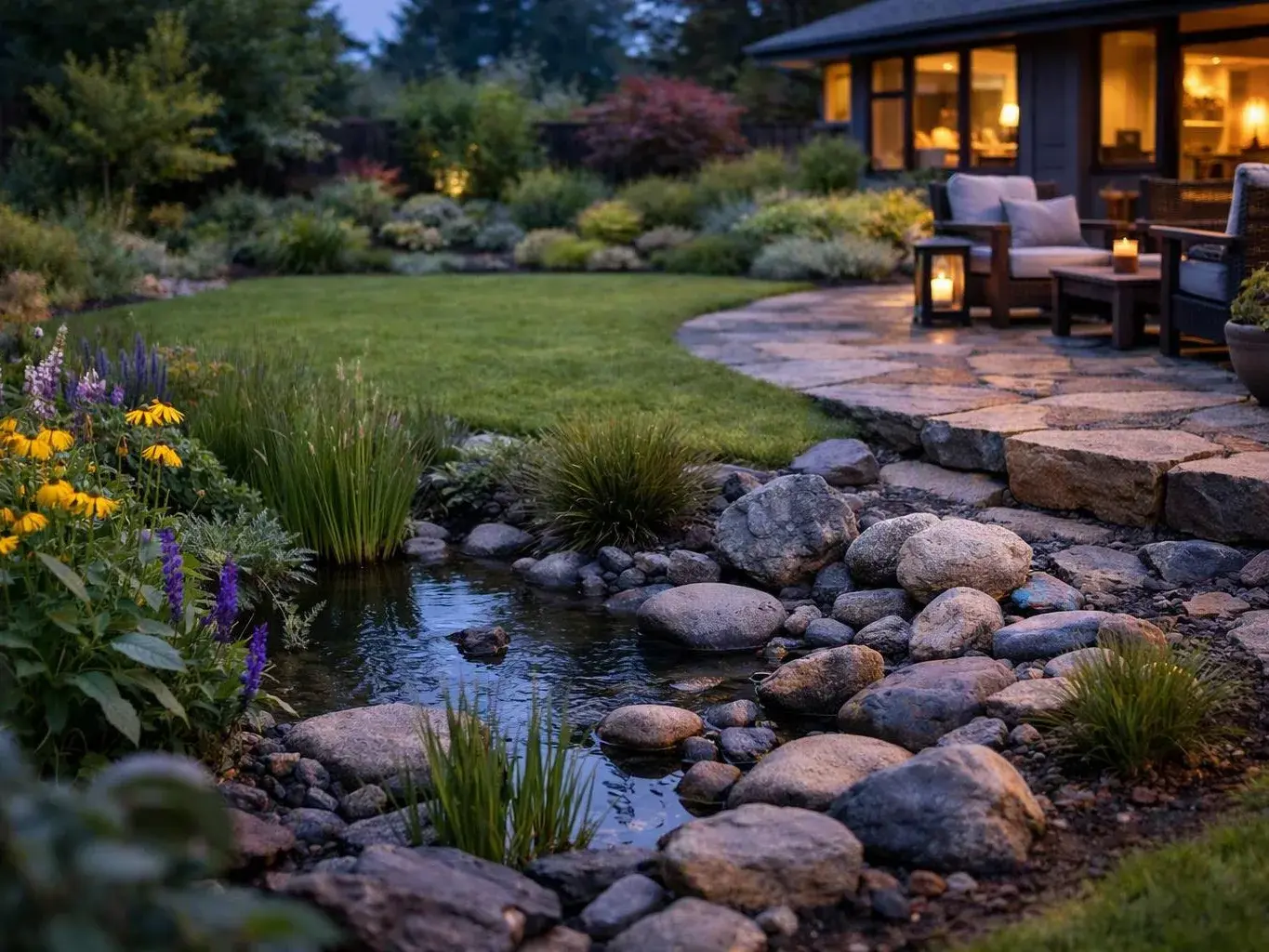
A landscaped backyard garden features a stone patio, glowing lanterns, a small pond, and lush flowers at dusk

Service Overview

Rain garden design is a planting plan that directs runoff into a planted area and matches plants to changing soil moisture.

  • Rain garden design focuses on plant choice and water movement, while general landscape design may cover the whole property, including patios, walls, lighting, and lawn areas.
  • We provide rain garden design in Bothell and other King County communities as part of our wider design-to-build service.

What changing-moisture planting can improve

A plant plan suited to changing moisture helps the garden fit the site's actual conditions.

Planting zones make it easier to choose species for wetter and drier parts of the garden.

Deep-rooted plants can support a more stable planting structure as soil moisture shifts.

A connected landscape plan helps the rain garden sit naturally beside paths, patios, lawns, and walls.

Regular maintenance helps planted areas stay clear, healthy, and suited to their intended use.

What the rain garden planting plan includes

LandscaperBellevuewa.com provides comprehensive Rain Garden Design in Bothell. Here's what you get:

  • We review the property conditions that shape plant selection, including soil, slopes, drainage, and the relationship to the home.
  • We develop a planting layout for areas with changing moisture levels.
  • We consider wetland plants for wetter parts of the garden and drought tolerant plants for sections that dry out.
  • We connect the rain garden concept with related landscape features such as walkways, patios, lawn areas, and retaining walls.
  • We guide the project from the design stage through construction and maintenance.
Process

How the rain garden planting work moves forward

1

Review the property conditions

We inspect soil, slopes, drainage, sun exposure, and the garden's relationship to the home and nearby landscape features.

2

Divide the moisture zones

We identify wetter and drier sections so plant groups match the conditions across the proposed garden.

3

Choose suitable plant groups

We compare native sedges, wetland plants, drought tolerant plants, and deep-rooted options for the planting areas.

4

Set the landscape connection

We place the rain garden within the wider plan, including any related lawn, walkway, patio, retaining wall, or lighting work.

5

Explain the design and scope

We review the plan with you, discuss construction and maintenance, and prepare the next step toward a quote.

Why use a landscape architect-LED planting plan

Plant fit before installation

Plant choice should follow the site's moisture pattern, soil, slope, and sun. A rain garden is the wrong job when the main need is a patio, retaining wall, or another hardscape feature without a planting concern.

Design joined to construction

Our clear concept-to-completion process links the planting plan with related landscape construction. That helps the layout account for access, materials, and the way the garden meets the home.

Guidance beyond the planting list

We explain how the selected plants fit the wider property and guide clients through project completion and maintenance. The goal is a plan you can understand before construction begins.

Plant groups for changing moisture

This comparison shows how each plant group fits a different part of a rain garden.

Plant groupBest fitPlanning point
Native sedgesAreas with changing moisture when site conditions support themReview soil, drainage, sun, and slope before placement
Wetland plantsWetter sections of the gardenConfirm the area can support higher soil moisture
Drought tolerant plantsEdges or sections that dry between rain eventsMatch plant choice to sun and soil conditions
Deep-rooted plantsAreas where root depth supports plant establishmentConsider soil depth and the wider planting layout

Our Standard

  • Collaborative Process
  • Site-Specific Planning
  • Documented Communication
  • Ecological Maintenance Planning

Customer Reviews for Rain Garden Design in Bothell

5(36 Customer Reviews)View our Google Business Profile
Kelly Hawkins
Kelly Hawkins
9 months ago
Verified on Google
Adam has a great eye for design and always offers suggestions that improve our original vision. He is professional and detail oriented and does great work. We have been happy with everything he has asked us to do and have had him out for several projects. He is also a really nice person and great to work with!
Garrett Richardson
Garrett Richardson
7 months ago
Verified on Google
Adam and his team did an amazing job designing our garden in NorthBend! He was very knowledgeable and helpful in finding the right plants to thrive in our particular environment. His team was courteous, friendly, and considerate. From the beginning we didn’t know exactly what we wanted, but Adam helped us find the perfect plants to complement the space. We are very happy with the results and his expertise. Thank you again, Adam!
Lisa K.
Lisa K.
4 months ago
Verified on Google
We recently had Adam help us with two big yard projects. For our primary home we had a goal of making our property lower maintenance so Adam designed a beautiful plan to bring in character with large rocks and appropriate ground cover and plants to replace all of the grass that we took out in the front yard and he and his team replaced our backyard grass with beautiful artificial turf that looks like perfectly cut grass. We are thrilled with the results and can’t say enough about how great Adam was to work with. He was very organized, had great communication and check ins and did exactly what he said he would do, and his team of workers were so respectful of property and easy to work with. After such a great experience we had him also help re design and improve our Suncadia yard to make it fit in more with the mountain landscape. All Projects were finished ahead of deadlines for some key entertaining events we had planned!

Questions about rain garden planting

Which plants handle changing moisture in a rain garden?

Native sedges suit planting areas with changing moisture when the site conditions support them. Wetland plants fit wetter sections, while drought tolerant plants suit areas that dry between rain events. Deep roots can help selected plants stay established as moisture shifts. The final mix should follow soil, drainage, sun, and slope findings from the property review.

What part of the property sets the planting scope?

The planting area, soil, slope, drainage path, sun exposure, and nearby features set the scope. A narrow area beside a walkway needs a different layout from an open section near a lawn. Access also matters during construction. We use these findings to define plant zones and decide whether related landscape work belongs in the same design.

How does a rain garden differ from general landscape design?

Rain garden design focuses on planting and site conditions linked to changing moisture. General landscape design can cover the whole property, including patios, retaining walls, walkways, lighting, lawn installation, and water features. Our design-to-build process can connect these services when the property needs a wider plan.

When should I request a planting assessment?

A planting assessment makes sense when runoff, wet soil, dry edges, or poor plant fit affects the proposed garden. Early review helps separate plant concerns from hardscape or drainage construction needs. Bring your main goals and any known site information. We can then discuss the design scope and the quote process.

Why do plant groups need different moisture zones?

Plant groups need different moisture zones because wetland plants and drought tolerant plants handle soil water in different ways. A single planting mix may not suit every part of the garden. We place plants according to the site's moisture pattern, then consider root depth, sun, soil, and the garden's connection to nearby landscape features.

What changes the quote for a rain garden plan?

The quote changes with site review needs, planting area, soil and drainage conditions, access, and related landscape construction. A plan that connects with a patio, walkway, retaining wall, or lawn may require a wider design scope. We discuss those factors first, then provide a quote based on the work you want included.

Who provides rain garden design in Bothell?

LandscaperBellevuewa.com provides rain garden design in Bothell through a landscape architect-led design-to-build service. We review property conditions, select plants for changing moisture, and connect the plan with related landscape work. Our coverage includes Bothell and other King County communities listed in our service area.
Contact

Request a Rain Garden Design Quote in Bothell

Tell us about your Bothell property and the moisture changes you want the planting plan to address. After you reach out, we'll discuss the site, the plant scope, and the information needed for a quote.

ZIP Codes We Serve in Bothell, Washington

9801198041
(425) 587-8011