
What Is a Rain Garden?
A rain garden is a planted area shaped to collect and soak up runoff from roofs, driveways, and other hard surfaces. Layers of soil and plant roots slow water, filter some pollutants, and help water enter the ground. Rain gardens are usually shallow, bowl-shaped features placed where runoff naturally flows. For more detail, see How to Choose a Landscape Architect for Your Project in Bellevue, Washington.
Quick Facts About Rain Garden
Category
Stormwater landscape feature
Used for
Runoff collection and soil infiltration
Common confusion
Not a permanent pond
Also called
Bioretention Garden, Stormwater garden
Often discussed with
Rain Garden Design
Key Takeaways About Rain Garden
- A shallow basin sets a rain garden apart from a standard planting bed.
- Good placement directs runoff without creating standing water near structures.
- A rain garden is not the same as a pond or drainage ditch.
How Rain Garden Works
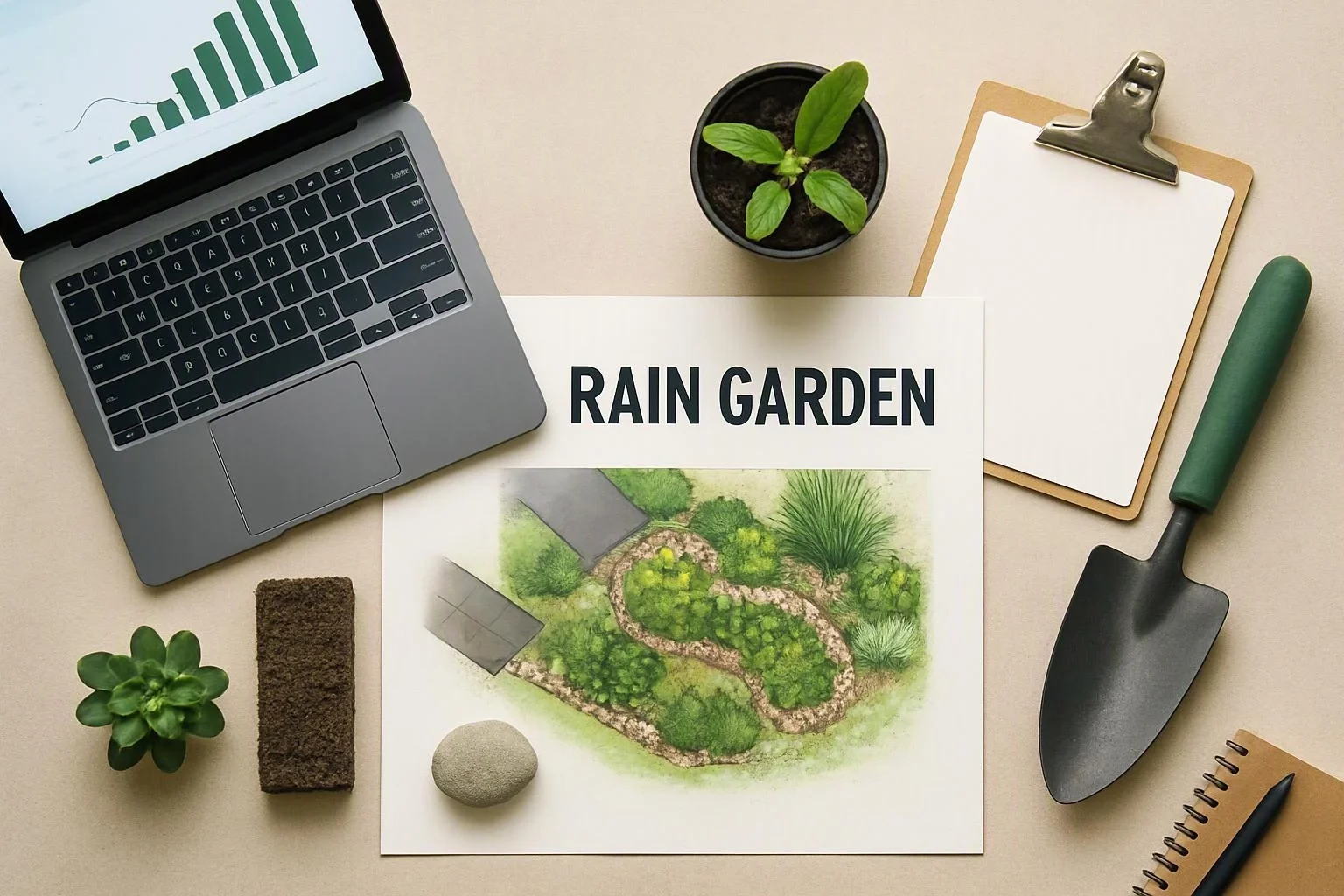
Rain garden design starts with the path that runoff takes across a property. A shallow basin receives water from a downspout, driveway, or paved walkway. The basin holds water briefly, then lets it move through amended soil.
Related glossary terms: Bioswale, Underdrain, Stormwater Inlet.
Plants support this process with deep roots that open small paths through the soil. The soil slows the flow and can trap sediment before water moves deeper. A properly placed bioswale may guide runoff toward the garden, while an underdrain can help move water away when site conditions call for it.
Rain gardens need plants that tolerate both wet and dry periods. Designers also check nearby foundations, slopes, soil texture, and existing drainage before choosing the basin location.
Expert Note
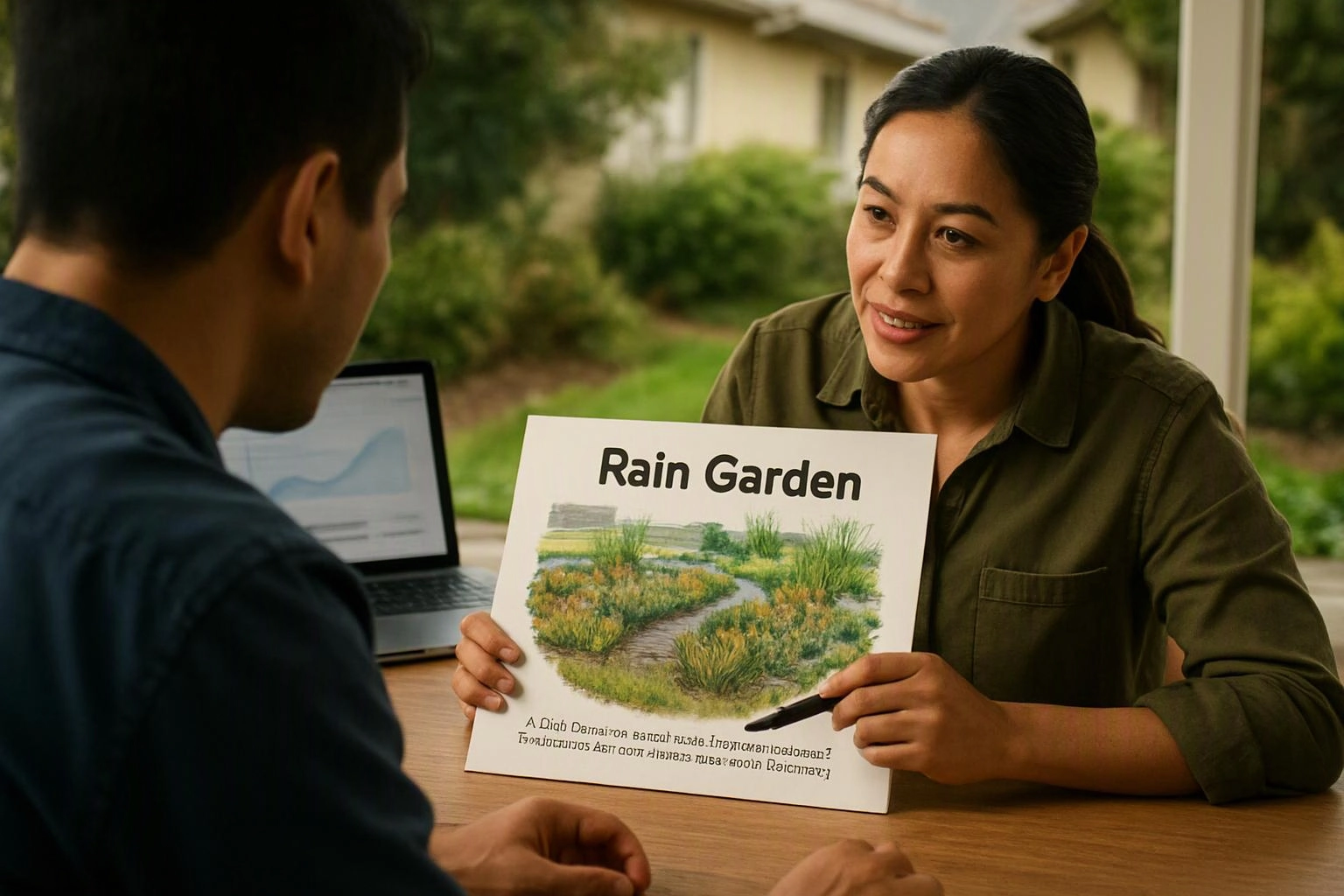
When we design a rain garden, we trace runoff from its source and check the receiving soil. We also review nearby foundations, slopes, and drainage paths. Our team selects plants that can handle changing moisture, then shapes the basin so water spreads without eroding the soil.
Rain Garden in Practice: A Real-World Example
A Bellevue homeowner could direct a roof downspout toward a shallow planted basin near the yard edge. The basin would hold stormwater briefly, while amended soil and suitable plants help it soak into the ground.
Related Services
Related Terms
Bioswale
Bioswale is a planted, shallow drainage channel that slows and filters stormwater as it moves across…
Underdrain
Underdrain is a buried drainage system that collects water in soil and carries it away through…
Stormwater Inlet
A stormwater inlet is a ground-level opening that collects rainwater runoff and directs it into a…
Soil Amendment
Soil Amendment is a material mixed into existing soil to change its structure, drainage, nutrient supply…
LandscaperBellevuewa.com
Have Questions About Rain Garden?
Contact LandscaperBellevuewa.com for practical guidance on Rain Garden and related landscape architect company work in Bellevue.