
What Is a Bioswale?
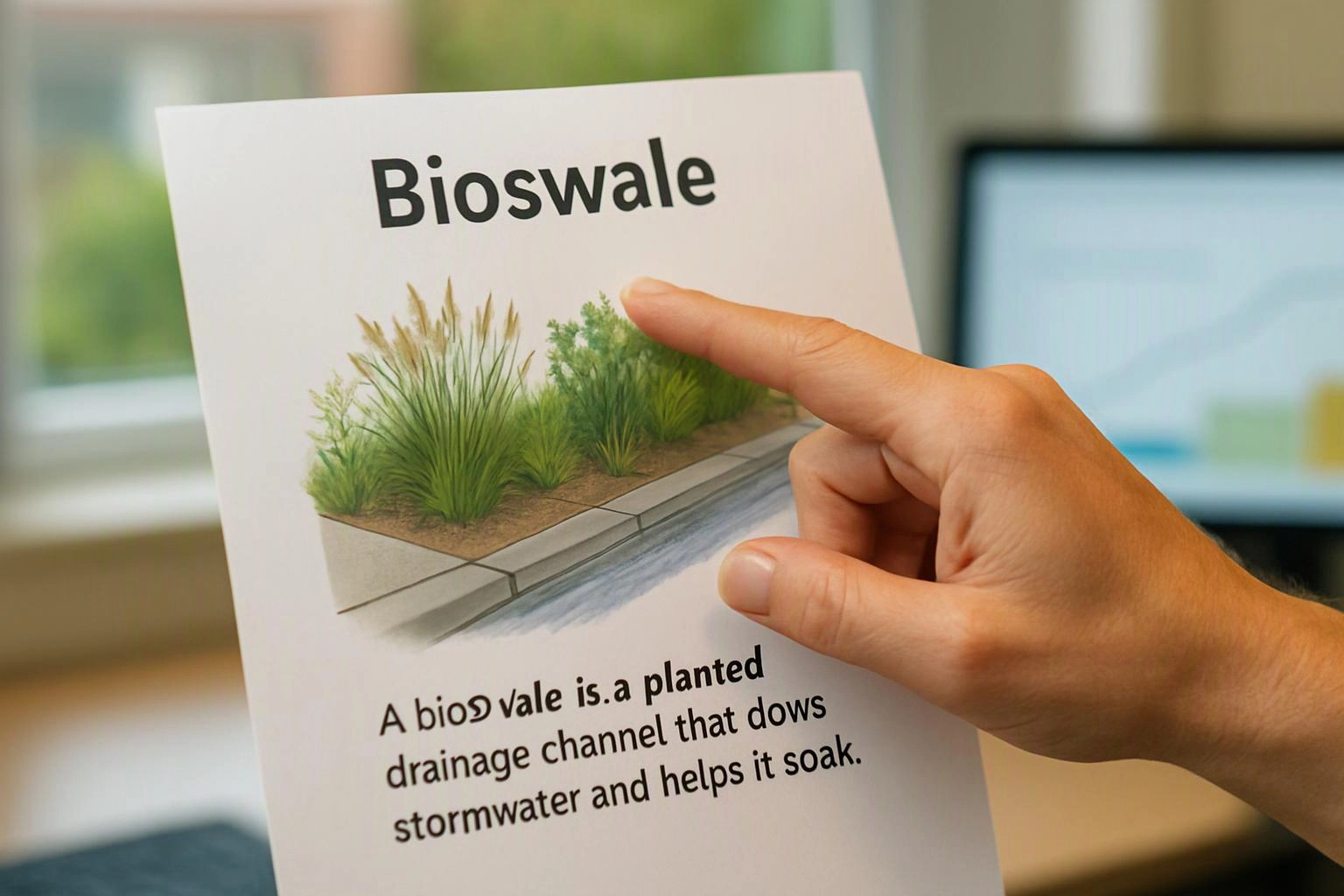
Bioswale is a planted, shallow drainage channel that slows and filters stormwater as it moves across a site. Soil, mulch, gravel, and plant roots help capture sediment and reduce runoff. A bioswale may guide water toward a rain garden, infiltration area, stormwater inlet, or another approved drainage point.
Quick Facts About Bioswale
Category
Stormwater landscape feature
Used for
Runoff control and water filtration
Common confusion
Often confused with a dry creek bed
Also called
Vegetated Swale, Grass swale
Often discussed with
Rain Garden Design
Key Takeaways About Bioswale
- A shallow channel gives stormwater room to slow down.
- Plants and soil help filter sediment from runoff.
- A bioswale is not the same as a dry creek bed.
How Bioswale Works

Bioswale design starts with a shallow flow path that directs water across planted soil. Sloped sides help spread the flow. Gravel or mulch can slow water near the surface, while roots hold soil in place.
Related glossary terms: Rain Garden, Stormwater Inlet, Underdrain.
Designers check where water enters, how the soil drains, and where overflow can go. The bottom may connect with a rain garden, underdrain, or stormwater inlet. The design must keep water moving without washing out the channel.
Plant selection depends on moisture, sunlight, and the length of time the soil stays wet. Native grasses, sedges, and other suitable plants can provide cover while supporting steady drainage. Maintenance includes removing sediment, clearing blocked inlets, and replacing plants that fail.
Expert Note
When we plan a bioswale, we trace the expected water path from its entry point to its outlet. We check soil conditions, slope, overflow areas, and plant needs as part of Rain Garden Design. Our team also considers how the feature will be reached for seasonal maintenance.
Bioswale in Practice: A Real-World Example
A Bellevue homeowner could use a bioswale to guide roof and driveway runoff toward a rain garden. The planted channel would slow the flow and help keep loose soil from reaching the planting area.
Related Services
Related Terms
Rain Garden
A rain garden is a planted area shaped to collect and soak up runoff from roofs…
Stormwater Inlet
A stormwater inlet is a ground-level opening that collects rainwater runoff and directs it into a…
Underdrain
Underdrain is a buried drainage system that collects water in soil and carries it away through…
Contour Grading
Contour Grading is a land-shaping method that follows the natural form of a site. It creates…
LandscaperBellevuewa.com
Have Questions About Bioswale?
Contact LandscaperBellevuewa.com for practical guidance on Bioswale and related landscape architect company work in Bellevue.