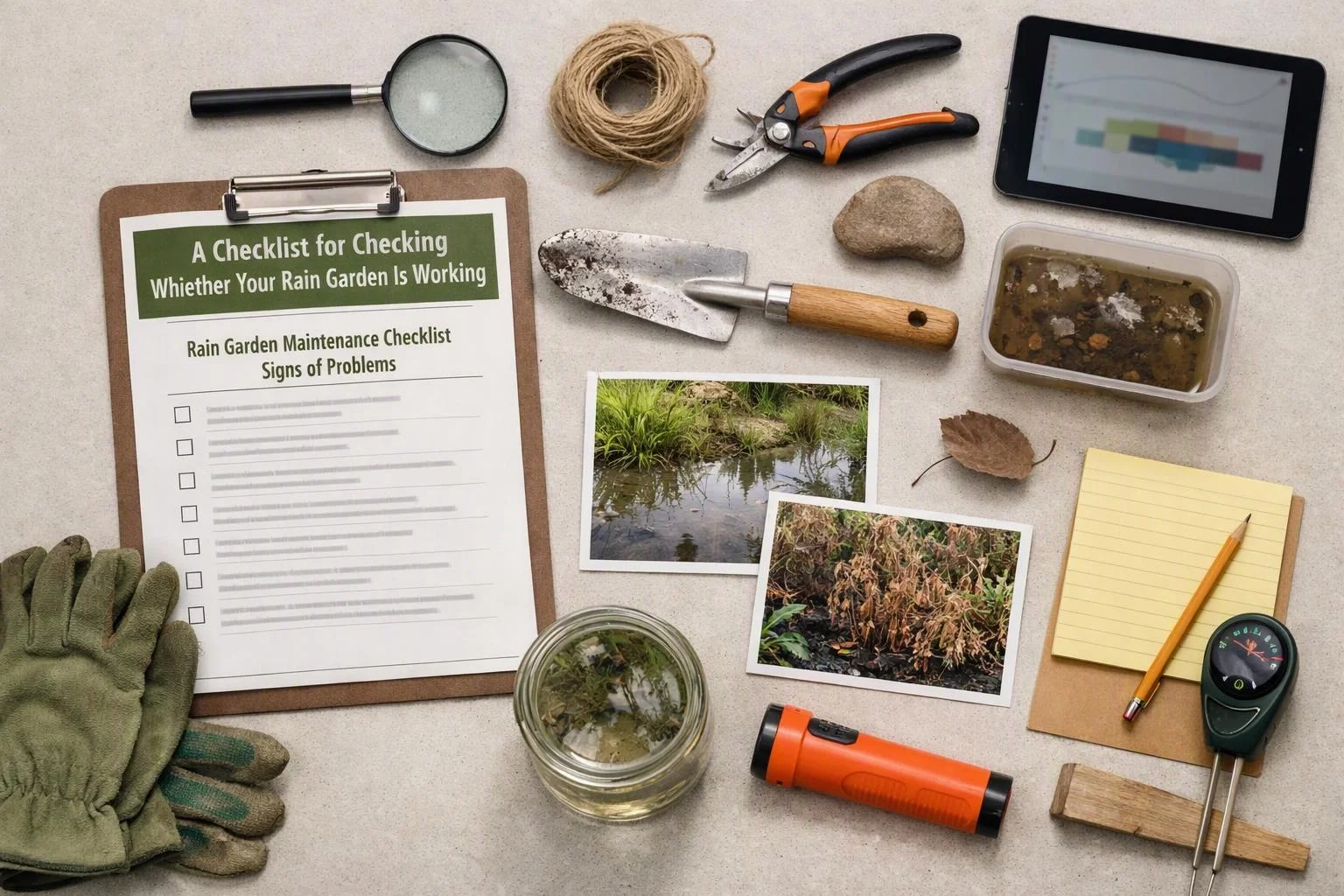
A Checklist for Checking Whether Your Rain Garden Is Working
A working rain garden drains runoff, holds soil in place, supports healthy plants, and avoids lasting standing water. LandscaperBellevuewa.com checks these signs before, during, and after inspections, with extra attention after heavy rain.
Written by Adam Gorski · 29 years of local experience
Request an EstimateWritten by Adam Gorski
How to Tell Whether a Rain Garden Is Working
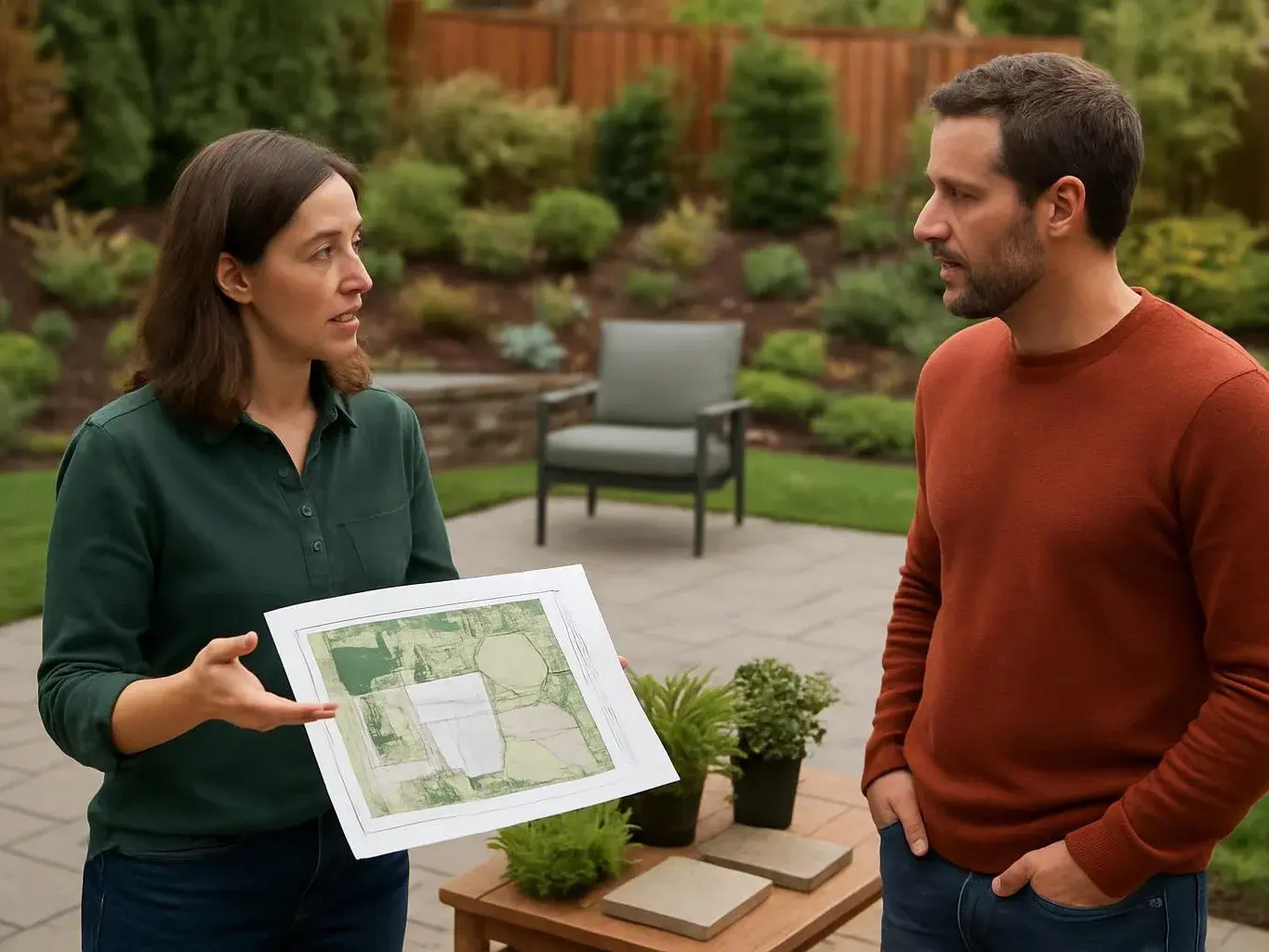
A rain garden is working when it receives runoff, spreads water across its basin, supports healthy plants, and drains without lasting ponding.
We look for clear infiltration across the soil surface. Water should enter through the inlet, move across the planting area, and soak into the ground without causing soil erosion.
Native plants should show steady growth and firm stems. Mulch should stay in place, and the basin edge should remain stable after stormwater runoff passes through.
Use This Rain Garden Reference Table
Rain garden signs help connect visible conditions with drainage performance. We use this comparison during a maintenance inspection.
Small changes can point to larger problems, so we check the inlet, outlet, soil, and plants together.
| Rain garden sign | What it may show | What we check |
|---|---|---|
| Healthy drainage | Runoff spreads and soaks into the basin | Water flow and the infiltration surface |
| Standing water | Slow infiltration or a blocked drainage feature | Soil condition, outlet function, and ponding areas |
| Sediment buildup | Runoff is carrying soil into the basin | Inlet, sediment deposits, and plant bases |
| Erosion | Water is moving too quickly or bypassing the basin | Soil washout, mulch movement, and basin edges |
| Plant health | The planting area is handling its moisture conditions | Plant stress, stems, roots, and leaf condition |
| Clogged inlet | Runoff may pool upstream or bypass the garden | Leaves, soil, rocks, and inlet protection |
| Blocked outlet | Water may remain trapped in the basin | Outlet opening and the overflow route |
Before You Inspect the Rain Garden
A rain garden inspection starts with a safe view of the drainage path and planting area. We first identify where water enters, where it leaves, and where it could overflow.
Do not enter fast-moving water or unstable soil. Contact our team when access requires unsafe climbing, excavation, or work around buried utilities.
What to Check During a Rain Garden Inspection
During an inspection, check whether runoff enters the rain garden, spreads across the basin, and begins draining without washing away soil or mulch.
We watch the stormwater flow from the inlet to the planting area. Even flow suggests that the basin is receiving runoff as intended.
We also check ponding, sediment, and the soil surface. Water that stays in one area may point to compaction, a blocked outlet, or a drainage design concern.
During the Rain Garden Check
A rain garden check during water flow shows whether the basin handles runoff without damage. Observe from a stable location and keep clear of fast-moving water.
Our team connects each visible change with the part of the system that may need attention.
Why Heavy Rain Reveals Rain Garden Problems
Heavy rain reveals problems by showing where water enters, bypasses, erodes, overflows, or remains trapped in the rain garden.
A stormwater surge can expose weak points that stay hidden during dry weather. Water may cut through mulch, carry sediment, or leave the basin through an unintended route.
We study the drainage pattern after the storm settles. That pattern helps us separate a surface cleanup issue from a deeper stormwater management design concern.
For larger drainage concerns, our Stormwater Management Design service can review the full flow path and system layout.
After Heavy Rain, Complete These Checks
A post-storm inspection checks water marks, soil movement, plants, and the overflow path after heavy rain. These signs show how the rain garden handled its largest recent flow.
Wait until conditions are safe to observe the basin. We document changes before cleanup removes useful evidence.
Red Flags That Show a Rain Garden Needs Maintenance
Rain garden maintenance is needed when visible problems interfere with drainage, soil stability, or plant health. We look for patterns that return after routine cleanup.
One sign may have a simple cause, but several signs together can point to a larger system issue.
What Sediment Buildup Does to a Rain Garden
Sediment buildup can cover the infiltration surface, block water entry, bury plants, and reduce the rain garden's drainage performance.
Sediment often collects where runoff first enters the basin. A thick deposit can seal the soil surface and change the intended water flow.
We check whether sediment has reached plant roots or raised the basin floor. Removal may require care because disturbing the soil can spread more sediment or harm established plants.
When Rain Garden Maintenance Needs More Than Cleanup
Rain garden maintenance needs a design review when repeated ponding, bypass flow, erosion, or plant loss continues after visible debris and sediment are addressed.
Soil compaction can limit infiltration even when the inlet and outlet look clear. Repeated overflow can also show that the drainage design does not match the current runoff path.
Our team can inspect inlet repair, outlet repair, plant replacement, soil condition, and the overflow route. We then explain whether the next step is routine upkeep or broader stormwater management design.
We include the site conditions, recommended work, and factors that shape the quote. Contact us for an exact quote after we review the rain garden and its drainage connections.