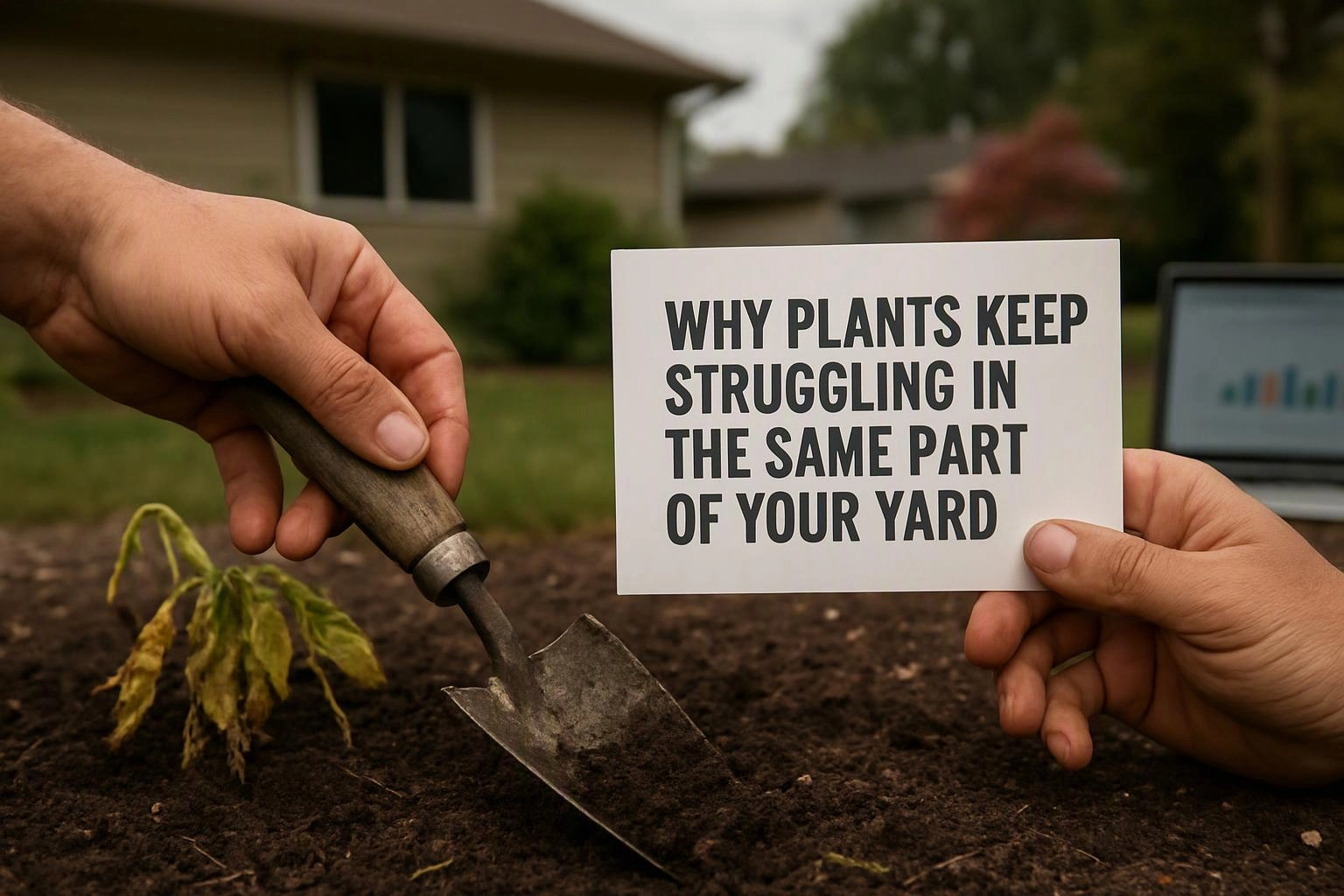
Why Plants Keep Struggling in the Same Part of Your Yard
Plants that struggle in the same yard area usually face a repeating site condition, such as poor drainage, compacted soil, unsuitable light, or wind exposure. At LandscaperBellevuewa.com, we check the site before recommending replacements.
Written by Adam Gorski · 29 years of local experience
Request an EstimateWhat Repeating Plant Problems Reveal About a Yard
Plants that decline in one area usually respond to a local condition that affects every planting there.
Site conditions shape plant health through soil, sunlight, drainage, and the local microclimate. A low spot may stay wet, while a wall or open corner may create heat and wind stress.
Repeated plant decline often points to the planting bed, not only the plant choice. We look for patterns across the root zone, soil surface, and nearby landscape before choosing replacement plants.
Warning Signs That Site Conditions Are Hurting Plants
The clearest warning signs include repeated wilting, yellow leaves, weak growth, root damage, and plant loss in one location.
One symptom may have several causes, so we compare plant symptoms with soil moisture, light, and drainage patterns. A repeated pattern across different species makes a site problem more likely.
These signs help narrow the cause, but they don't identify it alone. We connect visible damage with the bed's soil, water movement, and exposure.
Why Plants Wilt When the Soil Is Wet
Plants can wilt in wet soil because saturated roots can't take in enough oxygen.
Waterlogged soil fills the air spaces around plant roots. Oxygen-starved roots struggle to absorb water, even when soil moisture is high.
Poor drainage can also create conditions for root rot. We check whether water moves through the root zone or remains near the surface after irrigation or rain.
How Compacted Soil and Poor Drainage Cause Plant Decline
Yes, compacted soil and poor drainage can restrict roots, hold excess water, and cause yellow leaves.
Compacted soil has fewer open spaces for air and water movement. Poor soil structure slows infiltration, limits root growth, and can leave standing water around the planting bed.
Heavy foot traffic, construction activity, and repeated machinery use can compress soil. We assess the root zone and drainage pattern before deciding whether soil correction or a different planting plan is needed.
What to Check Before Replacing Struggling Plants
Check the planting site's soil, water movement, light, root space, and exposure before choosing replacement plants.
Replacement plants may fail when the original site condition remains. These checks help separate a plant selection issue from a wider bed problem.
We use these observations to guide plant selection and planting design. The best replacement matches the full growing condition, not just the plant's appearance.
When Site Correction Matters More Than New Plants
Site correction matters more than replacement planting when the same condition will harm new plants.
Soil amendment may help when structure limits infiltration or root growth. Drainage improvement or grading may help when water repeatedly collects in the same bed.
Plant selection still matters, but it must follow the site review. Native plants can suit local growing conditions, while stormwater management can guide water away from vulnerable planting areas.
Our team can connect these choices through Garden Design. The result is a site-specific plan that links soil, water, light, and plant placement.
DIY Checks Compared With Our Landscape Assessment
Homeowner observation can reveal basic patterns, while our team connects those observations to planting and drainage decisions.
You can safely note symptoms and changing site conditions. We use those details with a broader soil evaluation and planting review.
| Factor | What you can do yourself | What we do |
|---|---|---|
| Homeowner observation | Note wilting, yellow leaves, standing water, and changing sunlight. | Compare symptoms with site patterns and growing conditions. |
| Soil evaluation | Observe soil texture and whether water remains near the surface. | Review soil structure, moisture movement, and root-zone limits. |
| Plant selection | List plants that have struggled and note their light needs. | Match plant choices to soil, sunlight, moisture, and exposure. |
| Drainage planning | Watch water movement during normal rain or irrigation. | Plan drainage improvements and stormwater management design around the site. |
| Design decisions | Sketch possible bed changes and plant locations. | Develop Planting Design, Native Plant Landscaping, or Garden Design that fits the conditions. |
How We Use Site Conditions to Guide Better Planting
Our landscape assessment turns site conditions into a site-specific planting plan.
We review soil, drainage, irrigation, sunlight, wind exposure, planting depth, and available root space. We then connect those findings to planting design and plant selection.
Native plant landscaping can support a planting bed when its conditions match the selected species. Garden design and stormwater management design can also help place plants where they have a better chance to thrive.
Adam Gorski provides the author attribution for this guide.
How to Request a Site-Based Planting Quote
A site-based quote depends on the area's conditions, the corrective work needed, and the planting plan.
We begin with a site review that considers soil, drainage, irrigation, sunlight, exposure, and existing plant health. Our scope may include soil and drainage work, plant selection, bed preparation, and installation planning.
Share which plants keep struggling and where the problem occurs. We can use that information to shape the review and prepare a quote for the recommended work.
Request a site-based planting quote so our team can assess the conditions before recommending replacement plants.
Questions About Struggling Yard Plants
Can too much shade cause plants to keep dying in one area?
Yes, excess shade can cause plants to keep dying when their light needs exceed the available sunlight. Shade can also keep leaves and soil damp longer, so we check light levels with moisture and drainage conditions.
Should I test the soil before choosing replacement plants?
Yes, soil testing can help when plant decline may involve soil chemistry or nutrient balance. A soil review should also consider texture, compaction, moisture, and root space because testing alone doesn't explain every site problem.
Can changing plant species solve a site condition problem?
Changing plant species can solve the problem only when the new plants match the existing conditions. Plant selection won't correct compacted soil, standing water, or restricted root space that affects every planting.