Warning Signs Your Retaining Wall Needs Attention
A retaining wall may be failing when it leans, bulges, cracks, separates, drains poorly, or shows soil movement. At LandscaperBellevuewa.com, we check the wall, surrounding grade, drainage, and soil conditions to identify the cause and plan the next step.
Written by Adam Gorski · 29 years of local experience
Request an Estimate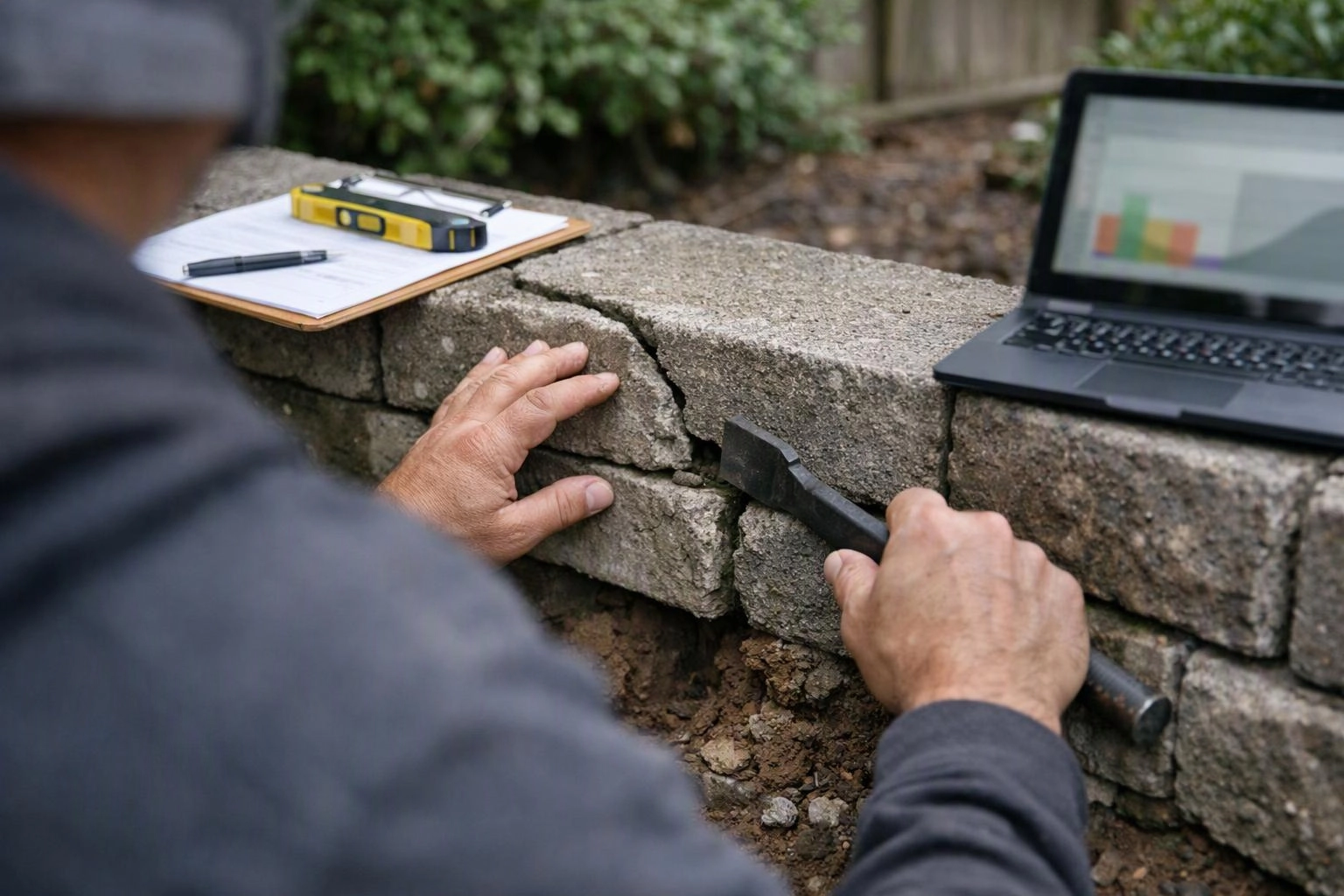
Author: Adam Gorski
What Are the Signs a Retaining Wall Is Failing?
A failing retaining wall often shows movement, cracking, drainage problems, or changes in the soil around it.
These signs can appear on a segmental block wall, concrete retaining wall, masonry retaining wall, or timber retaining wall. One sign may have several causes, so we look at the full soil retention system.
Why Is Your Retaining Wall Leaning or Bulging?
A retaining wall leans or bulges when soil pressure, water pressure, or a weak base pushes the wall out of position.
Lateral soil pressure increases when backfill becomes heavy or saturated. Poor compaction can also leave uneven pressure behind the wall.
A weak wall footing may settle or rotate under the load. A wall footing that lacks stable support can allow the wall face to move.
Our team checks the wall position, visible footing conditions, backfill, and surrounding grade. We also look for drainage problems that may be adding hydrostatic pressure.
For design concerns, our Retaining Wall Design service considers the wall system and the forces acting on it.
Are Cracks in a Retaining Wall a Concern?
Retaining wall cracks deserve attention when they widen, repeat across the wall, or appear with leaning, bulging, or soil movement.
Vertical cracks can form when sections move apart or settle differently. Horizontal cracks may reflect pressure pushing against the wall face.
Stair-step cracks often follow concrete block or masonry joints. Their location and pattern help us understand whether movement is local or spread across the wall.
Small surface damage doesn't always mean full retaining wall failure. Cracks paired with separation, drainage changes, or a leaning wall need a closer assessment.
Why Is Water Seeping Through the Retaining Wall?
Water seeping through a retaining wall can signal blocked drainage or rising pressure behind the wall.
Hydrostatic pressure develops when saturated soil holds water against the wall. That pressure can increase wall movement and stress weak joints.
Wall drainage may include a drainage pipe, weep holes, clean gravel, and filter fabric. Blocked outlets or damaged components can keep water trapped behind the wall.
Our team checks visible water paths, drain outlets, seepage points, and the soil near the wall. We then connect those findings to the wall movement and site grade.
What Should You Check After Heavy Rain?
After heavy rain, check for new movement, pooled water, erosion, blocked outlets, and saturated soil near the retaining wall.
Stay on stable ground and observe from a safe distance. Don't dig behind the wall or handle loose blocks while the soil remains wet.
Photos taken from safe locations can help us compare the site before and after rain. A guide such as Signs Your Yard May Have a Drainage Problem may also help you notice related surface drainage issues.
When Should You Stop Using the Area Near the Wall?
Stop using the area when the wall moves quickly, sheds material, develops large openings, or leaves soil unsupported.
Wall collapse risk increases when blocks fall, large cracks open, or unstable soil forms behind the wall. Keep people, pets, vehicles, and stored materials away from the affected area.
Don't touch loose blocks or enter a sunken area to inspect it. Contact our team for a retaining wall inspection when site safety is uncertain.
DIY Checks vs. Our Retaining Wall Assessment
You can document visible changes safely, while our team evaluates the wall system, drainage, grading, and design needs.
Visual inspection is useful for recording symptoms. Structural movement, retaining wall design, and drainage decisions require a broader site review.
| Factor | What you can do yourself | What we do |
|---|---|---|
| Visual inspection | Photograph cracks, leaning, bulging, ponding, and soil changes from safe ground. | We review the wall face, joints, cap blocks, nearby grade, and visible movement patterns. |
| Retaining wall design | Gather available plans, past repair details, and photos of earlier conditions. | We consider wall height, support, backfill, soil pressure, and the needed design scope. |
| Landscape grading design | Observe where surface runoff travels and where water collects. | We review grade changes and plan how the land should direct water. |
| Stormwater management design | Note drain outlets, erosion paths, and water entering from nearby surfaces. | We connect runoff, drainage, soil conditions, and wall performance. |
| Drainage assessment | Look for visible seepage or blocked outlets without digging or dismantling anything. | We assess likely drainage paths and identify improvements that fit the wall system. |
| Structural movement | Compare current photos with older photos when available. | We evaluate movement signs and explain whether repair, drainage work, or redesign is needed. |
How We Plan the Right Next Step
Our retaining wall inspection connects visible damage with site grading, stormwater flow, drainage, and wall design.
We start by reviewing wall movement, cracks, separation, water paths, and soil conditions. We then examine how the landscape grade sends water toward or away from the wall.
Our team separates surface drainage concerns from deeper soil pressure and footing concerns. That distinction helps define whether the next step involves drainage improvements, grading changes, repair work, or a new design.
We explain the project scope in clear terms and prepare a quote based on the work the site needs. You can request an assessment through our contact page.
Our work follows applicable site requirements and inspection criteria for the planned scope. We identify when a design review or licensed trade is needed before construction proceeds.
What Changes the Cost of Retaining Wall Work?
The cost depends on the wall condition, site access, soil movement, drainage work, grading changes, and the needed design scope.
Wall length and wall height affect the amount of material and support involved. Access conditions can also change how our crew reaches the wall and removes damaged material.
Soil pressure, saturated backfill, and drainage requirements may call for work behind or below the wall. Grading changes can add scope when surface runoff is part of the problem.
We include the observed repair scope, drainage needs, grading work, design requirements, and site access factors in our quote. Contact us so our team can review the wall and provide an exact project price.
Questions About Retaining Wall Warning Signs
Can a retaining wall be repaired after it starts leaning?
Yes, a leaning retaining wall can sometimes be repaired when the wall system and soil conditions allow it. Our team checks the movement, footing, backfill, drainage, and surrounding grade before we recommend repair or replacement.
What causes soil to wash out behind a retaining wall?
Soil can wash out behind a retaining wall when surface runoff, failed drainage, or open joints carry soil away. Our team traces the water path and checks grading, outlets, backfill, and filter fabric conditions.
Should drainage outlets be clear around a retaining wall?
Yes, drainage outlets should remain clear so water can leave the wall system. Our team checks visible outlets and looks for signs that blocked drainage is increasing pressure behind the wall.
What information should I collect before requesting a retaining wall assessment?
Collect clear photos, notes about recent rain, visible cracks, water paths, soil movement, and any older repair records. Our team can use that information with an on-site review of the wall, drainage, and landscape grade.