Signs Your Yard May Have a Drainage Problem
Signs of a yard drainage problem include repeated puddles, spongy lawn areas, soil erosion, standing water, and plants that decline in wet soil. At LandscaperBellevuewa.com, we check the site, trace how water moves, and match the fix to the drainage cause.
Written by Adam Gorski · 29 years of local experience
Request an Estimate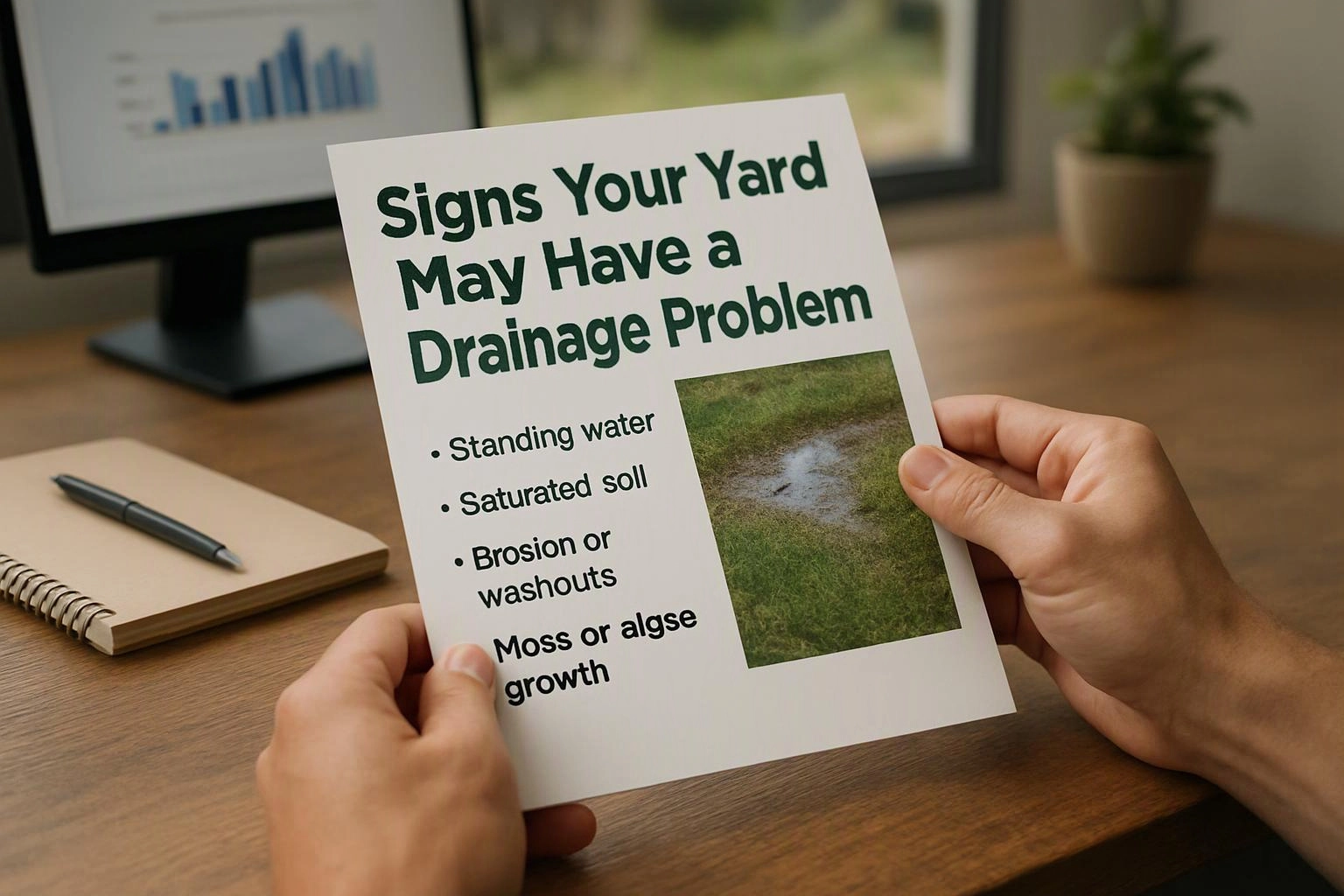
Visible water problems often point to a larger yard drainage issue below the surface. The pattern after rainfall helps show whether the cause involves soil, slope, runoff, or a blocked drainage path.
Author: Adam Gorski
What Are the Signs of a Yard Drainage Problem?
The clearest signs are water that stays, soil that feels saturated, and damage that returns after rain.
Grass may turn thin, and erosion can create small channels across the yard. These signs matter most when they keep returning after rainfall.
Why Does Water Pool in the Same Part of the Yard?
Puddles keep returning when a low spot, compacted soil, or blocked flow path sends water to the same place.
A low spot can collect surface runoff from higher ground. Poor landscape grading can also direct water toward a home, walkway, or planting bed.
Compacted soil has fewer open spaces for water to enter. That weakens soil infiltration and leaves water moving across the surface.
Blocked drainage paths can worsen the problem. We trace the yard slope and observe where water starts, travels, and stops.
Why Is the Lawn Spongy After Rain?
A spongy lawn usually means the soil holds too much water near the grass roots.
Waterlogged soil stays saturated when infiltration is poor. The root zone then has less air, which can weaken lawn health.
Foot traffic and heavy equipment can increase soil compaction. A grading problem or nearby runoff may also keep the lawn wet.
We look at the lawn surface, soil conditions, and nearby flow paths before choosing a drainage approach.
Can Poor Yard Drainage Cause Plants to Decline?
Yes, poor yard drainage can weaken plants because saturated soil limits healthy root function.
Plant roots need both water and air. Constantly wet soil can cause root stress and may contribute to root rot.
Plants may wilt even when the soil is wet. Thin growth, yellowing leaves, and repeated decline can point to waterlogged roots.
Drainage-tolerant plants may suit wet areas, but plant selection won't correct water that flows toward the house. We address the water source and movement first.
What Should You Check Before Planning a Drainage Solution?
Before planning a drainage solution, check when water appears and where the yard sends it.
These observations help separate a local low spot from a wider water-management problem. They also give our team useful information during the site assessment.
How We Diagnose Yard Drainage Problems
Our team diagnoses yard drainage problems by studying the site, soil, slope, and water-flow pattern.
We begin with a site assessment and review rainfall clues, downspout discharge, surface runoff, and existing drainage features. We also check soil conditions that may limit infiltration.
Our landscape grading design connects the yard slope to a clear drainage path. When broader runoff control is needed, our Stormwater Management Design service helps organize water movement across the site.
We may also consider rain garden design when the site can safely collect and absorb runoff. The design must match soil conditions, property boundaries, and the available drainage outlet.
DIY Drainage Checks or Professional Design?
You can observe drainage symptoms safely, while complex water-flow changes need a site-based design.
Simple observations can reveal patterns, but surface changes may affect nearby structures or properties. Our team evaluates those conditions before preparing a grading plan or stormwater design.
| Factor | What you can do yourself | What we do |
|---|---|---|
| Observation | Track puddles, muddy areas, and wet lawn sections after rainfall. | We connect visible symptoms to likely water-flow causes. |
| Drainage assessment | Review downspout discharge and visible drainage features. | We assess slope, soil conditions, runoff, and drainage paths. |
| Grading plan | Avoid moving soil until the flow direction is understood. | We develop landscape grading design that supports controlled flow. |
| Stormwater management | Record where runoff collects or leaves the property. | We plan stormwater management around site limits and discharge needs. |
| Rain garden design | Notice whether a planted area stays wet for long periods. | We assess whether infiltration and plant selection suit the site. |
Which Drainage Design Fits the Problem?
The right drainage design depends on where water starts, how it travels, and where it can safely go.
Landscape grading can redirect shallow surface flow when the yard slope causes ponding. Stormwater management can organize runoff from larger areas or several discharge points.
A rain garden can support infiltration when soil and site conditions allow it. Each design needs a safe drainage outlet and enough space for the planned water movement.
Our team matches the design to soil infiltration, runoff control, plant needs, and property limits.
How to Request a Yard Drainage Quote
The cost depends on the drainage cause, site conditions, design scope, and required changes, so we review the yard before preparing a quote.
Share where water pools, when the problem appears, and whether runoff moves toward the house. Photos taken after rainfall can also help show repeated puddles, erosion, and soggy lawn areas.
Our quote can address the needed grading scope, stormwater design scope, or rain garden scope. We explain the planned work so you can connect the quote to the drainage goal.
Request a Yard Drainage QuoteQuestions About Yard Drainage Warning Signs
How can I tell whether a puddle is caused by grading or compacted soil?
A puddle may point to grading when water flows toward one low area, while compacted soil can limit infiltration across a broader patch. Our team checks both the yard slope and soil conditions before selecting a fix.
What drainage warning signs should I track after rainfall?
Track standing water, repeated puddles, spongy soil, muddy areas, erosion, and water that flows toward the house. Note whether grass turns thin or plants decline in wet soil.
Can downspouts create a drainage problem in a yard?
Yes, downspouts can create a drainage problem when their discharge concentrates water near the foundation, lawn, or planting beds. We check downspout discharge as part of the full surface-flow evaluation.