Climate-Resilient Landscape Planning for Bellevue, Washington
Climate-resilient landscape design connects grading, drainage, planting, and outdoor use to site conditions. LandscaperBellevuewa.com plans Bellevue yards around seasonal moisture, runoff paths, slopes, and resilient plant choices.
Written by Adam Gorski · 29 years of local experience
Request an EstimateWhat Is Climate-Resilient Landscape Design?
Climate-resilient landscape design is a planning approach that helps outdoor spaces manage weather stress, water movement, and changing site conditions.
Landscape planning connects the yard’s grades, soil, plants, drainage, and outdoor functions. Green infrastructure can slow runoff, support infiltration, and guide overflow through planned paths.
Our team uses Climate-Resilience and Green-Infrastructure Planning to connect these choices. The goal is a resilient landscape that works with Bellevue’s seasonally wet maritime conditions.
Written by Adam Gorski.
How We Assess a Bellevue Landscape for Resilience
Our site assessment shows how existing grades, water movement, and site features affect the landscape plan.
We review the yard as a connected system. That helps us place drainage features, plants, paths, and outdoor uses where they can perform well.
How Do We Plan for Wet Weather and Heavy Rain?
Stormwater management design directs, slows, and safely handles runoff through grading, planting, infiltration areas, and planned overflow routes.
We first trace surface runoff across the property. Then we decide where water can spread, soak into suitable soil, or move safely toward an approved discharge area.
On hillside and foothill properties, erosion control becomes part of the grading decision. On low-lying properties, we examine infiltration, finished grades, and overflow routing before placing plants or outdoor features.
Which Landscape Features Support Rainwater Management?
Rainwater features support resilience when each one matches the site’s soil, grades, space, and overflow needs.
Our team coordinates these features with paths, planting beds, and outdoor functions. We also account for established improvements on built-up residential properties.
| Feature | Planning role | Key review point |
|---|---|---|
| Rain gardens | Receive and slow directed runoff. | Infiltration, soil moisture, and overflow routing. |
| Drainage swales | Guide surface water through a shaped landscape channel. | Slope, flow direction, and erosion prevention. |
| Permeable surfaces | Allow some water to pass through paved areas. | Base conditions, drainage, and intended use. |
| Planting beds | Hold soil and help manage water near outdoor spaces. | Plant tolerance, roots, and seasonal moisture. |
| Overflow paths | Provide a planned route when water exceeds the main feature. | Safe direction and protection of structures. |
How Do Planting Choices Support Landscape Resilience?
Planting choices support resilience when each plant matches its moisture, light, soil, and drainage conditions.
Native plant landscaping can support site-sensitive planting when native plants fit the yard’s growing conditions. We also use moisture-aware planting in areas that stay damp during seasonal moisture cycles.
Plant placement matters as much as plant selection. Root systems can help hold soil, while poorly matched plants may struggle in wet or dry zones.
How Do We Plan for Dry Summers and Wet Winters?
A resilient garden manages seasonal water demand by matching soil care, irrigation, mulch, and plant choices to each planting zone.
Our team separates areas by sun, soil moisture, and drainage. That creates a clearer plan for both wet winters and drier summer conditions.
How Does Site Shape Change the Landscape Plan?
Site shape changes the plan because slopes, low areas, and established features control water movement and usable space.
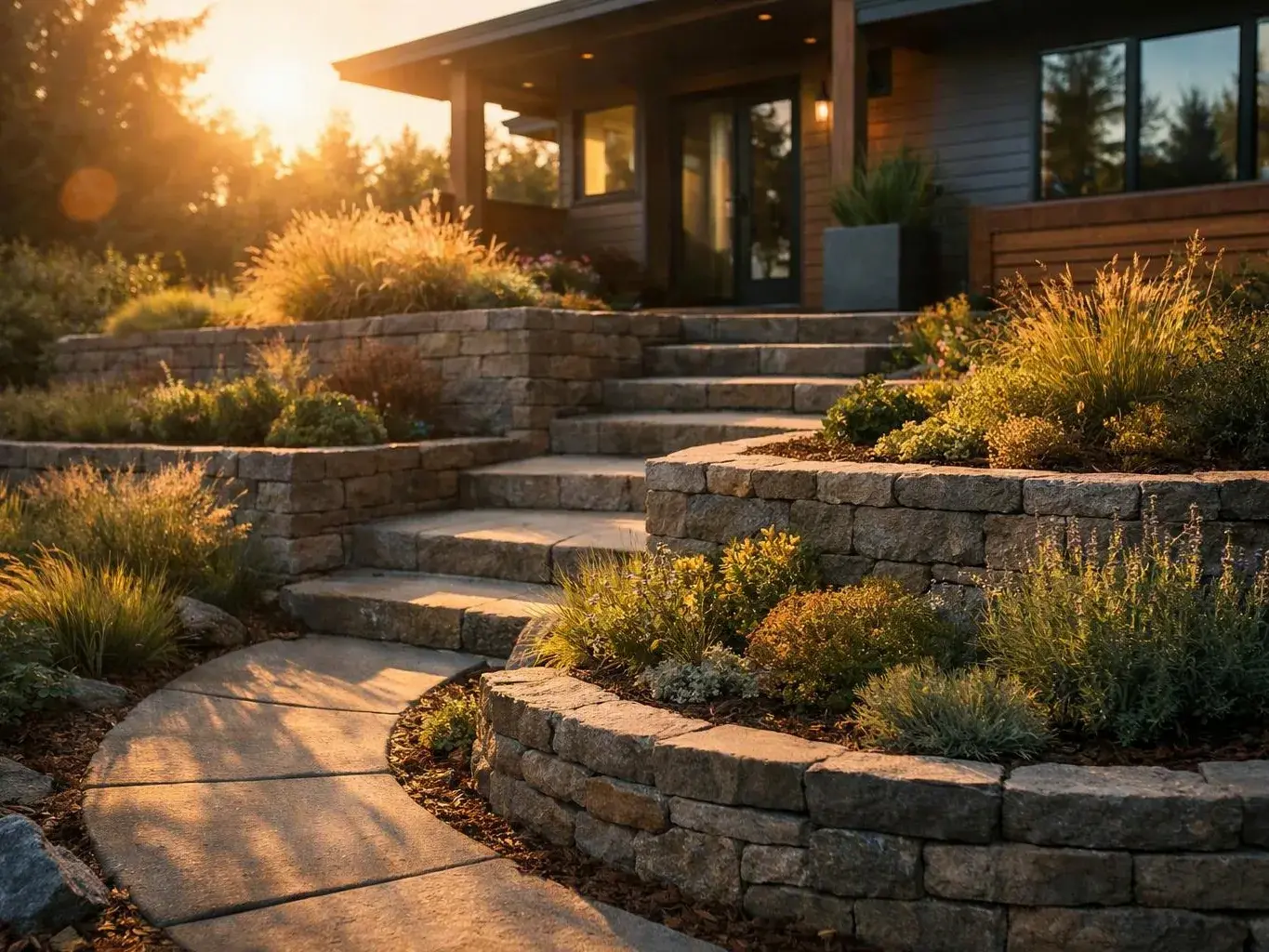
Sloping terrain needs careful attention to grade transitions, runoff paths, planting layout, and erosion control. Retaining walls may also affect soil retention, access, and drainage decisions.
Low-lying areas need a different review. We examine persistent moisture, infiltration, overflow routes, and plant tolerance before we finalize the layout.
What Does a Climate-Resilient Landscape Plan Include?
A climate-resilient landscape plan connects design details with outdoor functions and site conditions.
Our team coordinates the plan so drainage features support the way you want to use the property. Limited outdoor space and established improvements guide the final arrangement.
| Plan element | What it addresses |
|---|---|
| Landscape master planning | The relationship between the whole yard, site conditions, and future improvements. |
| Planting design | Plant zones, root systems, seasonal moisture, and maintenance needs. |
| Grading design | Finished grades, grade transitions, runoff, and erosion control. |
| Stormwater features | Rain gardens, swales, infiltration areas, and overflow routing. |
| Outdoor functions | Paths, seating, gathering areas, access, and usable space. |
What Changes the Cost of a Resilient Landscape Plan?
The cost depends on site access, grading, drainage work, planting scope, materials, and the condition of existing features; we review those details before preparing a quote.
Site access can affect how our crew handles materials and reaches work areas. Grading complexity, drainage needs, and existing walls or paving can also change the scope.
We prepare the quote from the assessment and proposed plan. The quote explains the included design work, materials, site preparation, and selected landscape features.
How We Turn the Assessment Into a Landscape Plan
Our planning process turns site observations and client goals into a coordinated landscape plan.
We keep water movement and outdoor use connected throughout the design. That helps prevent planting, grading, and drainage decisions from working against each other.
Plan a More Resilient Bellevue Landscape
Climate-resilient planning helps Bellevue homeowners connect water management, planting, grading, and outdoor use.
We bring together rain garden design, landscape grading design, Native Plant Landscaping, and Landscape Master Planning when the site calls for them. Our team also coordinates outdoor space planning around limited space and established improvements.
Contact us to discuss your site assessment and request a quote. We can review runoff, seasonal moisture, sloping terrain, low-lying areas, and your goals for the yard.
Get a Free EstimateQuestions About Resilient Bellevue Landscapes
Can climate-resilient landscaping work in a small Bellevue yard?
Yes, climate-resilient landscaping can work in a small Bellevue yard when the plan coordinates limited space, runoff, planting zones, and outdoor functions.
What should I share before requesting a resilient landscape quote?
Share your goals, known drainage concerns, areas that stay wet, slope concerns, existing improvements, and preferred outdoor uses before requesting a resilient landscape quote.
How can I tell whether my yard needs grading or drainage planning?
A yard may need grading or drainage planning when runoff crosses unwanted areas, water gathers in low spots, soil erodes on slopes, or planting zones stay persistently wet.