Front Yard Landscape Design: Entry, Planting, and Walkways
Front yard landscape design should guide visitors clearly, frame the entry, suit the home, and use plants and lighting with purpose. LandscaperBellevuewa.com plans planting, walkways, and entry lighting as connected parts of one design.
Written by Adam Gorski · 29 years of local experience
Request an EstimateHow Do You Design a Front Yard Landscape?
Front yard landscape design starts with the home, site conditions, arrival route, and the care the landscape needs.
Our team can also connect front yard work with broader landscape services when the property needs a larger plan. A good landscape layout makes the entry feel intentional while supporting safe access and long-term maintenance.
How Should the Front Entry Shape the Design?
The front entry should guide attention toward the door while planting frames the home without blocking views.
We use the front door as the visual destination for the entry sequence. The porch, steps, and front walkway should support that route without creating confusing turns.
Foundation planting can soften the home facade and create visual balance. We place shrubs and other plants to frame the focal point while preserving useful views and a suitable level of privacy.
Plant height, bed shape, and lighting placement should work together. The result should welcome visitors without making the front entry feel crowded.
What Plants Work Well in a Front Yard?
Front yard plants work well when their mature size, light needs, water needs, and appearance fit the site.
We build plant selection around sun exposure, soil conditions, drainage, and the look of the home. The table below shows how each plant group can support the planting design.
| Plant group | Front yard use | Key selection point |
|---|---|---|
| Native plants | Support a planting design suited to local growing conditions. | Check soil, moisture, sun, and mature plant size. |
| Evergreen plants | Provide structure and screening through seasonal change. | Choose forms that won't crowd windows or paths. |
| Deciduous plants | Add seasonal interest through flowers, leaves, or branching. | Plan for leaf drop and changing shade. |
| Shrubs | Frame the home and define planting beds. | Allow room for mature width and height. |
| Perennials | Bring recurring color and texture near the arrival route. | Match water and light needs within each bed. |
| Ground cover | Fill open spaces and connect larger plants. | Check spread, foot traffic, and moisture needs. |
| Ornamental grasses | Add movement and texture near beds or walkways. | Choose a form that fits the space at maturity. |
A low-maintenance planting plan still needs proper plant spacing and soil preparation. We group plants with similar needs so watering, pruning, and seasonal care stay manageable.
How Should a Front Walkway Be Laid Out?
A front walkway should create a clear, comfortable route from the public approach to the front door.
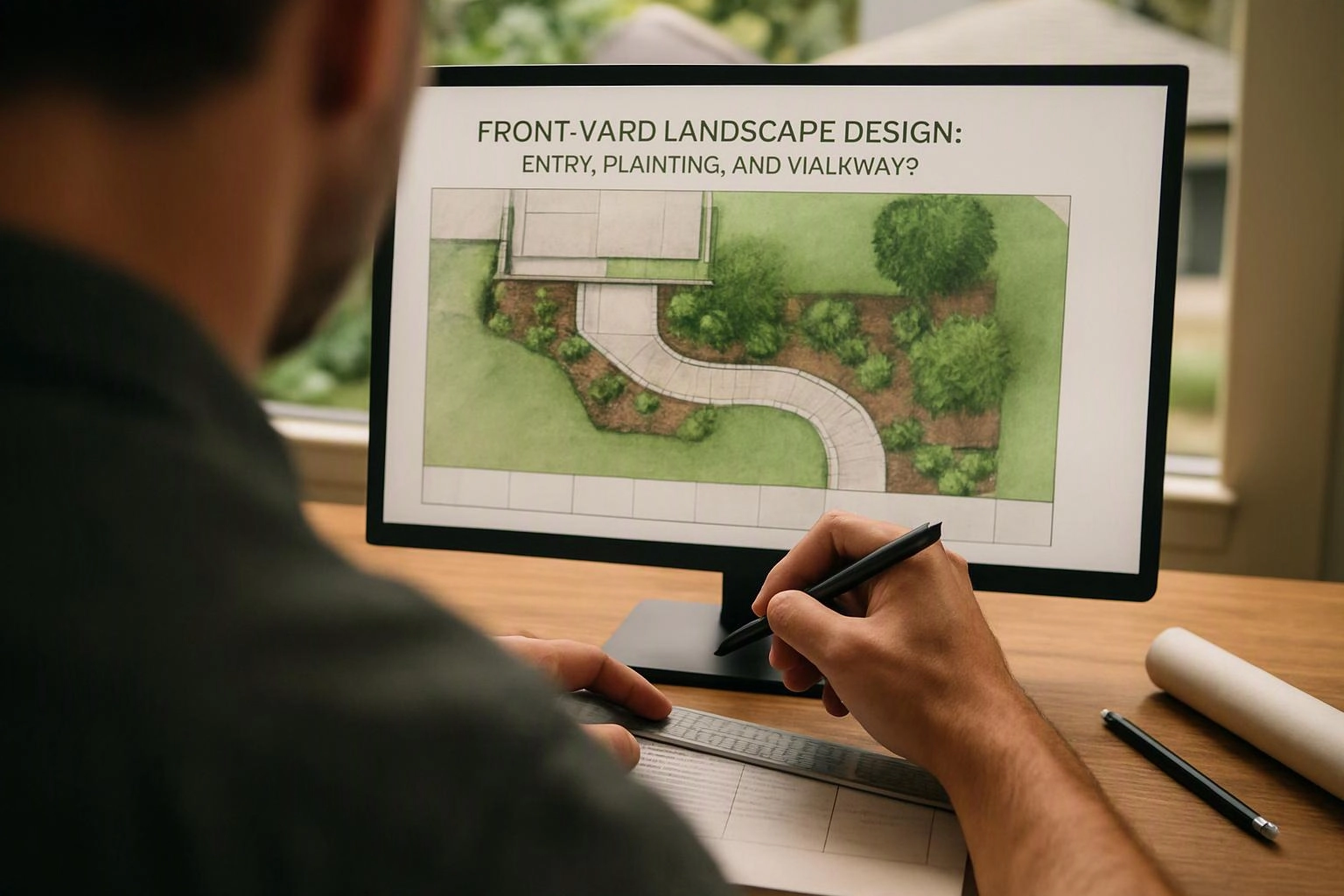
We align the pathway with the entry sequence and the home's main visual lines. The route should feel natural, support wayfinding, and avoid unnecessary bends.
Walkway width should suit daily use, visitors, and safe access. We also review steps, slopes, drainage, and surface transitions before choosing paving materials.
Accessibility depends on the property's grades, steps, clearances, and local requirements. Our walkway design accounts for those conditions instead of treating the path as a separate feature.
Which Walkway Materials Suit a Front Yard?
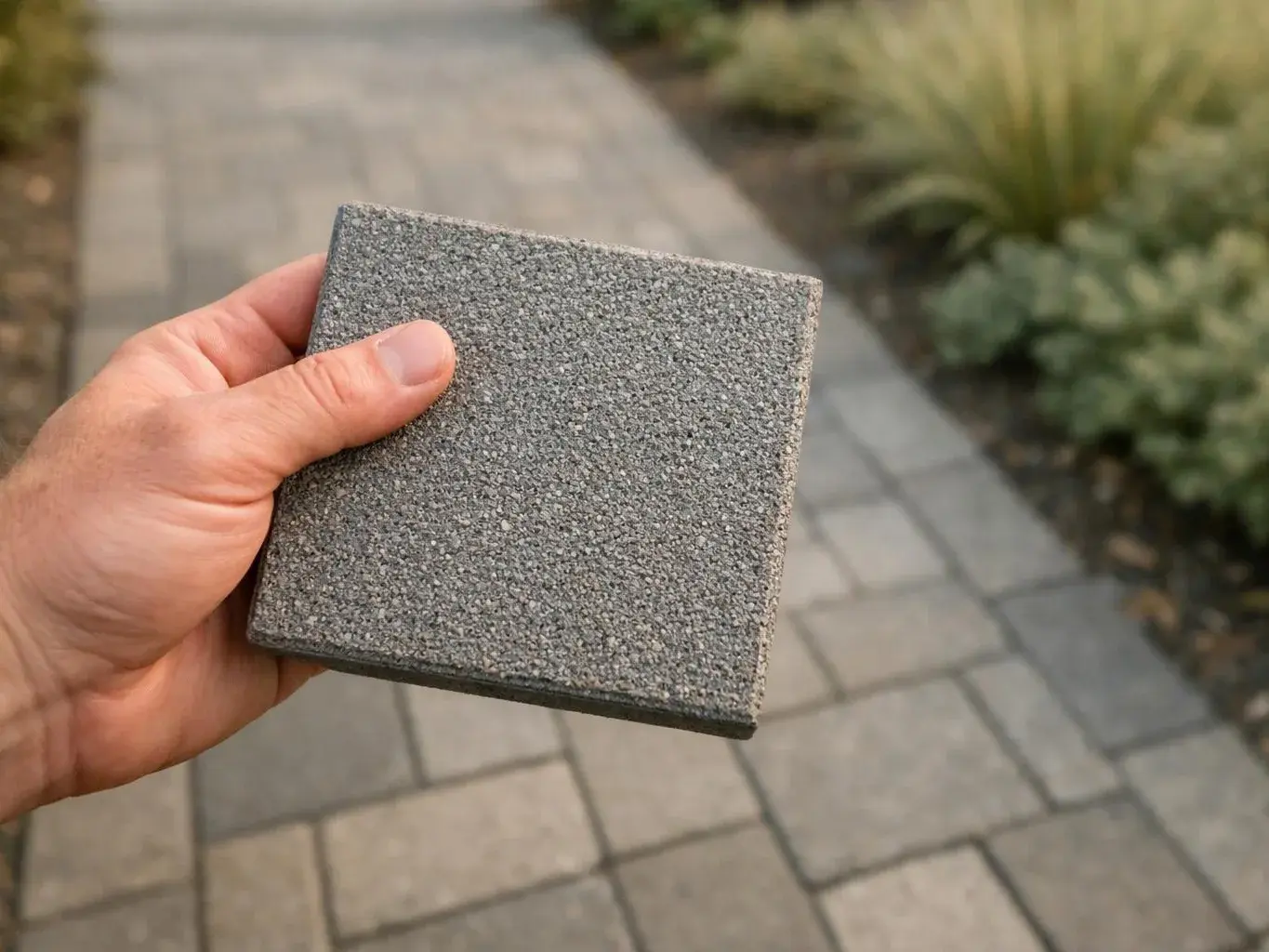
Walkway materials suit a front yard when their appearance, grip, drainage, and maintenance needs match the site.
We compare the surface, edge details, and surrounding planting before making a material selection.
| Material | Appearance | Planning considerations |
|---|---|---|
| Concrete | Clean and adaptable to many home styles. | Plan joints, drainage, finish, and surface maintenance. |
| Pavers | Offers pattern, color, and texture options. | Use a stable base and suitable edge restraint. |
| Natural stone | Creates a varied, natural material appearance. | Select pieces with useful texture and slip resistance. |
| Gravel | Provides a relaxed and informal garden feel. | Use edging, stable grading, and regular surface care. |
A paver walkway or natural stone path should also connect visually with the home facade. We keep the material choice consistent with the entry, planting beds, and surrounding hardscape.
How Can Landscape Lighting Improve an Entry?
Landscape lighting can make the entry easier to read at night, highlight safe movement, and add depth to planting.
Path lighting helps visitors follow the arrival route without overpowering the walkway. Entry lighting can define the front door, porch, and steps.
Step lighting supports visibility where grades change. Accent lighting can draw attention to a tree, focal point, or textured planting bed.
We plan light placement for useful coverage and glare control. Warm light usually supports a comfortable residential setting, while careful fixture aiming protects views from the home.
What Should We Check Before Building the Landscape?
We check the site, existing conditions, and design constraints before finalizing front yard landscape work.
This site assessment helps us protect existing features and avoid conflicts. It also gives the planting design and walkway design a sound base.
How Do We Plan Front Yard Landscape Work?
We connect the design scope, materials, planting plan, walkway details, and lighting plan before preparing a quote.
Our design consultation starts with your goals for the front entry, maintenance, privacy, and curb appeal. We then develop planting design and walkway design around the site's conditions.
Material selection covers the walkway surface, edge treatment, planting bed details, and related site preparation. Landscape lighting installation is planned with fixture placement, safe wiring practices, visibility, and glare control in mind.
The project quote reflects the agreed scope of work and selected materials. You can contact our team through our contact page to request an exact quote for your front yard landscape plan.
Written by Adam Gorski.
How Can You Keep the Design Looking Balanced?
A balanced front yard uses consistent scale, spacing, color, and care across the entry landscape.
Our maintenance plan supports the original design as plants grow and seasons change. Regular care keeps the arrival route clear and the planting beds visually connected.