A Checklist for Deciding What Needs to Change in Your Landscape
A landscape renovation problem assessment checklist starts with safety, drainage, access, plant health, maintenance, and design goals. At LandscaperBellevuewa.com, we use these checks to separate urgent function problems from cosmetic updates and build a clear renovation plan.
Written by Adam Gorski · 29 years of local experience
Request an EstimateAuthor: Adam Gorski
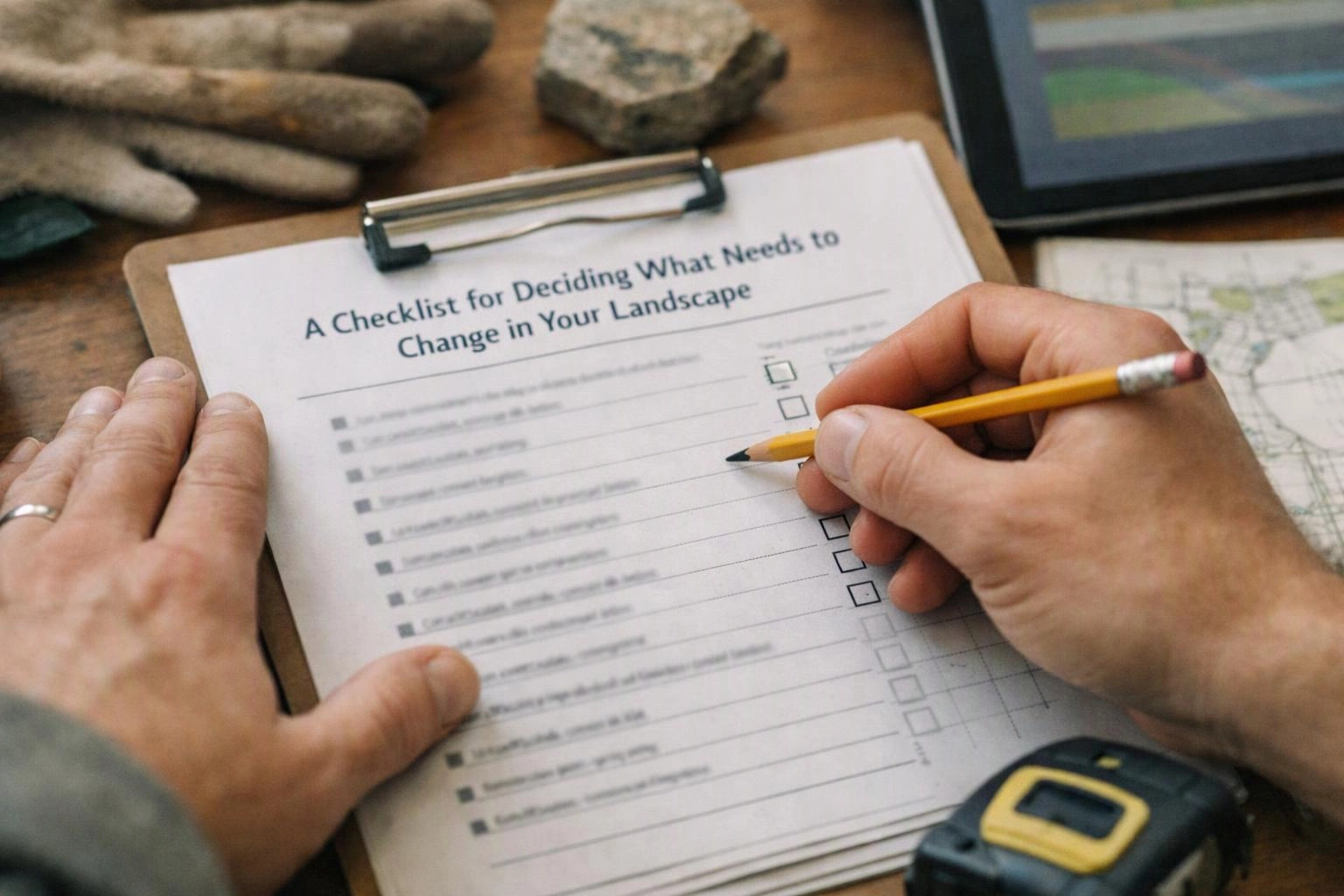
What Should You Check Before Redesigning Your Landscape?
Landscape redesign should begin with the problems you need to solve, the areas you want to keep, and the way you use the property.
Start with the full landscape condition, not one planting bed. Review backyard landscaping and front yard landscaping together if they share drainage, access, or maintenance concerns.
Check how water moves across the property and where people walk, park, gather, and work. Your maintenance goals also matter because a beautiful plan can fail if it creates more work than you want.
Before the Site Review: Record the Problems You See
A site assessment starts with a clear record of what feels unsafe, difficult, unhealthy, or unattractive.
Walk the property at different times when practical. Note what changes with sunlight, rain, daily use, and seasonal plant growth.
How Do You Tell Cosmetic Problems From Functional Problems?
A cosmetic problem affects appearance, while a functional problem affects use, movement, drainage, safety, or long-term landscape health.
Use the comparison below to sort your findings before choosing plants, materials, or layout changes.
| Problem type | Common signs | Planning response |
|---|---|---|
| Cosmetic landscape problem | Dated colors, uneven planting, bare beds, or a tired visual style | Improve plant selection, bed shape, materials, and visual balance |
| Functional landscape problem | Poor drainage, difficult circulation, weak privacy, or repeated plant decline | Correct site conditions before adding decorative changes |
| Safety problem | Blocked paths, unstable structures, slippery surfaces, or hazardous visibility | Address the hazard and confirm the area is safe before design work continues |
How Should You Prioritize an Overgrown or Hard-to-Maintain Yard?
Prioritize hazards and water problems first, then address access and maintenance, and finish with appearance upgrades.
An overgrown yard can hide drainage damage, weak retaining walls, blocked walkways, and declining plants. Our team separates the maintenance burden from the root problem so the renovation solves more than surface growth.
Next, review water management and plant replacement needs. Design improvements should support the way you use the property and the maintenance level you can sustain.
During the Site Review: Test Each Landscape Problem
A site walk-through tests whether each concern comes from layout, water, materials, plants, or maintenance.
Our team connects visible symptoms with site conditions before we outline renovation work.
Which Red Flags Need Attention Before Design Changes?
Red flags need attention before decorative changes because they can damage new work or create safety concerns.
Pause design decisions when the site shows active water movement, unstable structures, or serious plant decline.
What Should You Decide Before Choosing a Landscape Solution?
Choose solutions based on how you use the space, how much maintenance you want, and which problems must be solved first.
Set landscape goals before choosing plants or hardscape materials. Decide whether the main purpose is outdoor living, privacy, easier care, better access, or stronger curb appeal.
Plant selection should match soil, sun exposure, water needs, and available maintenance. Material choices should also support safe circulation and the way your household uses the property.
After the Site Review: Turn Findings Into a Renovation Plan
A landscape renovation plan turns site findings into a defined scope, sequence, and maintenance approach.
Our team uses the findings to separate required corrections from optional design improvements. That makes the renovation scope easier to review and adjust.
When Does Landscape Master Planning Make Sense?
Landscape master planning makes sense when several areas need changes and the work should follow one coordinated design.
Whole-property design helps connect front yard redesign, backyard redesign, drainage, privacy, access, and outdoor living goals. It also helps keep renovation phases aligned with long-term landscape goals.
When you need a coordinated landscape renovation, our team can use site priorities to shape the larger plan.
What Should You Prepare Before Discussing a Landscape Redesign?
Prepare a short list of problems, goals, preferred features, and areas you want to keep before discussing the redesign.
Bring site photos that show the full yard and close views of problem areas. Note how you use the property, which maintenance tasks concern you, and what outdoor features matter most.
List existing landscape materials, planting areas, walkways, patios, and structures that should remain. Your renovation priorities help our team build a focused project scope.
How We Use the Checklist to Shape Your Project
LandscaperBellevuewa.com uses the checklist to connect site conditions with practical design priorities and a clear project scope.
We review landscape renovation needs across backyard landscaping and front yard landscaping. Our site assessment covers drainage, grading, soil, plant health, irrigation, hardscape, walkways, retaining walls, maintenance, outdoor living, privacy, and safety.
We then organize the work around your landscape goals. This approach helps our team create a useful renovation plan without losing sight of how you live outdoors.
Questions About Landscape Renovation Decisions
What are signs that a yard needs a landscape renovation?
A yard needs landscape renovation when safety risks, water problems, access issues, plant decline, or excessive maintenance keep returning.
Should drainage problems be fixed before new planting?
Yes, drainage problems should be addressed before new planting when water movement can damage soil, roots, structures, or finished landscape areas.
What information should I bring to a landscape design consultation?
Bring site photos, property-use notes, maintenance concerns, preferred features, existing materials, and your renovation priorities.
Can a landscape renovation be completed in phases?
Yes, a landscape renovation can be completed in phases when the sequence protects site priorities and keeps the overall design coordinated.
Project cost depends on the site conditions, scope of work, materials, drainage needs, hardscape, planting, and phasing. We review these factors with you and prepare a quote based on the renovation plan.
Discuss your landscape renovationRelated Resources
Whole-Property Master Plan or One-Area Landscape Design?
Everything About ItHow Professional Landscape Design Can Improve the Way You Use Your Property
Everything About ItHow Landscape Architects Use Plans, 3D Models, and Site Data
Everything About ItClimate-Resilient Landscape Planning for Western Washington