A Fall Checklist for Spotting Yard Drainage Trouble
A fall yard drainage inspection checklist helps you find blocked drains, pooling, erosion, runoff paths, and grading trouble before wetter weather worsens them. LandscaperBellevuewa.com uses these observations to guide stormwater management design, grading, or landscape renovation decisions.
Written by Adam Gorski · 29 years of local experience
Request an Estimate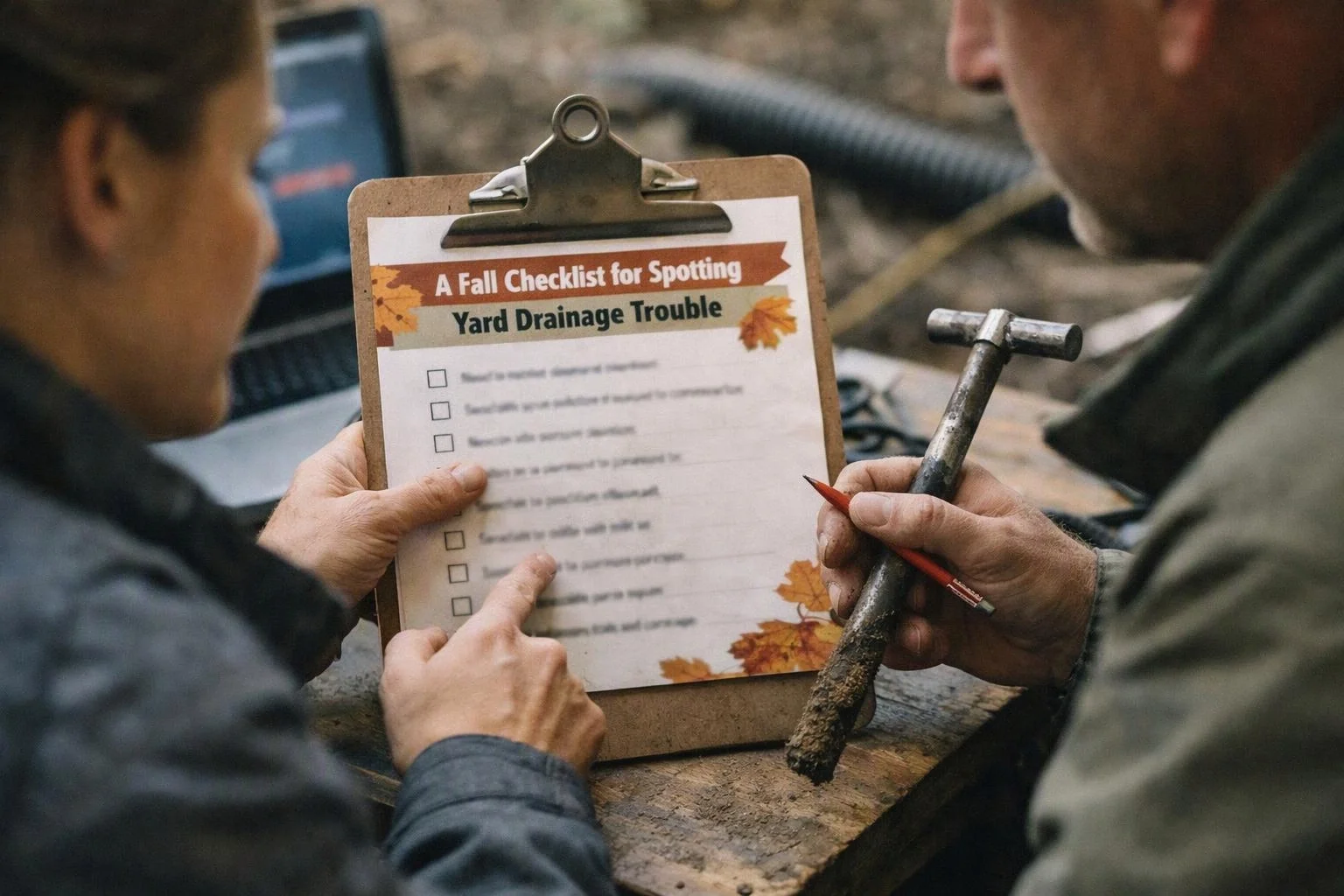
Author: Adam Gorski
Why Fall Is the Right Time to Inspect Yard Drainage
Fall rain reveals how yard drainage handles real surface runoff. Dry-season conditions can hide low spots, blocked features, and weak landscape grading.
Wet soil shows where water stays after a storm. Soil saturation also makes erosion easier to spot near slopes, paths, walls, and structures.
A fall drainage check gives us useful evidence before the wet season becomes harder on the landscape. The findings can guide repairs, grading changes, or a broader drainage assessment.
Before Rain: Prepare the Yard Drainage Inspection
Before rain arrives, clear visible leaves and debris and note each drainage feature. A clean starting point helps you separate a blocked drain from a grading problem.
Use safe ground-level observations, and avoid climbing roofs or entering drainage structures. Record what you see before weather changes the evidence.
These checks focus on visible conditions, not hidden pipe performance. We can review concerns that involve buried drainage, unstable walls, or unsafe access.
What Drainage Trouble Looks Like in the Yard
Drainage trouble often appears as a pattern of water, soil, or plant damage. Use this reference table to connect each symptom with a possible cause.
The same symptom can have more than one cause. Site slope, soil type, outlet conditions, and nearby surfaces all matter.
| What you see | What it may indicate |
|---|---|
| Standing water | A low spot, blocked drain, or poor surface flow. |
| Slow-draining soil | Compaction, heavy soil, or limited infiltration. |
| Muddy areas | Repeated flow, soil saturation, or concentrated runoff. |
| Soil erosion | Fast water flow, exposed soil, or an unprotected slope. |
| Exposed roots | Washed soil near trees, slopes, or drainage paths. |
| Cracked soil | Drying and shrinking soil, settlement, or movement near a slope. |
| Saturated lawn | Poor infiltration, repeated runoff, or a drainage outlet issue. |
| Blocked outlet | Leaves, sediment, roots, or a damaged discharge point. |
During Rain: Check How Water Moves
During rain, observe the runoff path from roof areas, paved surfaces, and upper parts of the yard. Watch the flow from a safe location, and never enter fast-moving water.
These observations show whether water reaches a drain inlet, drain outlet, or property boundary as intended.
Do not remove covers, enter pipes, or disturb unstable soil during a storm. We can assess hidden or unsafe drainage conditions through a planned site review.
How Yard Grading Can Cause Winter Pooling
Yard grading can cause winter pooling when slopes direct runoff into low spots or toward structures.
Positive drainage moves water away from buildings and toward a suitable discharge area. Low spots, compact soil, and impermeable surfaces can interrupt that flow.
Foundation drainage can also be affected when surface water stays beside walls. Our team reviews slopes, soil conditions, hard surfaces, and discharge points before recommending grading work.
After Rain: Record What the Yard Reveals
After rain, record the places where water remains or where soil has moved. These details show how the yard responds after active water flow stops.
Take photographs from consistent viewpoints, and include nearby drains, walls, paths, and structures for context.
A clear record helps us compare symptoms with site grades and drainage features. It also keeps small changes from being overlooked between storms.
Red Flags That Need a Closer Drainage Review
Some drainage signs need a closer review because they can affect structures, soil stability, or safe yard use.
Contact our team when the same condition returns or grows worse after rain.
What to Record Before Requesting a Drainage Assessment
A drainage assessment record should show where water collects, when the problem appears, and how runoff moves across the yard.
List problem locations and the rain conditions when each symptom appeared. Describe water movement from roof areas, hard surfaces, slopes, and drainage features.
Add notes about landscape changes, new soil, removed plants, construction, or altered paths. Include site photographs that show both the symptom and the surrounding grade.
This record supports a focused stormwater management design review. It helps our team connect visible conditions with possible drainage solutions.
How We Turn Inspection Notes Into a Drainage Plan
We use inspection notes, site grades, runoff paths, and drainage conditions to shape the right design approach.
Our team starts with the runoff source and follows water across the site. We review soil conditions, site grading, outlets, structures, and any signs of erosion or settlement.
Depending on the findings, the plan may involve Landscape Grading Design, drainage improvements, or a broader landscape renovation. We explain how each recommendation addresses the observed water problem.
For larger sites or complex flow patterns, our Stormwater Management Design process can organize drainage features into a coordinated plan. We also consider how proposed work should function during future wet weather.
Questions About Fall Yard Drainage Inspections
Can clogged gutters cause yard drainage problems?
Yes, clogged gutters can cause yard drainage problems when overflow adds concentrated water near foundations, lawns, or slopes. Leaves and debris can also block connected downspouts, drains, and outlets.
Why does water pool near my foundation after rain?
Water pools near a foundation when grading directs runoff toward the structure or when soil and drainage features cannot move water away. Downspout discharge, compact soil, low spots, and blocked outlets can all contribute.
When should I request a professional drainage assessment?
You should request a drainage assessment when standing water, erosion, overflowing drains, or wet foundations return after rain. An assessment is also useful when the runoff path is unclear or the problem may involve buried drainage or site grading.
Share your inspection notes and site concerns with our team so we can discuss the next step.
Request a drainage assessment