
What Is a Runoff Coefficient?
A runoff coefficient is a value that shows how much rainfall may flow across a surface instead of soaking into the ground. Paved areas usually produce more runoff, while planted soil usually absorbs more water. Designers use the coefficient to estimate drainage needs and shape grades that guide water toward safe collection points.
Quick Facts About Runoff Coefficient
Category
Drainage planning metric
Used for
Estimating surface runoff
Common confusion
Not the same as site slope
Often discussed with
Landscape Grading Design, Rain Garden Design
Key Takeaways About Runoff Coefficient
- Surface type controls how much rainfall becomes runoff.
- The value guides drainage and grading decisions.
- It isn't the same as the slope of a site.
How Runoff Coefficient Works
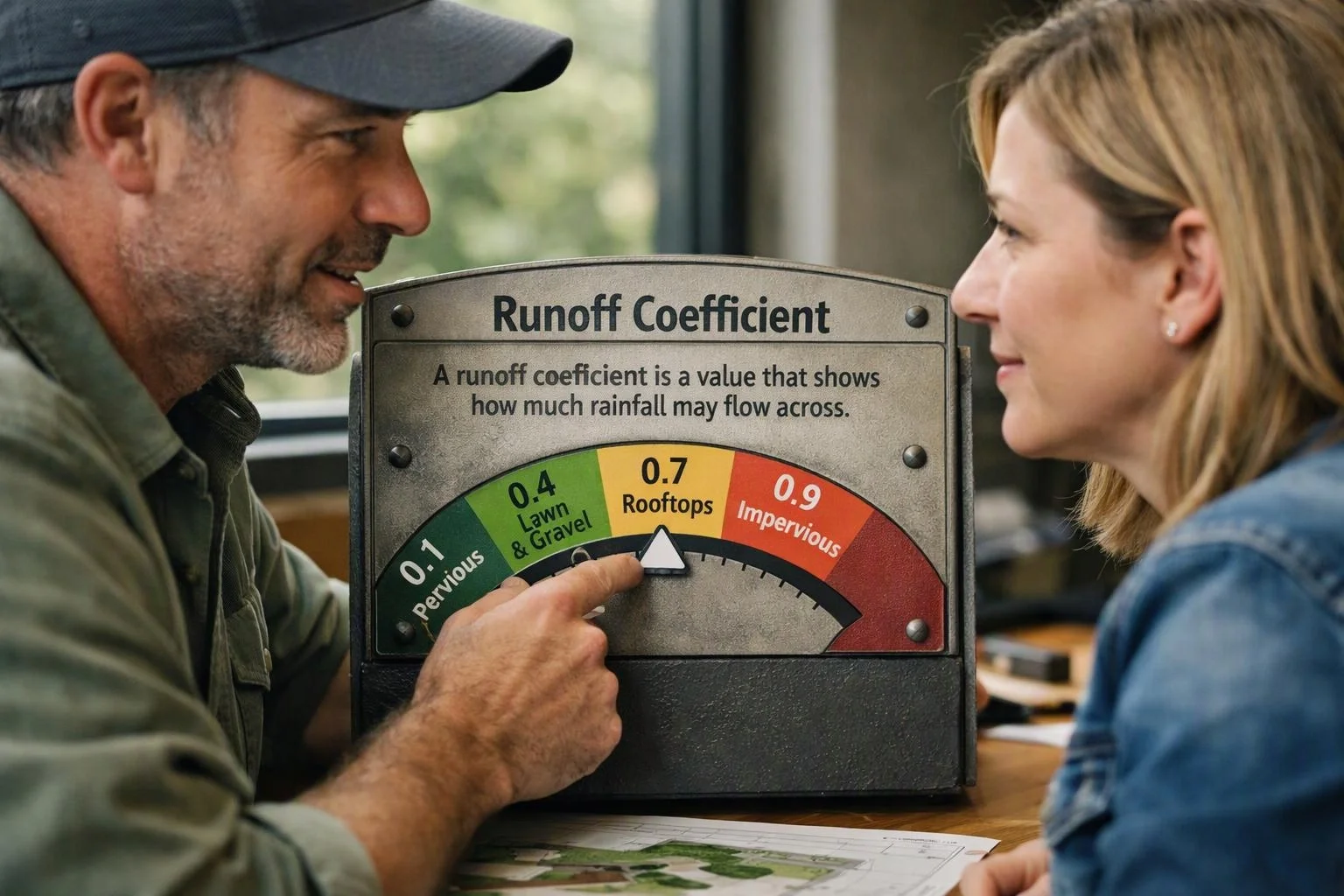
Runoff coefficient helps a designer compare surfaces by their expected water flow. A roof, driveway, or patio sends more rain toward drainage systems. Mulched beds and healthy soil allow more water to soak in.
Related glossary terms: Grading Plan, Contour Grading, Stormwater Inlet.
Landscape grading design uses this value with the size and layout of each surface. The result helps show where water may collect and how much flow a swale, drain, or other feature may receive. Existing soil, surface condition, and planned plantings can change the practical result.
The coefficient describes surface response, while slope describes the direction and steepness of the land. A site can have a mild slope and still create heavy runoff if much of its surface is hard. Grading plans show how those conditions work together.

Expert Note
When we prepare landscape grading design, we review each surface and its likely water response. We use that review to guide grades toward suitable drainage features and reduce low spots near structures. Our team also checks how proposed planting areas may change water movement.
Runoff Coefficient in Practice: A Real-World Example
A Bellevue yard may combine a roof, concrete walkway, lawn, and planting beds. We assign their different runoff responses during grading design, then shape the site so water moves away from the home and toward a planned drainage area.
Related Services
Related Terms
Grading Plan
A Grading Plan is a site drawing that shows how land will be shaped to guide…
Contour Grading
Contour Grading is a land-shaping method that follows the natural form of a site. It creates…
Stormwater Inlet
A stormwater inlet is a ground-level opening that collects rainwater runoff and directs it into a…
Rain Garden
A rain garden is a planted area shaped to collect and soak up runoff from roofs…
LandscaperBellevuewa.com
Have Questions About Runoff Coefficient?
Contact LandscaperBellevuewa.com for practical guidance on Runoff Coefficient and related landscape architect company work in Bellevue.