A Checklist for Investigating Water Near Your Home
When water collects near a house, check its source, flow path, depth, timing, nearby structures, and recent landscape changes. LandscaperBellevuewa.com uses these observations to guide grading and stormwater planning.
Written by Adam Gorski · 29 years of local experience
Request an EstimateWritten by Adam Gorski.

What Should You Check When Water Collects Near a House?
Water collecting near a house should be checked at its source, flow path, depth, timing, and effect on nearby structures.
Start with the surface water around the house. Look for water pooling beside the foundation, moving across the yard, or entering a low point.
Check how yard drainage handles rainfall and roof runoff. Note whether stormwater reaches a drainage swale, catch basin, planting bed, or hardscape edge.
Before You Inspect the Yard
Before a yard drainage assessment, prepare safe access and clear site information. Your notes will help our team understand conditions that may not appear during a dry visit.
Do not enter unsafe areas or open buried drainage components. Keep away from unstable soil, deep standing water, and exposed electrical equipment.
What Should You Record About Yard Drainage After Rain?
After rain, record where water stands, where it flows, how long the area stays wet, and what changed since earlier observations.
Record the rainfall timing and the first location where water appears. Then follow the water flow path toward drains, slopes, low spots, or the house.
Note soil saturation around the wet area. Repeated standing water can reveal a drainage pattern that a single dry inspection may miss.
During the Water Investigation
During the water investigation, trace roof runoff from the roof edge to the final discharge point. Our team uses this record to separate a local low point from a broader drainage problem.
Observe the site from safe ground, and do not enter a crawl space if conditions appear unsafe. Photos from accessible areas can still show useful drainage clues.
Which Drainage Signs Need Prompt Attention?
Drainage signs need prompt attention when water reaches the house or remains near important structures. These signs can point to foundation moisture, crawl space moisture, or ongoing soil movement.
Contact our team when conditions repeat or appear to worsen. Stop the inspection if the area is unstable, contaminated, or connected to unsafe utilities.
Why Can Landscaping Changes Redirect Water Toward a House?
Yes, landscaping changes can redirect water toward a house when new soil, paving, walls, or slopes block or change the original drainage path.
Landscape grading controls the direction of surface runoff across the property. Added soil can raise a planting bed, while compacted soil can reduce infiltration and send more water downhill.
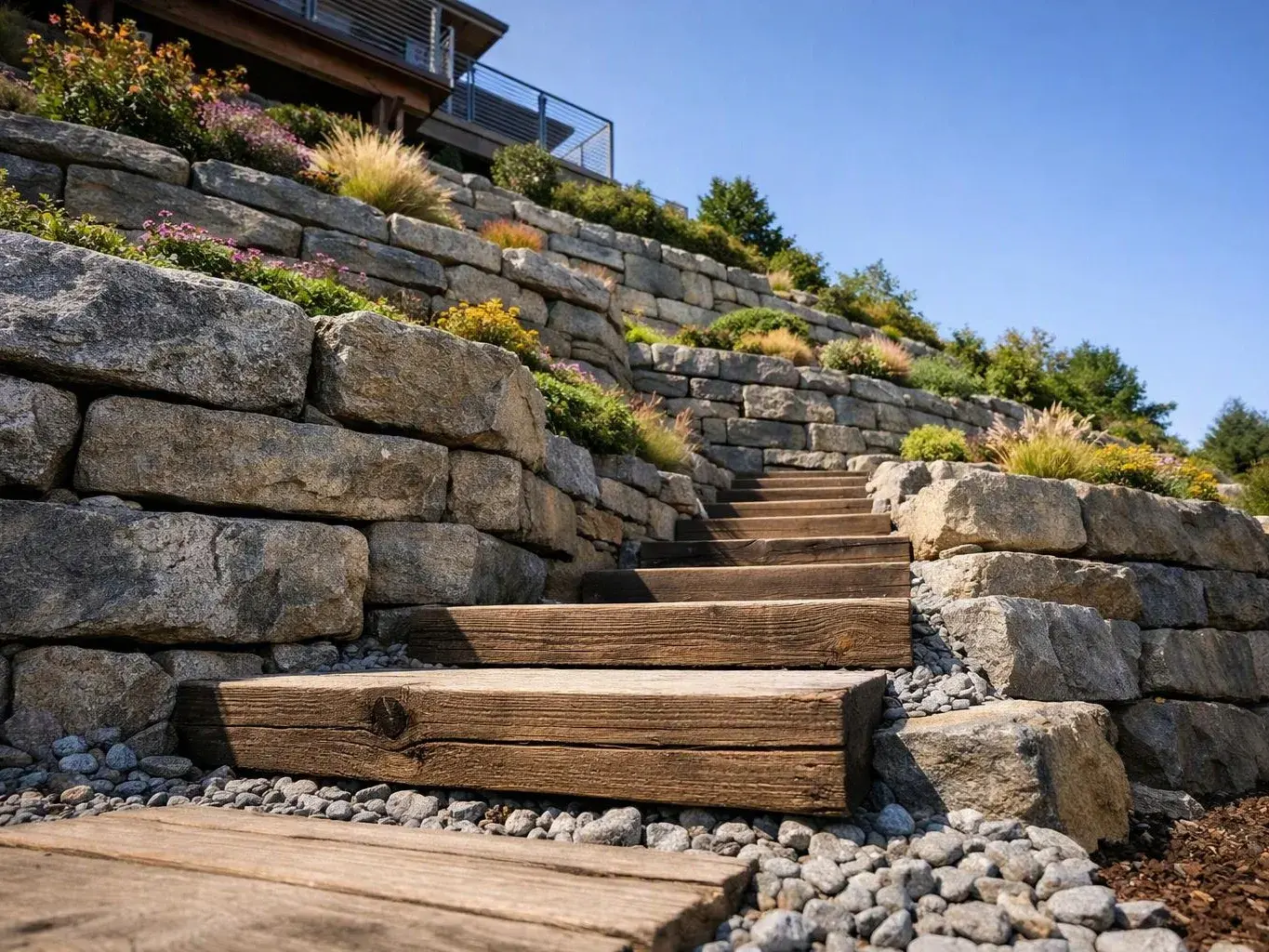
Retaining walls may interrupt a former flow path if they lack a suitable drainage plan. Hardscape can also shed water toward the foundation when its slope points the wrong way.
Our team uses [Landscape Grading Design](/services/landscape-grading-design/) to connect site observations with practical grading decisions.
After the Investigation: Prepare Your Site Record
A site record should combine photos, drainage notes, water sources, problem areas, and landscape history. A clear record helps our team compare visible symptoms with likely causes.
Keep observations factual and separate from guesses. Include changes that happened before the water problem appeared.
What Does Each Water Pattern Suggest?
Each water pattern suggests a different place to investigate first. The table helps organize observations before our drainage assessment.
Patterns can overlap, so our team reviews the whole site. A visible symptom may have an upstream cause.
| Water pattern | What it may suggest | What to record |
|---|---|---|
| Ponding | A low point, slow infiltration, or blocked outlet | Location, depth, soil condition, and nearby drainage features |
| Runoff | A slope or discharge point directing water across the yard | Starting point, flow direction, and final outlet |
| Erosion | Concentrated flow or an unstable drainage path | Channels, exposed roots, loose soil, and sediment movement |
| Foundation moisture | Water reaching the house or collecting beside it | Stains, damp areas, cracks, and nearby runoff paths |
| Crawl space moisture | Water entering below the house or trapped by poor drainage | Safe-access observations, damp materials, and surface flow nearby |
| Blocked drainage | A catch basin, swale, outlet, or channel unable to carry water | Blockage location, overflow direction, and affected areas |
How We Use Your Drainage Notes
Our team uses drainage notes to connect site observations with a practical grading and stormwater plan. The record helps us see where water starts, how it moves, and where it creates risk.
For Stormwater Management Design, we review runoff sources, outlets, soil saturation, and drainage swales. For Landscape Master Planning, we consider planting beds, hardscape, slopes, and future landscape changes together.
Our site assessment may guide drainage improvement through grading changes, improved flow paths, or coordinated stormwater features. The final plan depends on site conditions, existing structures, and applicable code or inspection needs.
Send your notes and photos through our contact page so we can discuss the next step.